

Understanding Islamic pilgrimage and performing Umrah for others
TL;DR:
- Islamic law permits capable individuals to perform proxy Umrah for seriously ill or elderly loved ones.
- Proxy Umrah requires prior personal completion of Umrah, clear intention, and permission if the person is alive.
- Proper procedure, sincere intention, and scholarly guidance are essential for the validity and spiritual reward of proxy Umrah.
Many Muslims are surprised to discover that Islamic law permits a capable person to perform Umrah on behalf of a loved one who is too ill or elderly to travel. This provision, known as Badal Umrah or proxy Umrah, carries deep spiritual weight and comes with specific conditions that must be met carefully. Families often feel uncertain about whether their situation qualifies, which steps are required, and how to ensure the rite is religiously valid. This guide walks through the meaning of Islamic pilgrimage, the scholarly rulings on proxy performance, the exact steps involved, and practical advice for common edge cases.
Table of Contents
- The meaning and pillars of Islamic pilgrimage
- Who can perform pilgrimage for others? Rules and conditions
- Step-by-step guide to performing Umrah on behalf of loved ones
- Common questions, edge cases, and practical tips
- A nuanced perspective: Why intention and diligence matter most
- Considering proxy Umrah? Trusted support for your loved ones
- Frequently asked questions
Key Takeaways
| Point | Details |
|---|---|
| Two types of pilgrimage | Hajj is mandatory once in a lifetime for able Muslims, while Umrah is a non-obligatory pilgrimage that can be performed any time. |
| Proxy Umrah rules | Umrah Badal is permitted for elders, the ill, and the deceased, but the proxy must have performed their own pilgrimage first. |
| Precise process required | Proxy must observe all rites, have clear intention, and obtain permission for living individuals to ensure validity. |
| Practical guidance | Families should seek reputable services and follow proper procedures for peace of mind and religious compliance. |
The meaning and pillars of Islamic pilgrimage
Islamic pilgrimage primarily refers to Hajj, the fifth pillar of Islam, and Umrah, the lesser non-obligatory pilgrimage. Both involve traveling to Makkah and performing a set of prescribed rites, but they differ significantly in obligation, timing, and ritual structure. Understanding these differences is the first step toward fulfilling your family’s religious duty with confidence.
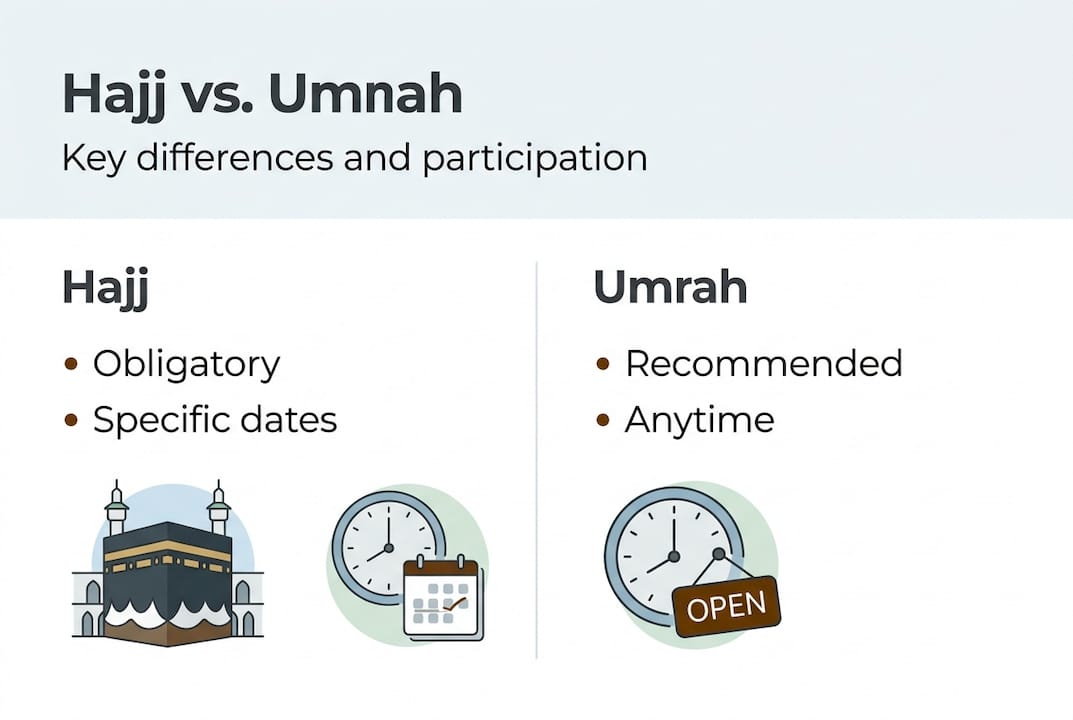
Hajj is obligatory once in a lifetime for every Muslim who is physically and financially able. It takes place during specific days in the Islamic month of Dhul Hijjah and includes rites such as standing at Arafah, spending the night at Muzdalifah, stoning the Jamarat, and offering a sacrifice. Umrah, by contrast, can be performed at any time of year and is considered a highly recommended Sunnah. It consists of four main rites:
- Ihram: Entering a state of ritual purity and wearing the prescribed garments
- Tawaf: Circling the Kaaba seven times in a counterclockwise direction
- Sa’i: Walking seven times between the hills of Safa and Marwa
- Tahallul: Cutting or shaving the hair to exit the state of Ihram
The differences between Hajj and Umrah are not merely procedural. Hajj carries a mandatory status tied to one of Islam’s five pillars, while Umrah is a deeply rewarding voluntary act. Both, however, can be performed on behalf of another person under the right conditions.
| Feature | Hajj | Umrah |
|---|---|---|
| Obligation | Fard (obligatory) once in a lifetime | Sunnah (recommended), not obligatory |
| Timing | Specific days in Dhul Hijjah | Any time of year |
| Duration | Several days | Can be completed in hours |
| Key rites | Arafah, Muzdalifah, Jamarat, Tawaf, Sa’i | Ihram, Tawaf, Sa’i, Tahallul |
| Proxy permitted | Yes, under conditions | Yes, under conditions |
The scale of participation in these pilgrimages is remarkable. Umrah participation has grown steadily over the years, reflecting the deep commitment Muslims worldwide hold toward these rites. This widespread participation also means that proxy services are increasingly sought by families who want to ensure their loved ones are spiritually represented.
Who can perform pilgrimage for others? Rules and conditions
Understanding the main forms of pilgrimage, the next step is knowing when you can represent someone else and the exact requirements. Proxy Umrah is allowed for those permanently unable due to illness, age, or for the deceased, and this ruling is backed by authentic Hadith and the majority of Islamic scholars.
The scholarly consensus identifies three main categories of people who may be represented by a proxy:
- The permanently ill: Someone with a chronic or terminal condition that prevents travel indefinitely
- The elderly: A person whose age has rendered travel physically impossible or severely harmful
- The deceased: A person who passed away without performing Umrah and either requested it or whose family wishes to fulfill it on their behalf
However, the proxy themselves must meet important conditions. Rulings for performing Umrah for others require that the proxy must have already completed their own Umrah before performing it for someone else. This is a firm condition across most scholarly opinions.

Some schools permit proxy for the permanently incapacitated living, while the Maliki school restricts proxy Umrah strictly to the deceased. Families should consult a knowledgeable scholar to understand which ruling applies to their situation.
Conditions for a valid proxy Umrah:
| Condition | Requirement |
|---|---|
| Proxy’s own Umrah | Must be completed first |
| Niyyah (intention) | Must be made at miqat, naming the person |
| Permission | Required if the person is still living |
| One person per Umrah | Cannot combine for multiple individuals |
| Reason for proxy | Must be permanent incapacity or death |
Pro Tip: If you are performing Umrah for a living relative, get their explicit verbal or written permission beforehand. This protects the religious validity of the act and brings peace of mind to both parties.
For families navigating special provisions for ill persons, Islamic jurisprudence provides thoughtful guidance. The religion recognizes that hardship is real and that sincere intention combined with proper procedure fulfills the obligation in a way that is both legally and spiritually sound.
Step-by-step guide to performing Umrah on behalf of loved ones
Once you know whether you can perform Umrah for a loved one, the next step is understanding the process and doing it correctly. The proxy must complete all Umrah rites including Ihram, Tawaf, Sa’i, and haircut for the designated person, starting with a clear niyyah at miqat.
Here is the sequence to follow:
- Make niyyah at miqat: State clearly in your heart and verbally that you are entering Ihram for Umrah on behalf of the named person. For example: “I intend to perform Umrah on behalf of [name], with Allah’s permission.”
- Enter Ihram: Wear the prescribed garments and observe all Ihram restrictions, including avoiding perfume, cutting nails, and engaging in disputes.
- Perform Tawaf: Circle the Kaaba seven times, beginning and ending at the Black Stone, maintaining the intention that this Tawaf is for your loved one.
- Perform Sa’i: Walk seven times between Safa and Marwa, keeping the same intention throughout.
- Perform Tahallul: Cut or shave the hair to exit Ihram. This completes the Umrah for the person you are representing.
For a detailed walkthrough, the guide on fulfilling Umrah Badal duties covers each rite with additional context and scholarly notes.
“The proxy must maintain sincere and consistent intention throughout all rites. The niyyah made at miqat is not a one-time statement but a continuous state of purpose carried through every step.”
Pro Tip: Carry a written note with the full name of the person you are performing Umrah for. This helps you maintain focus and avoid confusion, especially in the spiritually intense environment of Makkah.
One common mistake is rushing through the rites without maintaining the correct intention. Another is skipping a step because of crowd pressure or fatigue. Both can affect the validity of the proxy Umrah. Families who want full documentation of the process, including video coverage and a personalized certificate, can explore Umrah certification for proxies to understand what proper documentation looks like.
The proxy Umrah process is spiritually and legally valid when all rites are performed in sequence with the correct intention. There is no shortcut that preserves validity.
Common questions, edge cases, and practical tips
Even when the steps are clear, many still have practical concerns or encounter unique circumstances in the process. Let’s address the most frequent ones directly.
Can you travel with an elderly person and assist them instead of performing proxy?
Saudi authorities offer elderly and disabled support, including wheelchair services and designated entry points. For those who can travel but need assistance, this is often the preferred path. However, religious consensus often favors proxy for those who truly cannot travel, even with support. If a doctor has confirmed that travel poses serious health risks, proxy Umrah becomes the appropriate choice.
What about temporary illness?
This is one of the most common edge cases. If someone is ill but expected to recover, most scholars hold that proxy Umrah is not yet appropriate. The person should wait and perform Umrah themselves when able. Proxy is reserved for those whose incapacity is permanent or for those who have passed away.
Key practical points to keep in mind:
- One Umrah can only be performed for one person. You cannot split a single Umrah between two individuals.
- If you wish to perform Umrah for multiple family members, you must return to miqat and make a fresh niyyah for each one, performing all rites separately.
- For families managing a loved one with severe illness, consulting both a physician and a qualified Islamic scholar before making the decision is strongly advised.
- Documentation, such as a medical report confirming permanent incapacity, can help clarify eligibility and provide peace of mind.
Pro Tip: If you are unsure whether a loved one’s condition qualifies, seek a fatwa (religious ruling) from a trusted scholar before proceeding. Acting on sound knowledge protects the sincerity and validity of the act.
For families navigating complex situations, the resources on legitimate Umrah practices and Islamic rulings for proxy Umrah offer detailed guidance grounded in scholarly opinion.
“The goal is not merely to complete a ritual. It is to fulfill a trust, on behalf of someone who placed their spiritual hope in you.”
A nuanced perspective: Why intention and diligence matter most
Beyond the steps and rules, what is often overlooked is the deeper ethical dimension of fulfilling someone else’s spiritual obligation. Performing proxy Umrah is not a transaction. It is an act of love and religious responsibility that carries real weight.
Families sometimes rush to arrange proxy Umrah without verifying whether the person truly qualifies, or without ensuring the proxy has completed their own Umrah first. This oversight can undermine the validity of the entire act. The spiritual legitimacy in proxy Umrah depends entirely on sincerity, correct procedure, and proper knowledge.
What we have seen in practice is that families who take the time to understand the rulings, seek scholarly guidance, and choose a diligent proxy experience genuine peace of mind. The act becomes a source of spiritual connection between the living and those who have passed, or between a caregiver and a loved one who can no longer travel. That bond is real, and it is worth protecting through diligence. Cutting corners does not serve your loved one. Doing it right does.
Considering proxy Umrah? Trusted support for your loved ones
If you are considering entrusting proxy Umrah for a loved one, reputable services can help fulfill your duty respectfully and transparently. Finding a provider who combines religious compliance with clear documentation gives families the confidence they need.

At badalumrah.org, every proxy Umrah is performed by individuals who have completed their own Umrah, following all required rites with proper intention. Packages such as the Umrah Badal Barakah Premium Package include video coverage, photo documentation, and a personalized certificate so your family has a complete record. For those seeking a simpler option, the Umrah Badal du’a package offers a sincere and documented act of worship. Browse all available Umrah packages to find the right fit for your loved one’s needs.
Frequently asked questions
Can I perform Umrah for multiple people in one trip?
No, each Umrah must be performed for one person at a time. You must return to miqat and make a separate intention for each individual before performing the full set of rites again.
Is permission needed from a living person for proxy Umrah?
Yes, explicit permission is required before performing Umrah Badal on behalf of someone who is still alive. Without this permission, the act may not be considered valid.
Can proxy Umrah be performed for someone who is sick but may recover?
Majority opinion allows proxy only for those who are permanently unable to perform Umrah themselves. A person with a temporary illness should wait until they recover and perform Umrah on their own.
Are there official services to help perform Umrah by proxy?
Yes, reputable agencies offer fully documented proxy Umrah services that include certificates, video coverage, and transparent reporting of each rite performed on behalf of the designated person.
How many people perform Umrah each year?
Nearly 17 million foreign pilgrims performed Umrah in 2024, reflecting the growing global commitment to this sacred act, with Hajj averaging approximately 1.8 million pilgrims annually.