

Step-by-step guide to fulfilling Umrah Badal duties
TL;DR:
- Proxy Umrah allows capable Muslims to perform sacred rites for those unable due to illness or age.
- Eligibility requires the proxy to be Muslim, sane, physically capable, and have the deceased or permanent incapacity of the recipient.
- Proper preparation, clear permissions, correct rituals, and expert services ensure valid and meaningful proxy Umrah.
When a beloved parent or grandparent can no longer travel to Makkah due to advanced age or chronic illness, the weight of that unperformed Umrah can rest heavily on the entire family. This is where Umrah Badal offers a meaningful and Islamically valid solution, allowing a capable Muslim to perform the rites on behalf of someone who cannot. This guide walks you through every essential step: who qualifies, how to prepare, how to perform each ritual correctly, and how to support elderly or unwell loved ones through this process with care and confidence.
Table of Contents
- Who can perform Umrah Badal and for whom?
- Prepare for your proxy Umrah: permissions, intentions, and practicalities
- Step-by-step Umrah Badal rituals: Performing each duty in order
- Supporting the elderly and unwell: Practical tips and accessibility
- The overlooked personal power in proxy worship
- Let experts help: Trusted Umrah Badal services for your peace of mind
- Frequently asked questions
Key Takeaways
| Point | Details |
|---|---|
| Eligibility is crucial | Only certain proxies and recipients qualify for Umrah Badal, with clear rules by scholars. |
| Preparation prevents mistakes | Securing permissions, documents, and proper niyyah ensures your proxy Umrah is valid. |
| Strict ritual order | Following each Umrah step in sequence avoids common errors and upholds religious integrity. |
| Support for the elderly | Physical and logistical help makes Umrah possible for those with disabilities or health challenges. |
| Choose trusted services | Engaging reputable providers for Umrah Badal brings peace of mind and transparent fulfillment. |
Who can perform Umrah Badal and for whom?
Now that you understand why proxy Umrah is valuable, let’s clarify who exactly can perform and receive this sacred act. Understanding Badal Umrah begins with knowing the eligibility rules, because not every situation qualifies.
Who may act as a proxy?
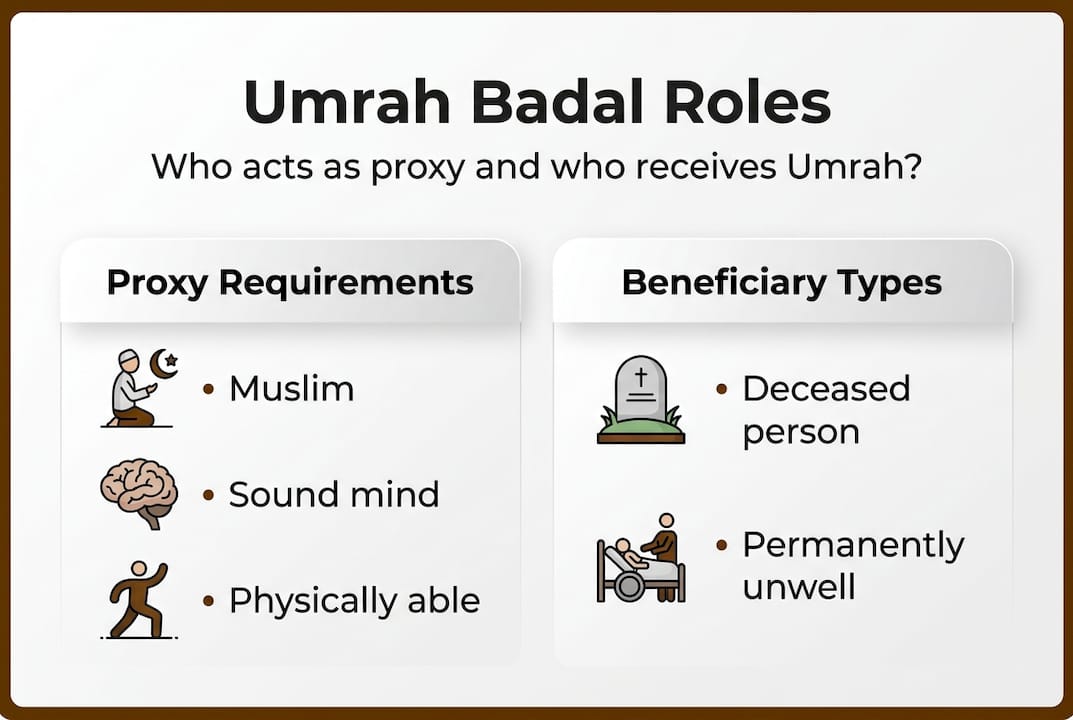
The proxy must be Muslim, mentally sound, and physically capable of completing all the rites without assistance. Most scholars also require that the proxy has already completed their own Umrah before performing it for someone else. This condition ensures the proxy understands the rituals fully and fulfills their own obligation first.
Who may receive proxy Umrah?
The beneficiary must be either deceased or permanently unable to perform Umrah themselves. This includes individuals with chronic illness, severe disability, or advanced old age that prevents travel. Importantly, proxy Umrah rulings are clear that temporary illness or a healthy person does not qualify. If someone is expected to recover, they should wait and perform Umrah themselves.
For living beneficiaries, explicit verbal or written permission is required. Without that consent, the act is not considered valid by most scholars.
Schools of thought: Key differences
The four major schools of Islamic jurisprudence hold slightly different positions on Umrah Badal:
| School of Thought | Own Umrah Required First? | Notes |
|---|---|---|
| Hanafi | Not strictly required | Performing without own Umrah is valid but disliked |
| Shafi’i | Yes | Proxy must complete own Umrah first |
| Hanbali | Yes | Umrah is obligatory once; proxy must have fulfilled it |
| Maliki | Not required | Permitted but discouraged in some cases |
The Fiqh differences across schools reflect genuine scholarly debate, but there is broad consensus that proxy Umrah for a deceased person is valid across all four schools. For living individuals, the majority position requires permanent incapacity and explicit permission.
“The proxy must be a Muslim who is sane and physically capable. For a living person, explicit permission is needed, and it is not permitted for someone with a temporary illness or a healthy individual.”
You can also review Umrah certification for proxies to understand how documentation supports the validity of the act. Additionally, the IslamQA proxy Umrah fatwa provides authoritative scholarly guidance on this topic.
Prepare for your proxy Umrah: permissions, intentions, and practicalities
With eligibility clear, the next step is careful preparation, both spiritual and practical. Rushing into proxy Umrah without proper groundwork can compromise its validity.
Step 1: Obtain permission from the beneficiary
If the beneficiary is alive, get their clear verbal or written consent before proceeding. This is not a formality. It is a condition for validity in most schools of thought. Document it where possible.
Step 2: Confirm your own Umrah history
As noted in the proxy Umrah prerequisites, the majority of scholars require you to have performed your own Umrah first. Gather proof of your previous Umrah if required by a service provider or local scholar.
Step 3: Gather your documents
Prepare the following before travel or before engaging a proxy service:
- Your valid passport and travel documents
- Written consent from the living beneficiary (if applicable)
- Proof of your own prior Umrah completion
- Proxy service contract or agreement (if using a service)
- The full name of the beneficiary for use in the niyyah (intention)
Step 4: Prepare your Ihram and logistics
Arrange your Ihram garments, confirm your Miqat entry point, and plan your travel to Makkah. If you are using a service, confirm all logistics with the provider in advance.
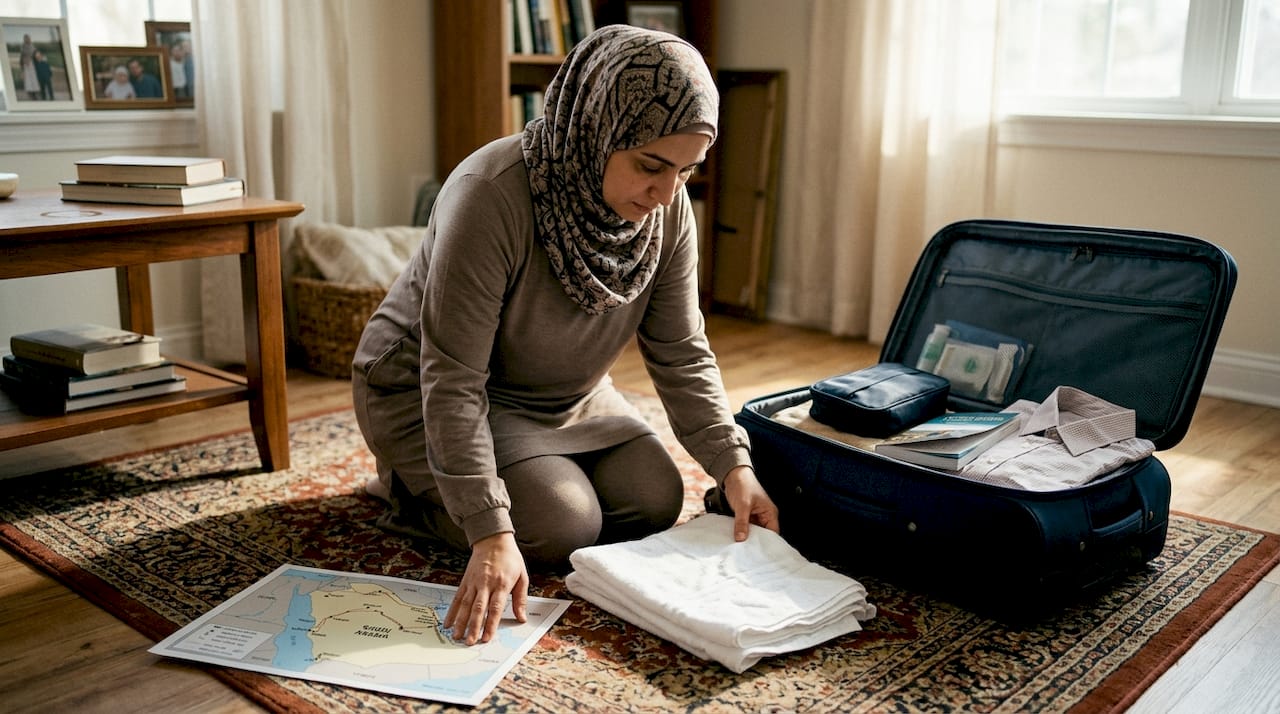
The step-by-step Badal Umrah process outlines how the niyyah is stated as: “Labbayk Allahumma Umratan an [beneficiary’s name].” This intention is made at the Miqat while entering Ihram.
Preparation checklist at a glance
| Preparation item | Why it matters |
|---|---|
| Written consent | Validates the act for living beneficiaries |
| Own Umrah proof | Meets majority scholarly requirement |
| Beneficiary’s full name | Required for correct niyyah |
| Ihram garments | Ritual entry requirement |
| Proxy service contract | Ensures accountability and documentation |
Pro Tip: Write down the full name of the beneficiary and the exact niyyah wording before you travel. Having it in written form reduces errors during a spiritually significant and emotionally charged moment.
Step-by-step Umrah Badal rituals: Performing each duty in order
After getting ready, it’s crucial to follow the correct procedure for every ritual. Here’s how to do it properly, step by step.
The Umrah Badal steps must be performed in sequence, with full attention and sincerity. Each stage has specific requirements that cannot be skipped or altered.
-
Enter Ihram at the Miqat. Put on your Ihram garments and state the niyyah clearly: “Labbayk Allahumma Umratan an [name of beneficiary].” This marks the formal beginning of the proxy Umrah.
-
Recite the Talbiyah. After entering Ihram, recite the Talbiyah continuously until you begin Tawaf. This is an act of devotion and signals your readiness to fulfill the rites.
-
Perform Tawaf. Circumambulate the Kaaba seven times in a counterclockwise direction, starting and ending at the Black Stone. Maintain focus on the intention you made for the beneficiary throughout.
-
Perform Sa’i. Walk seven times between the hills of Safa and Marwah, beginning at Safa. This commemorates the actions of Hajar (peace be upon her) and is an essential part of Umrah.
-
Perform Halq or Taqsir. After Sa’i, shave the head completely (Halq) or shorten the hair (Taqsir). This step marks the end of the Ihram state and the completion of Umrah.
You can review the service-based Umrah Badal steps or the family guide to Badal Umrah for additional context on each stage. The thepilgrim’s Umrah Badal steps also offer a reliable external reference.
Common mistakes to avoid
- Do not attempt to perform Umrah for more than one beneficiary in a single journey. Each Umrah is for one person only.
- Do not change the beneficiary’s name mid-ritual. The intention must remain consistent throughout.
- Do not skip Tawaf or Sa’i circuits. All seven rounds of each must be completed.
Pro Tip: If you are unsure about any step during the ritual, consult a local scholar or a knowledgeable guide before proceeding. It is better to pause and confirm than to complete a step incorrectly.
Supporting the elderly and unwell: Practical tips and accessibility
Fulfilling religious duties isn’t just about rituals. Ensuring caregivers and family members are prepared is just as important, especially when the elderly or unwell are traveling in person.
For those who can travel but need physical support, the Masjid al-Haram provides significant accessibility accommodations. Wheelchairs are permitted for both Tawaf and Sa’i, and trained assistants are available to help push the wheelchair through the circuits. This makes it possible for many elderly pilgrims to participate personally.
Practical tips for caregivers
- Book hotels as close to the Haram as possible to minimize walking distance and physical strain.
- Arrange a wheelchair rental or hire a dedicated assistant through your travel agent before arriving.
- Carry all necessary medications and a brief medical summary in both Arabic and English.
- Plan visits during off-peak hours to avoid large crowds, which can be physically dangerous for frail individuals.
- Communicate with the pilgrim about each step beforehand so they feel spiritually engaged even if physically limited.
- Keep emergency contact numbers and the nearest hospital details readily accessible.
Safety note: High-traffic periods such as the days surrounding Ramadan and Hajj season carry significant health risks for elderly or medically vulnerable pilgrims. Consult a physician and a qualified travel agent before finalizing travel plans during these times.
For families who choose proxy Umrah instead of personal travel, the special provisions for ill persons explain how Islamic rulings accommodate those who genuinely cannot make the journey. You can also refer to external accessibility guidance for broader context on eligibility and support options.
Emotional and spiritual care matters too. Speak with your loved one about the Umrah being performed on their behalf. Share updates, photos, or video where possible. This connection honors their spiritual longing and brings comfort to both parties.
The overlooked personal power in proxy worship
While the above steps cover what to do, there’s a deeper value many caregivers overlook. Most people approach Umrah Badal as an obligation to check off a list. Complete the steps, get the certificate, move on. But that framing misses something important.
When you stand at the Miqat and speak the name of your mother or grandfather in your niyyah, something shifts. You are no longer just performing a ritual. You are carrying someone’s lifelong longing in your heart. That weight changes how you move through each step of the full Badal Umrah process. The Tawaf feels different. The Sa’i carries new meaning.
Many proxies report that performing Umrah on behalf of a loved one deepened their own faith more than any personal Umrah had. This is not coincidence. Sincere proxy worship requires you to set aside your own spiritual needs and focus entirely on another person’s. That act of selflessness is itself a form of worship. It builds empathy, strengthens family bonds, and renews your own commitment to the faith.
Contrary to what some assume, proxy worship is not a lesser form of devotion. Done with proper intention and care, it may be among the most spiritually demanding acts a Muslim can perform.
Let experts help: Trusted Umrah Badal services for your peace of mind
After understanding the steps and significance, many families prefer expert help. Here’s how to take that path with confidence.

Choosing a reputable provider ensures every ritual is fulfilled with integrity, proper documentation, and full transparency. At badalumrah.org, you can select from carefully designed packages that include photo and video coverage, personalized certificates, and step-by-step confirmation of each completed rite. The Umrah Badal Du’a package offers an accessible starting point, while the Barakah Premium Package provides comprehensive documentation for families who want complete peace of mind. Every booking also contributes 10% of profits to humanitarian support in Gaza, making your spiritual act one of broader compassion.
Frequently asked questions
Can Umrah Badal be performed for a living person with temporary illness?
No. Proxy Umrah is only valid for deceased individuals or those permanently incapacitated. Someone with a temporary condition should wait until they recover and perform Umrah themselves.
What must be recited for the intention (niyyah) of Umrah Badal?
The correct niyyah wording is: “Labbayk Allahumma Umratan an [person’s name],” stated clearly at the Miqat while entering Ihram on behalf of the beneficiary.
Is it necessary to have performed your own Umrah before acting as a proxy?
The majority scholarly position requires the proxy to have completed their own Umrah first. The Hanafi school allows it without this condition, though it is considered disliked.
Are wheelchairs allowed during Tawaf and Sa’i for the elderly or unwell?
Yes. Wheelchairs are fully permitted for both Tawaf and Sa’i, and trained assistants are available within the Haram to provide support throughout the circuits.
Can one Umrah Badal be done for multiple beneficiaries?
No. Each Umrah Badal covers one person only. A separate Umrah must be performed for each individual beneficiary.