

Key differences between Hajj and Umrah in 2026
Many Muslims confuse Hajj and Umrah because both involve sacred rituals in Makkah and hold deep spiritual significance. However, their timing, obligations, and specific practices differ substantially. Understanding these distinctions becomes especially important when considering performing these rituals on behalf of family members who cannot travel. This guide clarifies the essential differences between Hajj and Umrah, explains their unique requirements, and provides practical insights for Muslims planning proxy pilgrimages in 2026.
Table of Contents
- Overview Of Timing And Obligations For Hajj And Umrah
- Detailed Rituals: What Makes Hajj And Umrah Unique?
- Proxy Pilgrimage: Performing Hajj And Umrah On Behalf Of Others
- Comparing The Spiritual Significance And Community Aspects Of Hajj And Umrah
- Explore Our Trusted Umrah Proxy Services In 2026
- Frequently Asked Questions
Key takeaways
| Point | Details |
|---|---|
| Timing flexibility | Hajj occurs only during specific days in Dhul-Hijjah, while Umrah can be performed year-round except during Hajj days. |
| Ritual complexity | Umrah involves fewer rituals taking only hours, whereas Hajj includes additional rites spanning multiple days with three distinct types. |
| Obligation level | Hajj is mandatory once in a lifetime for able Muslims, while Umrah remains highly recommended but not obligatory. |
| Proxy rules | Performing Umrah on behalf of others follows more flexible guidelines compared to stricter conditions for proxy Hajj. |
| Participation scale | Millions gather for Hajj during its fixed season, while Umrah accommodates pilgrims throughout the year. |
Overview of timing and obligations for Hajj and Umrah
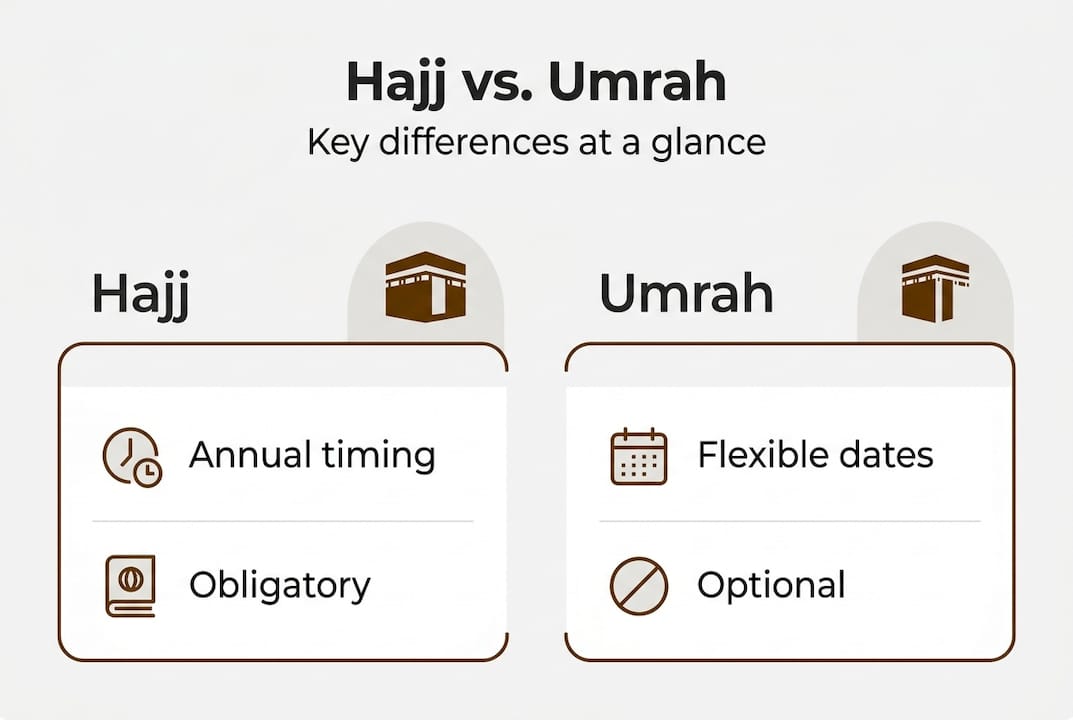
The most fundamental difference between these two pilgrimages lies in their timing windows. Hajj occurs only during 8th through 13th Dhul-Hijjah, creating a concentrated five to six day period when millions converge on Makkah. This fixed schedule means pilgrims must plan months or years in advance, coordinating travel, accommodations, and logistics within this narrow timeframe. The sheer volume of participants during these specific days creates a unique communal atmosphere that defines the Hajj experience.
Umrah offers dramatically different flexibility. Muslims can perform this lesser pilgrimage any day of the year except during the official Hajj days. This year-round availability allows families to choose times that suit their schedules, budgets, and personal circumstances. Many Muslims prefer performing Umrah during Ramadan for additional spiritual rewards, while others select quieter periods for a more contemplative experience. The flexibility makes Umrah particularly suitable for proxy performance when coordinating on behalf of elderly or ill family members.
Regarding obligation, Hajj stands as one of Islam’s five pillars, mandatory once in a lifetime for every Muslim who possesses physical ability and financial means. This obligatory status carries profound spiritual weight and social significance within Muslim communities worldwide. Fulfilling this duty represents a major life achievement and spiritual milestone for believers.
Umrah, while deeply meritorious and strongly encouraged, does not carry the same obligatory status. Scholars describe it as Sunnah Mu’akkadah, a confirmed practice of Prophet Muhammad that brings immense rewards but remains voluntary. This distinction affects how Muslims prioritize these pilgrimages when planning their spiritual journeys or considering umrah preparation tips for families unable to travel themselves.
“The timing difference fundamentally shapes each pilgrimage’s character. Hajj’s fixed schedule creates an unparalleled gathering of faith, while Umrah’s flexibility allows personal spiritual journeys throughout the year.”
Key timing considerations include:
- Hajj requires arrival before the 8th of Dhul-Hijjah and participation through the 13th
- Umrah can begin any day except during the five to six Hajj days
- Weather conditions vary significantly, with summer months bringing extreme heat
- Ramadan Umrah carries special spiritual significance but higher crowds
- Off-peak Umrah periods offer more comfortable conditions and lower costs
Detailed rituals: What makes Hajj and Umrah unique?
Understanding the specific rituals distinguishes these pilgrimages beyond just timing. Umrah rituals include entering Ihram, performing Tawaf around the Kaaba, Sa’i between Safa and Marwah, and completing Halq or Taqsir. These core practices can be completed in just a few hours, making Umrah accessible even for those with limited time or physical stamina. The streamlined nature makes it particularly manageable for proxy performers acting on behalf of others.
The Umrah sequence follows this order:
- Enter state of Ihram with intention and specific clothing before reaching Miqat
- Perform Tawaf by circling the Kaaba seven times counterclockwise
- Complete Sa’i by walking seven times between the hills of Safa and Marwah
- Finish with Halq (complete head shaving) or Taqsir (hair trimming) to exit Ihram
Hajj incorporates these same foundational rituals but adds several major components that extend the pilgrimage over multiple days. Pilgrims must stand at Arafat on the 9th of Dhul-Hijjah, spend nights in Muzdalifah and Mina, perform the symbolic stoning of pillars representing Satan, and offer animal sacrifice. These additional rites carry deep historical and spiritual significance, commemorating Prophet Ibrahim’s trials and Prophet Muhammad’s farewell pilgrimage.
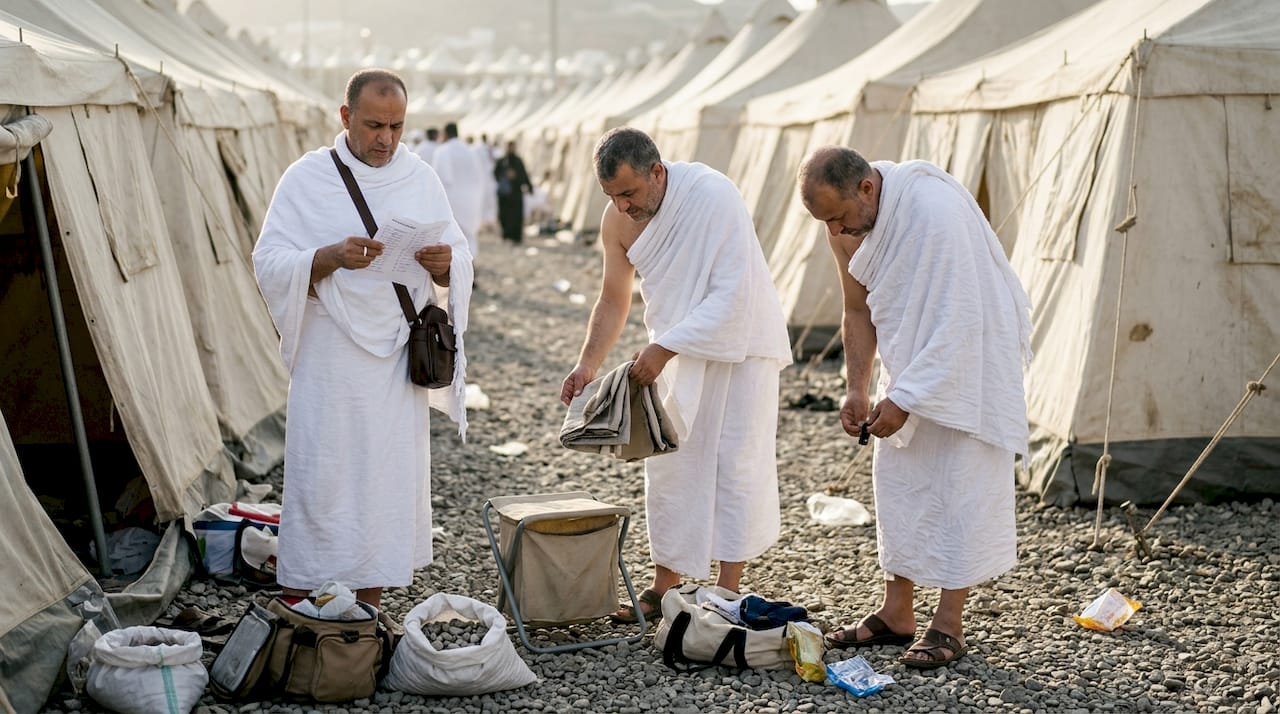
Hajj has three distinct types that affect how pilgrims combine and sequence their rituals. Understanding these variations helps families choose appropriate approaches, especially when arranging proxy performance:
| Hajj Type | Description | Key Features |
|---|---|---|
| Tamattu’ | Separate Umrah then Hajj | Perform Umrah first, exit Ihram, re-enter for Hajj; requires sacrifice |
| Qiran | Combined continuous rituals | Maintain single Ihram state throughout both Umrah and Hajj; requires sacrifice |
| Ifrad | Hajj only | Perform only Hajj rituals without Umrah; no sacrifice required |
The complexity of Hajj rituals demands careful preparation and often benefits from experienced guides. Pilgrims navigate massive crowds while maintaining precise ritual requirements across multiple sacred sites. Physical demands include walking long distances, standing for extended periods, and managing challenging conditions. These factors make Hajj significantly more demanding than Umrah for both personal performance and proxy arrangements.
Pro Tip: When considering proxy pilgrimage for family members, understanding Hajj types becomes crucial because the performer must know which type to execute based on the beneficiary’s circumstances and scholarly guidance. Consulting with knowledgeable sources about Umrah Badal versus normal Umrah ensures proper ritual fulfillment.
The duration difference significantly impacts planning. Umrah’s few hours allow flexibility for travel schedules and physical limitations. Hajj’s multi-day commitment requires substantial time away, physical endurance, and logistical coordination. These practical considerations heavily influence decisions about personal versus proxy performance, particularly for elderly family members or those with health constraints. Understanding rules for Umrah on behalf of others helps families make informed decisions about proxy arrangements.
Proxy pilgrimage: performing Hajj and Umrah on behalf of others
Proxy performance represents a compassionate provision in Islamic law, allowing capable Muslims to perform pilgrimages on behalf of those unable to do so themselves. Proxy Umrah is permitted for deceased individuals or those permanently incapable due to illness or age. This flexibility offers families meaningful ways to fulfill spiritual obligations for loved ones facing insurmountable barriers to travel.
The conditions for proxy Umrah prove more lenient than Hajj proxy. While some scholarly opinions suggest performers should complete their own Umrah first, this requirement is not universally mandated. The key elements focus on proper intention, correct ritual execution, and sincere dedication to performing the pilgrimage for the beneficiary’s spiritual benefit. Many families choose professional services to ensure these requirements are met with precision and authenticity.
For living individuals, obtaining explicit permission before performing proxy Umrah demonstrates respect and maintains proper Islamic etiquette. This permission ensures the beneficiary understands and accepts the spiritual gift being offered. Without permission, the proxy performance may not fulfill its intended purpose or carry the same spiritual weight. Clear communication prevents misunderstandings and strengthens the spiritual connection between performer and beneficiary.
Proxy Hajj carries stricter requirements. Performers must prioritize their own Hajj obligation first before undertaking proxy performance for others. This rule ensures that mandatory personal obligations take precedence over voluntary acts performed on behalf of others. Once a Muslim has fulfilled their own Hajj duty, they become eligible to perform this service for family members or others in need.
The intention formulation proves critical for valid proxy performance. Performers typically state their intention as “Labbaik Umrah’an 'an [Name]” when entering Ihram, clearly specifying they perform the pilgrimage on behalf of the named beneficiary. This verbal declaration establishes the spiritual connection and directs the rewards appropriately. Proper intention separates personal pilgrimage from proxy service and ensures correct spiritual accounting.
Pro Tip: Always document proxy pilgrimage arrangements clearly, including the beneficiary’s full name, the performer’s credentials, and the specific dates of performance. Professional services often provide certificates, photos, and videos that offer families peace of mind and tangible proof of completed rituals, addressing both spiritual and practical concerns.
Key considerations for proxy pilgrimage include:
- Verify the performer’s knowledge and experience with proper rituals
- Ensure clear communication about the beneficiary’s identity and circumstances
- Obtain written or verbal permission if the beneficiary is living
- Choose reputable services that document the entire pilgrimage process
- Understand that proxy performance benefits both performer and beneficiary spiritually
Families seeking proxy services should research providers carefully, ensuring they follow authentic Islamic guidelines and maintain transparent operations. Caregiver tips for proxy Umrah help families navigate the process smoothly while maintaining focus on the spiritual significance. Understanding Umrah prayers for others ensures that the entire experience honors the beneficiary’s needs and Islamic requirements.
Comparing the spiritual significance and community aspects of Hajj and Umrah
The spiritual dimensions of these pilgrimages extend beyond ritual mechanics into profound communal and personal transformation. Hajj’s status as a mandatory pillar creates an extraordinary gathering where Muslims from every nation, ethnicity, and social class stand equal before Allah. This annual convergence during specific days generates an unmatched sense of global Muslim unity. Pilgrims witness firsthand the diversity and universality of Islamic faith, breaking down barriers and fostering brotherhood.
Umrah offers different but equally valuable spiritual benefits. Its year-round availability allows Muslims to seek spiritual renewal whenever their hearts call them to the sacred sites. The relatively smaller crowds during non-peak periods can facilitate deeper personal reflection and connection with the rituals’ meanings. Many Muslims perform multiple Umrahs throughout their lives, each visit strengthening their faith and providing spiritual refreshment.
The scale of participation reflects these differences. Hajj draws millions of pilgrims compressed into less than a week, creating logistical challenges but also powerful collective worship experiences. Umrah distributes pilgrims across twelve months, allowing the holy sites to accommodate visitors more comfortably while maintaining their sacred atmosphere. Both patterns serve important spiritual and practical purposes within the Muslim community.
| Aspect | Hajj | Umrah |
|---|---|---|
| Religious obligation | Mandatory once if able | Highly recommended, voluntary |
| Timing | Fixed 5-6 days in Dhul-Hijjah | Year-round except Hajj days |
| Duration | Multiple days | Few hours |
| Ritual complexity | Extensive with three types | Streamlined core rituals |
| Proxy flexibility | Stricter conditions required | More flexible arrangements |
| Annual participation | Millions in concentrated period | Distributed throughout year |
Performing proxy Umrah carries special spiritual significance for both parties. The performer earns immense rewards for facilitating another’s spiritual journey and demonstrating compassion. The beneficiary receives the pilgrimage’s blessings despite physical inability to travel. This exchange strengthens family bonds and fulfills collective responsibilities within Muslim communities. Many families describe profound emotional satisfaction when completing proxy pilgrimages for elderly parents or deceased relatives.
“Proxy pilgrimage represents one of Islam’s most beautiful provisions, allowing love and devotion to transcend physical limitations. When you perform Umrah for a parent who cannot travel, you honor them, serve Allah, and strengthen the bonds that unite Muslim families across generations and distances.”
The communal aspect extends beyond the pilgrimage itself. Muslims worldwide follow Hajj season closely, making supplications for pilgrims and sharing in the spiritual atmosphere. Social media and live broadcasts now allow families to witness loved ones’ pilgrimages in real time, creating new forms of communal participation. These technological advances particularly benefit those arranging proxy services, as documentation provides tangible connection to the sacred rituals performed on their behalf.
Understanding the meaning of Badal Umrah enriches appreciation for this practice’s spiritual depth. When choosing Umrah packages for proxy performance, families should prioritize providers who honor the sacred trust involved and execute rituals with proper intention and care. The spiritual rewards multiply when proxy performance is conducted with sincerity, knowledge, and dedication to serving both Allah and the beneficiary.
Explore our trusted Umrah proxy services in 2026
Navigating the complexities of proxy Umrah requires reliable partners who understand both Islamic requirements and family needs. Badal Umrah specializes in facilitating authentic Umrah performance on behalf of individuals unable to travel, combining religious expertise with compassionate service.
Our certified performers execute every ritual with precision and proper intention, ensuring your loved ones receive the full spiritual benefits of Umrah. We offer comprehensive packages including the Umrah Badal Dua’a package for essential coverage and the Umrah Badal Barakah premium package featuring detailed documentation with photos, videos, and personalized certificates. Each service includes live updates so families stay connected throughout the sacred journey. Browse our complete Umrah packages collection to find the option that best serves your family’s needs. Additionally, we donate 10% of profits to humanitarian efforts in Gaza, allowing your spiritual service to support those facing hardship. Trust Badal Umrah to honor your family’s sacred trust with authenticity, transparency, and devotion.
Frequently asked questions
What is the main difference between Hajj and Umrah?
Hajj is a mandatory pilgrimage performed annually during specific days in Dhul-Hijjah, involving extensive rituals across multiple sacred sites over several days. Umrah is a voluntary, shorter pilgrimage that can be performed anytime except during Hajj days, with streamlined rituals completable in just a few hours. Hajj includes three distinct types affecting how rituals are combined, while Umrah follows a single straightforward sequence. The obligatory nature and fixed timing of Hajj create a massive annual gathering, whereas Umrah’s flexibility allows year-round participation with smaller crowds.
Can I perform Umrah on behalf of a deceased family member?
Yes, proxy Umrah is explicitly permitted for deceased individuals or those permanently unable to perform it due to severe illness or disability. The performer executes the same Umrah rituals with proper intention, stating they perform on behalf of the named beneficiary. If the beneficiary is living, obtaining their permission before performing proxy Umrah is strongly recommended to ensure proper etiquette and spiritual validity. Understanding Umrah proxy rulings helps families navigate this compassionate practice correctly.
What are the types of Hajj and how do they affect performance?
The three types of Hajj are Tamattu’, where pilgrims perform Umrah first then separately perform Hajj after exiting and re-entering Ihram; Qiran, where both pilgrimages are combined under continuous Ihram; and Ifrad, which involves Hajj rituals only without Umrah. Tamattu’ and Qiran require animal sacrifice, while Ifrad does not. These distinctions affect ritual sequencing, Ihram duration, and sacrifice obligations. Understanding these types becomes important when planning personal pilgrimages or arranging proxy performance, as the correct type must match the beneficiary’s circumstances and scholarly guidance. Learning about Hajj types and distinctions ensures proper fulfillment.
Is it necessary to perform Hajj before doing Umrah on behalf of others?
While performing your own obligatory Hajj is required before undertaking proxy Hajj for others, Umrah proxy generally does not require having completed your own Umrah first. Scholarly opinions vary on this matter, with some recommending personal Umrah completion for added validity, while others permit proxy Umrah without this prerequisite. The key requirements focus on proper intention, correct ritual execution, and sincere dedication to the beneficiary’s spiritual benefit. Consulting knowledgeable scholars or professional services ensures compliance with authentic Islamic guidelines. Following proxy Umrah performance guidelines helps families make informed decisions aligned with their circumstances and religious understanding.