

How to ensure spiritual legitimacy in proxy Umrah
TL;DR:
Proxy Umrah is valid when performed with sincere intention, proper conditions, and official verification.
Eligible for those with permanent incapacity, elderly, or deceased, but not temporary illness or financial inability.
Proper preparation, authorized proxy, and thorough documentation ensure spiritual legitimacy and peace of mind.
When a loved one can no longer travel due to serious illness, advanced age, or permanent disability, the family faces a deeply personal question: can Umrah still be performed on their behalf, and will it truly count? This concern is not just procedural. It touches the heart of Islamic worship. Families want to know that every step taken is valid, sincere, and accepted by Allah. This guide walks you through the Shariah requirements, who qualifies, how to prepare, what the rituals involve, and how to verify that the proxy Umrah was carried out correctly so you can move forward with confidence and peace of mind.
Table of Contents
-
Why spiritual legitimacy isn’t just a checklist: A deeper look
-
Take the next step with professional, Shariah-compliant proxy Umrah services
Key Takeaways
| Point | Details |
|---|---|
| Legitimacy checklist | Proxy Umrah is only valid for the permanently incapacitated or deceased with all Shariah conditions met. |
| Qualified proxy | Choose a trustworthy Muslim who has already completed Umrah or Hajj themselves. |
| Thorough documentation | Collect medical evidence, written permission or wasiyyah, and proof of completed rites for spiritual reassurance. |
| Priority of intention | Sincere intention, explicit niyyah, and family consultation are as crucial as legal compliance. |
Understanding spiritual legitimacy in proxy Umrah
Spiritual legitimacy in proxy Umrah, known as Badal Umrah or Umrah al-Niyabah, means that the ritual is performed in a way that fully satisfies Islamic law and is done with sincere intention. It is not simply about completing the physical acts. It is about ensuring that every condition set by Shariah is met so the worship is valid for the person it is intended for.
The rulings for proxy Umrah are grounded in classical Islamic jurisprudence. Scholars agree on several core requirements that must be in place for the Umrah to be considered spiritually legitimate:
-
The proxy (wakil) must be an adult Muslim of sound mind. A minor or someone who is not mentally competent cannot serve as a wakil.
-
The proxy must have already performed their own Umrah or Hajj. This is a widely held condition among scholars, as one cannot fulfill an obligation for another before fulfilling it for oneself.
-
Explicit permission (idhn) must be obtained from the living beneficiary, or a wasiyyah (written bequest) should be available if the person is deceased.
-
The niyyah (intention) must be made explicitly in the name of the beneficiary at the start of Ihram.
According to IslamQA fatwa on proxy Umrah, the proxy performer qualifications include being an adult Muslim of sound mind, having already performed one’s own Umrah or Hajj, obtaining permission, and making an explicit niyyah on behalf of the beneficiary.
A common misconception is that any sincere Muslim can simply intend the reward for another person and that counts as proxy Umrah. This is not accurate. Gifting the reward of a voluntary act is different from performing a proxy Umrah, which has its own legal conditions.
“The scholars stipulate that the person performing Umrah on behalf of another must have already performed Umrah for themselves first.” This is not a minor detail. It is a foundational requirement.
Another misconception is that the deceased automatically receive the benefit without any formal process. In reality, the Umrah on behalf guide makes clear that proper intention and ritual completion are both necessary.
Pro Tip: Before arranging a proxy Umrah, consult a qualified scholar in your area to confirm that all conditions are met for your specific situation. This adds an extra layer of spiritual assurance.
Following legitimate Umrah practices is not about being overly cautious. It is about honoring the person on whose behalf the worship is being performed.
Who qualifies for Umrah by proxy and when is it allowed?
Having established what makes a proxy Umrah spiritually legitimate, it is crucial to know exactly who it applies to and when it is truly allowed. Not every situation justifies a proxy, and understanding the boundaries protects families from making well-intentioned but invalid arrangements.
The following table summarizes the main scenarios:
| Situation | Proxy Umrah allowed? | Notes |
|---|---|---|
| Permanent physical incapacity | Yes | Must be medically confirmed |
| Elderly with no hope of recovery | Yes | Age-related permanent inability |
| Deceased person | Yes | Wasiyyah preferred but not obligatory |
| Temporary illness | No | Wait for recovery |
| Financial inability | No | Save and perform later |
| Travel ban with hope of removal | No | Must wait unless permanent |
| Busy schedule or work | No | Not a valid excuse |
According to proxy Umrah eligibility guidance, temporary illness does not qualify. The person should wait for recovery. A travel ban only qualifies if there is no realistic hope that it will be lifted.
Here are the groups who are clearly eligible:
-
Individuals with permanent disabilities that prevent travel
-
Elderly persons who are physically unable to make the journey
-
Those with chronic, incurable illness confirmed by a doctor
-
Deceased Muslims whose Umrah was never performed
The Umrah provisions for ill persons reflect the mercy built into Islamic law. The religion does not burden a soul beyond its capacity.
“Islam is a religion of ease. The permission for proxy worship exists precisely because Allah knows the limitations of human beings.”
There are also differences between the Hanafi and Salafi schools on this matter. The Hanafi school is more restrictive, requiring that the person be unable to perform Umrah due to a permanent condition and also be unable to travel at all. The Salafi position, which is the majority view, focuses on permanent incapacity as the main criterion.
Families dealing with edge cases, such as a loved one with a progressive illness, should review the differences Hajj and Umrah rulings, as the conditions for proxy Hajj and proxy Umrah are similar but not identical.
Sincerity and documentation matter here too. Even when the case seems clear, having written confirmation of the beneficiary’s condition adds integrity to the entire process.
How to prepare for a legitimate proxy Umrah
Once it is determined that a proxy Umrah is permissible, proper preparation is essential to avoid critical mistakes. Rushing into the arrangement without the right groundwork can undermine the validity of the entire effort.
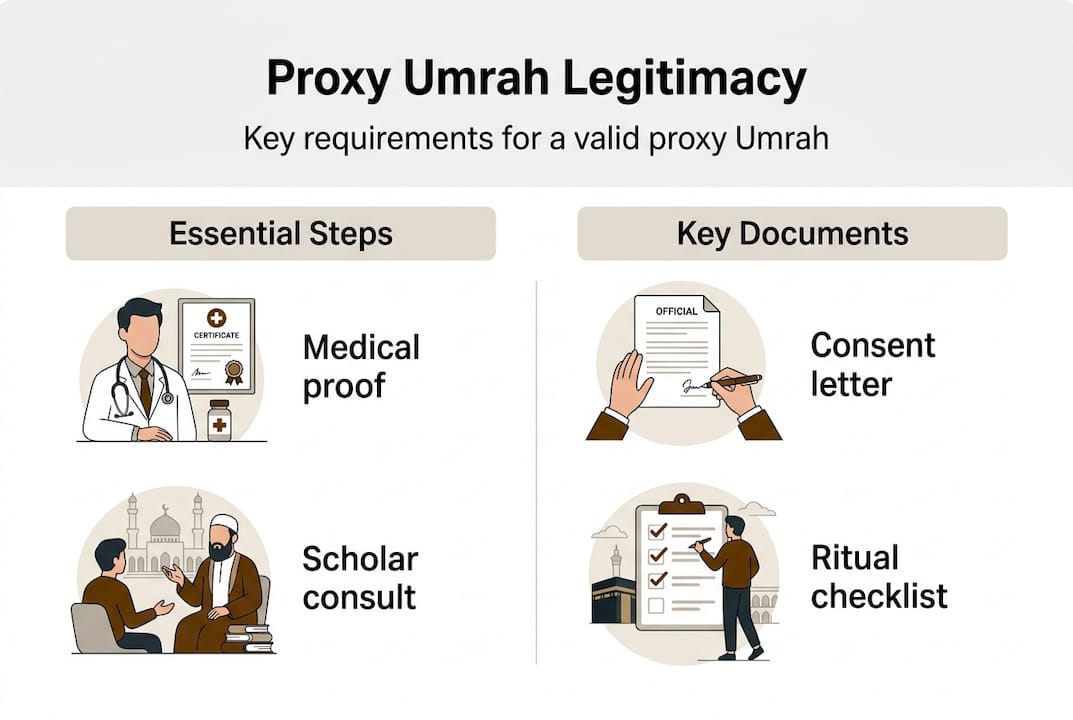
Here is a step-by-step preparation guide:
-
Obtain medical documentation. If the beneficiary is living, get a formal medical report confirming permanent incapacity from a licensed physician.
-
Secure written permission. If the person is alive and able to communicate, get their explicit verbal or written consent. If deceased, locate any wasiyyah they may have left.
-
Select a qualified wakil. The proxy must be an adult Muslim, of sound mind, and must have already completed their own Umrah or Hajj. Character and trustworthiness matter greatly.
-
Consult a local scholar or qadi. A brief consultation adds religious assurance and can clarify any doubts specific to your family’s situation.
-
Brief the proxy thoroughly. Make sure the wakil knows the beneficiary’s full name, understands the niyyah wording, and is aware of all ritual requirements.
-
Prepare a formal authorization letter. This document records the family’s permission and the proxy’s acceptance of the responsibility.
According to scholarly advice, verifying permanent incapacity through medical evidence, consulting a scholar, selecting a trustworthy wakil, and documenting permission are all essential steps for spiritual legitimacy.
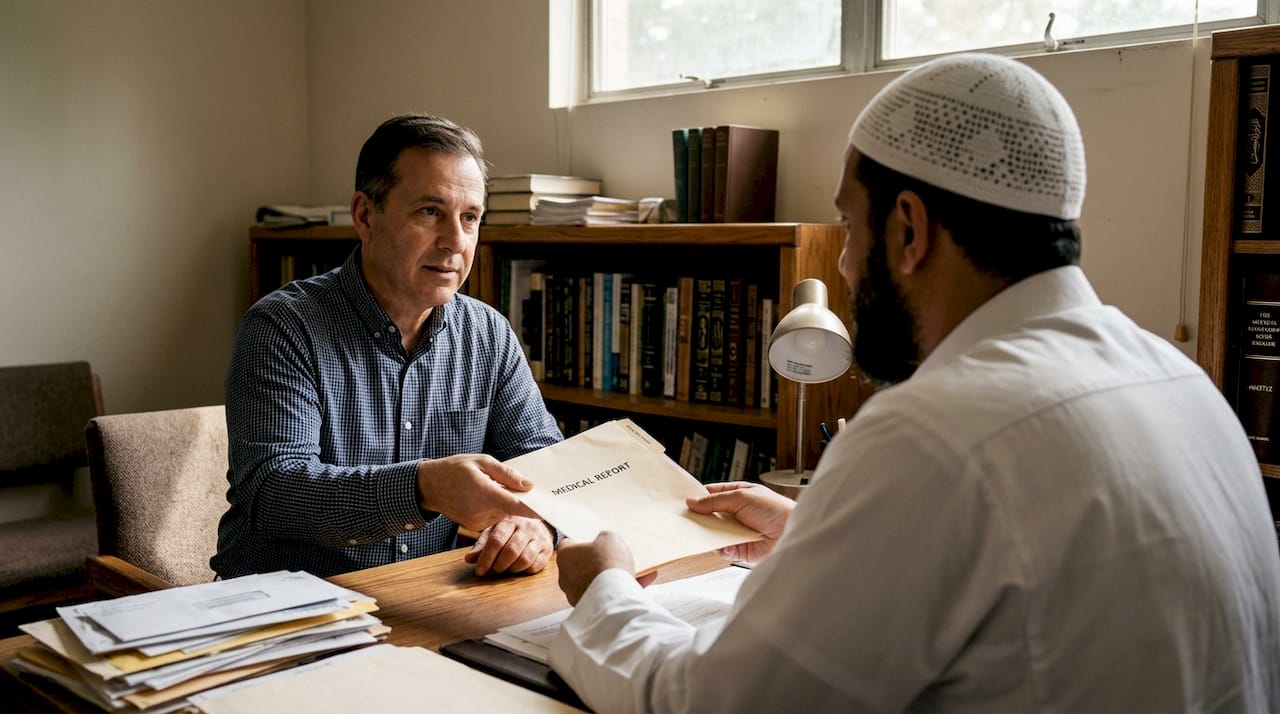
The Umrah certification for proxies process is also worth reviewing, as it outlines what documentation professional services provide after completion.
Pro Tip: Keep copies of all documents, including the medical report, the authorization letter, and any scholar’s written opinion. These records give the family lasting peace of mind and serve as a reference if questions arise later.
| Preparation step | Required? | Who is responsible? |
|---|---|---|
| Medical documentation | Yes (if living) | Family/caregiver |
| Written permission | Yes | Beneficiary or family |
| Scholar consultation | Strongly recommended | Family |
| Wakil selection | Yes | Family |
| Authorization letter | Yes | Family and wakil |
The step-by-step proxy Umrah process
After careful preparation, families and proxies must know step-by-step what is required for the Umrah itself. The rituals must be performed in the correct order and with the right intention at each stage.
Here is the complete sequence:
-
Enter Ihram. The proxy wears the Ihram garments and makes the niyyah explicitly for the beneficiary. The wording is: Labbayk Allahumma Umratan an [Name of beneficiary].
-
Recite the Talbiyah. The proxy continues reciting the Talbiyah from the Miqat until reaching the Masjid al-Haram.
-
Perform Tawaf. The proxy completes seven circuits around the Kaaba, beginning and ending at the Black Stone, while maintaining the intention for the beneficiary.
-
Pray two Rakats behind Maqam Ibrahim. This follows the completion of Tawaf.
-
Perform Sa’i. The proxy walks seven times between the hills of Safa and Marwah, again maintaining the intention for the beneficiary.
-
Complete Halq or Taqsir. The proxy shaves the head (Halq) or shortens the hair (Taqsir) to exit Ihram. This marks the completion of Umrah.
According to proxy Umrah rituals, the proxy must name the beneficiary in the niyyah, complete all rites correctly, and follow the specific Shariah wording throughout.
| Ritual step | Key requirement | Common mistake |
|---|---|---|
| Ihram and niyyah | Name the beneficiary clearly | Forgetting to name them |
| Tawaf | Seven complete circuits | Losing count |
| Sa’i | Seven passes, Safa to Marwah | Wrong starting point |
| Halq/Taqsir | Must be done inside the Haram | Doing it outside |
Pro Tip: The proxy should write the beneficiary’s name on a small card and keep it visible during the rituals. This helps maintain focus and ensures the niyyah stays consistent throughout.
Families can also learn how this act connects to broader service by reading about support Umrah humanitarian efforts and Umrah proxy faith fulfillment.
Verifying results and ensuring acceptance
Finishing the actual rituals is not the end. Families need confidence that everything was accepted and truly spiritual. Verification is a practical and spiritually meaningful step.
Here is what families should look for after the proxy Umrah is completed:
-
A detailed written report from the proxy or service describing each ritual performed, the date, and the location
-
Photographs taken at key points such as during Tawaf, Sa’i, and at the completion of Halq or Taqsir
-
Video documentation where available, providing visual confirmation of the rituals
-
A personalized certificate naming the beneficiary and confirming the completion of all rites
-
The proxy’s signed declaration confirming the niyyah was made correctly and all steps were followed
According to assurance of acceptance, sincerity and documentation together provide the strongest foundation for peace of mind.
“Ultimately, acceptance rests with Allah. But sincerity of intention, proper ritual completion, and transparent documentation are the means through which families fulfill their responsibility.”
If any doubts arise after reviewing the documentation, consult a qualified scholar. Describe what was done and ask whether the process meets the required conditions. This is not a sign of distrust. It is a sign of care.
Families should also be cautious of services that offer proxy Umrah without any documentation or transparency. A trustworthy service will always provide clear evidence that the rituals were performed. Exploring the Umrah donation rewards associated with sincere proxy worship can also deepen the family’s understanding of the spiritual value of this act.
Remember that du’a plays a central role. After the proxy Umrah is complete, families are encouraged to make sincere supplication asking Allah to accept the worship on behalf of their loved one.
Why spiritual legitimacy isn’t just a checklist: A deeper look
It is easy to treat spiritual legitimacy as a list of boxes to check. Meet the conditions, follow the steps, get the certificate, and move on. But this view misses something important.
The heart of proxy Umrah is ikhlas, sincerity. The legal requirements exist to protect the integrity of worship, not to replace its spirit. A family that rushes through the process without genuine care, or a proxy who performs the rites mechanically without feeling the weight of the trust placed on them, may satisfy the legal form but lose the deeper purpose.
We have seen families struggle with guilt and uncertainty even after a proxy Umrah is completed. Often, this is not because anything went wrong procedurally. It is because they feel disconnected from the process. Involving the community, consulting scholars, and choosing a proxy who understands the spiritual gravity of the role all help close that gap.
True legitimacy, in our view, is when the legal and the spiritual align. The Umrah social responsibility dimension of this act reminds us that proxy Umrah is also a form of service, to your family, to your community, and ultimately to Allah.
Take the next step with professional, Shariah-compliant proxy Umrah services
For families seeking peace of mind, working with a professional service that specializes in proxy Umrah removes much of the uncertainty and burden.
At badalumrah.org, every package is designed to meet Shariah requirements while providing full transparency. The Barakah Premium proxy Umrah package includes detailed documentation, photos, video coverage, and a personalized certificate naming your loved one. For families seeking a more focused option, the Umrah Badal Dua package offers sincere supplication alongside the ritual. You can review all proxy Umrah packages to find the right fit for your family’s needs. A portion of every booking also supports humanitarian efforts in Gaza, so your act of worship extends beyond your family.
Frequently asked questions
Can Umrah be performed by proxy for someone with a temporary illness?
No, proxy Umrah is only valid for those with permanent incapacity or for the deceased. Someone with a temporary illness should wait until they recover before performing Umrah themselves.
What if the beneficiary is healthy but financially unable to perform Umrah?
Proxy Umrah is not permitted in this case. Financial inability or a busy schedule does not meet the required incapacity condition; the person should save and perform Umrah when able.
Is explicit consent always required from the person on whose behalf Umrah is performed?
If the beneficiary is living, explicit permission is required. If deceased, a wasiyyah is preferred but scholars consider it not strictly obligatory in all cases.
How does the proxy perform the intention (niyyah) properly?
The proxy states the niyyah at the point of Ihram, saying Labbayk Allahumma Umratan an Name], which [explicitly names the beneficiary as required by Shariah.
How do families verify that the Umrah actually took place correctly?
Families should request a written report, photographs, video documentation, and a signed certificate from the proxy or service, and consult a scholar if any doubts remain.