

Humanitarian acts in Islam: Mercy, proxy Umrah, and duties
TL;DR:
- Proxy Umrah allows those permanently unable to perform the pilgrimage to fulfill their religious duty through others.
- It is permitted only for individuals with genuine, lasting incapacity, not temporary illness or inconvenience.
- This practice exemplifies Islamic compassion, enabling worship, honoring parents, and promoting ongoing spiritual rewards.
When a parent grows too frail to travel, or a spouse faces a chronic illness that makes the journey to Makkah impossible, families often feel a deep, quiet ache. The desire to fulfill religious duty remains strong, but the body cannot cooperate. Islam, in its mercy, does not leave families without options. Proxy Umrah (Badal Umrah) is permissible for those who are elderly or permanently ill and unable to perform it themselves. This article walks through the humanitarian values behind this practice, who qualifies, how it works step by step, and why these provisions matter so deeply for Muslim families today.
Table of Contents
- Understanding humanitarian acts in Islam
- Proxy Umrah: When, why, and for whom?
- How proxy Umrah works: Step-by-step process and requirements
- Humanitarian impact: The spirit of mercy behind the rules
- A fresh perspective on humanitarian acts and proxy Umrah
- How to fulfill proxy Umrah duties with confidence
- Frequently asked questions
Key Takeaways
| Point | Details |
|---|---|
| Proxy Umrah allows inclusion | Islamic law ensures those unable to perform Umrah themselves can still fulfill this duty through a proxy. |
| Clear eligibility rules | Only those with permanent incapacity, not temporary illness or financial hardship, qualify for proxy Umrah. |
| Mercy and kindness prioritized | Ritual mercy and birr to parents are core humanitarian values reflected in proxy Umrah. |
| Strict process and intention | Specific steps and correct intention are essential for proxy Umrah to be valid and spiritually beneficial. |
Understanding humanitarian acts in Islam
Islamic humanitarianism is not a separate category from worship. It is woven into the fabric of how Muslims are expected to live, pray, and care for one another. At its core, Islamic humanitarian teaching holds that no believer should be left behind simply because of physical limitation or circumstance.
Several foundational concepts shape this understanding:
- Rukhsah (legal concession): Islam permits easing religious obligations when hardship is genuine. Fasting may be broken during illness; prayers may be shortened during travel; and worship may be performed by proxy when a person is permanently incapable.
- Birr al-walidayn (kindness to parents): Honoring and serving parents is one of the highest acts of worship in Islam. Performing Umrah on behalf of an elderly parent is a direct expression of this value.
- Sadaqah jariyah (ongoing charity): Acts done with sincere intention that continue to benefit others, including deceased loved ones, carry ongoing spiritual reward.
These values extend naturally into ritual practice. Social responsibility in Umrah is not an afterthought; it is part of what makes the pilgrimage meaningful. Islam encourages helping the vulnerable, supporting those with disabilities, and enabling others to worship when they cannot do so alone.
“Islam values humanitarianism as an essential part of worship, with exceptions in ritual practices to ensure inclusivity.”
This is not about bending the rules. It is about recognizing that mercy is a pillar of Islamic law. Just as charity donation in Islam is considered an act of worship, so too is stepping in for a loved one who cannot perform their own religious rites. These exceptions reflect the depth of Islamic compassion, not its limits.
To see how these ideals come to life, let’s explore how Umrah can be performed for those unable to go themselves.
Proxy Umrah: When, why, and for whom?
With this understanding of humanitarian values, we turn to the practical application: Who can benefit from proxy Umrah and under which circumstances?
Not everyone who finds Umrah difficult qualifies for a proxy. Islamic scholars are clear that proxy is allowed only for the permanently incapable due to age or chronic illness, not for temporary reasons. This distinction is important and often misunderstood.
Who qualifies for proxy Umrah:
- Elderly individuals who are physically unable to travel or complete the rites
- Those with a permanent illness or disability that prevents them from performing Umrah themselves
- Deceased Muslims for whom Umrah was not completed during their lifetime
- Those with a chronic condition that has no realistic hope of recovery
Who does NOT qualify:
- Someone temporarily ill who is expected to recover
- Someone who lacks the financial means at the moment but may acquire them later
- Those who are simply unwilling or find the journey inconvenient
The Maliki school of thought is notably more restrictive on this matter, generally limiting proxy Umrah to cases of death or extreme permanent incapacity. Other major schools, including the Hanbali and Shafi’i schools, allow it more broadly for permanent incapacity. Families should consult a knowledgeable scholar if they are uncertain about their specific situation.
“The permission for proxy Umrah is rooted in mercy, not convenience. Scholars emphasize that the inability must be genuine and lasting.”
For a thorough review of the conditions, the Umrah proxy rules and the special provisions for ill persons provide detailed guidance aligned with scholarly consensus.
Pro Tip: If your loved one’s condition fluctuates between good and poor health, seek a fatwa (religious ruling) from a qualified scholar before arranging a proxy. Sincerity and accuracy of intention matter greatly in this act of worship.
How proxy Umrah works: Step-by-step process and requirements
Now that we know who qualifies, let’s break down exactly how proxy Umrah is performed, step by step.
The proxy must have performed Umrah for themselves first, must be Muslim and an adult, and must specify the intention (niyyah) clearly on behalf of the person they represent. These are non-negotiable conditions for the Umrah to be valid.
Step-by-step process:
- Confirm eligibility: Verify that the person on whose behalf Umrah is being performed genuinely qualifies as permanently incapable.
- Enter Ihram: The proxy puts on the Ihram garments at the designated miqat (boundary point) and makes the intention for the person they represent.
- State the niyyah: The proxy says, “Labbayk Allahumma bi 'umratin 'an [name]” (Here I am, O Allah, performing Umrah on behalf of [name]). This verbal intention is essential.
- Perform Tawaf: Circumambulate the Kaaba seven times counterclockwise, beginning and ending at the Black Stone.
- Perform Sa’i: Walk seven times between the hills of Safa and Marwah.
- Complete Halq or Taqsir: Shave or trim the hair to exit the state of Ihram, completing the Umrah.
One proxy can perform Umrah for only one person per trip. The rules of intention in Umrah are specific, and combining intentions for multiple people in a single Umrah is not permitted.
| Requirement | Proxy (person performing) | Principal (person on whose behalf) |
|---|---|---|
| Must be Muslim | Yes | Yes |
| Must be adult | Yes | Not required |
| Must have done own Umrah first | Yes | Not applicable |
| Must be permanently incapable | Not required | Yes |
| Verbal niyyah required | Yes | Not required |
For a complete walkthrough, the key rulings and process and the step-by-step Umrah Badal guide offer reliable reference points.
Pro Tip: Write down the full name of the person you are performing Umrah for before you travel. Having it memorized and written prevents any uncertainty at the moment of intention.
Humanitarian impact: The spirit of mercy behind the rules
But proxy Umrah is more than a set of rules. It is a living example of mercy in action.
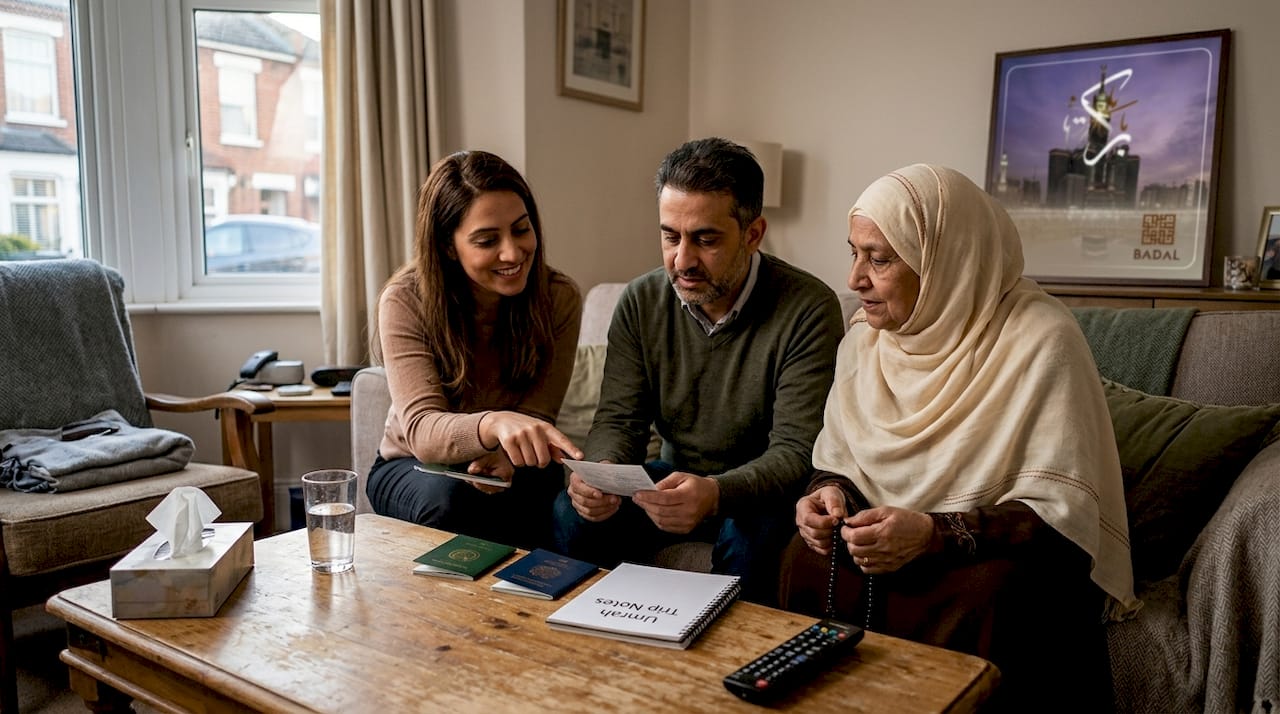
In most acts of worship, Islam requires personal performance. You cannot pray on behalf of another person, and you cannot fast for someone else in the ordinary sense. But fiqh provides rukhsah (concessions) for the elderly and ill in worship, and proxy Umrah allows participation in worship despite physical limitations. This is a remarkable exception, and it exists because Islam recognizes the pain of exclusion.
The humanitarian benefits of proxy Umrah are felt on multiple levels:
- Enabling worship: An elderly parent who spent decades hoping to perform Umrah can have that wish fulfilled through a loving family member.
- Expressing birr al-walidayn: Acting as a proxy for a parent is one of the most tangible ways to honor them, both in life and after death.
- Generating sadaqah jariyah: The reward of the Umrah flows to the person on whose behalf it is performed, creating an ongoing spiritual benefit.
- Bringing peace to families: Knowing that a loved one’s religious duty has been fulfilled brings genuine emotional relief and closure.
| Aspect | Regular Umrah | Proxy Umrah |
|---|---|---|
| Who performs the rites | The individual themselves | A qualified proxy |
| Niyyah (intention) | For oneself | For another person |
| Spiritual reward | Goes to the performer | Goes to the person represented |
| Eligibility requirement | Any capable Muslim | Permanently incapable individual |
| Family involvement | Personal journey | A shared act of care |
For families navigating this process, understanding pilgrimage for others and exploring meaningful ways to fulfill Umrah can provide both practical and spiritual guidance. Islam’s call to ongoing kindness does not end with Ramadan. It extends into every act we perform for those we love.
A fresh perspective on humanitarian acts and proxy Umrah
Stepping back, let’s consider what all of this means for us and how we live out these principles.
There is a tendency to view ritual exceptions in Islam as edge cases, footnotes in a legal manual that rarely apply to real life. But proxy Umrah challenges that view directly. These exceptions are not peripheral. They are central to what Islam teaches about community, mercy, and the nature of worship itself.
When a family arranges proxy Umrah for an ailing parent, they are not finding a workaround. They are practicing Islam at its most humane. The rules exist not to restrict but to protect the integrity of the act while extending its reach to those who need it most.
Families should also approach this with caution and sincerity. The intention must be genuine, the eligibility must be real, and the process must follow scholarly guidance. Cutting corners or acting out of social pressure rather than sincere care undermines the whole purpose.
For those seeking legitimate Umrah practices for family, the most important step is always to begin with honest reflection: Is this truly needed? Is the person genuinely unable? Answered sincerely, those questions lead to a deeply meaningful act of worship.
How to fulfill proxy Umrah duties with confidence
If you feel ready to fulfill this meaningful duty, here’s how you can take the next step.
At Badal Umrah, we understand that arranging proxy Umrah for a loved one is both a religious responsibility and an emotional journey. Our services are designed to give families confidence that every step is performed correctly, sincerely, and with full documentation.
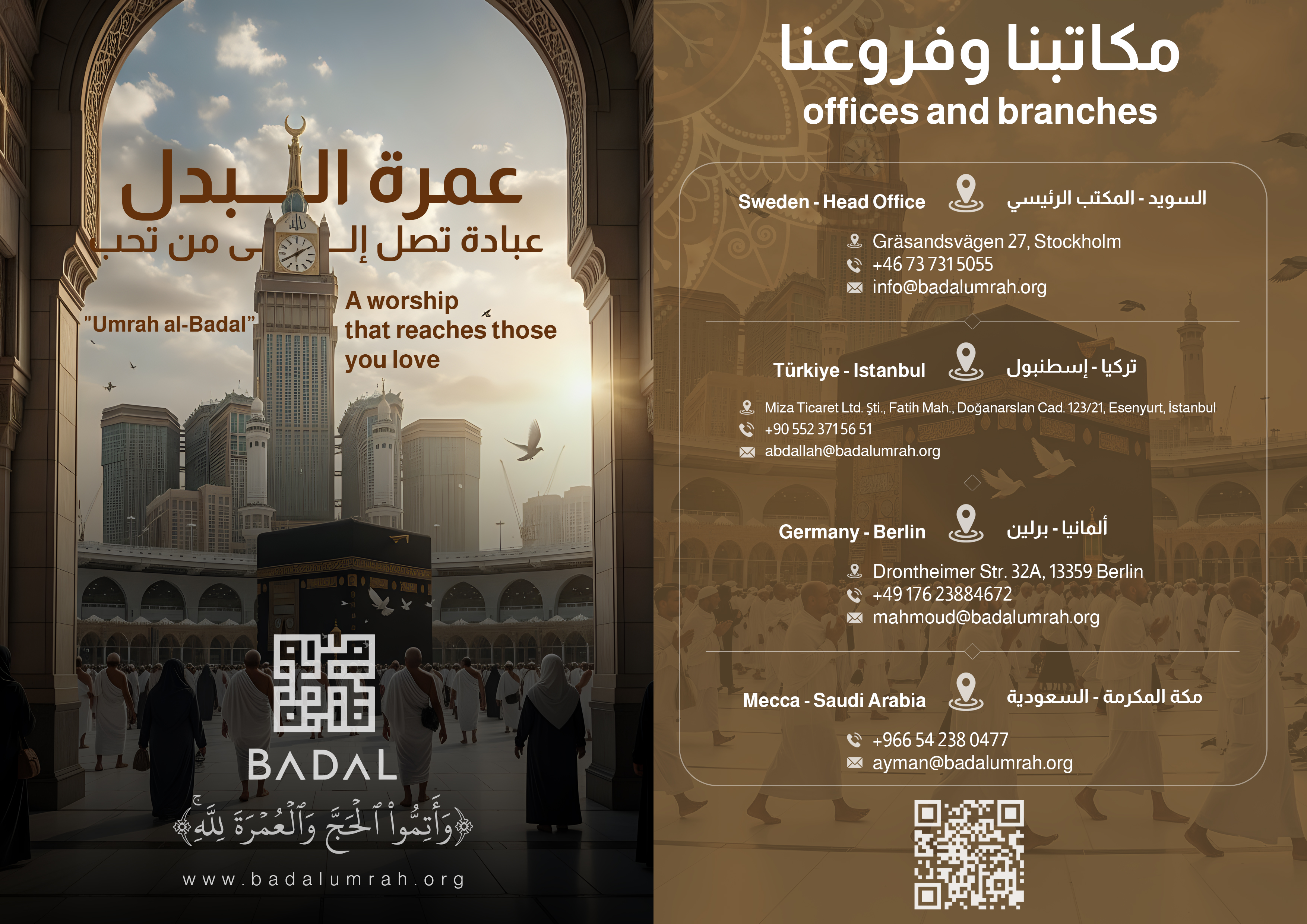
Whether you choose the Umrah Badal du’a package or the more complete Barakah premium package, you receive photo and video coverage, a personalized certificate, and the assurance that the rites were performed according to Islamic rulings. A portion of every booking also supports humanitarian efforts in Gaza, so your act of worship extends even further.
Frequently asked questions
Can proxy Umrah be performed for someone temporarily ill or financially unable?
No, proxy Umrah is only for permanent incapacity, not for temporary illness or financial hardship. If there is a realistic chance the person can perform Umrah themselves in the future, they should wait.
Does the person performing proxy Umrah need to have performed Umrah before?
Yes, it is a scholarly requirement that the proxy perform their own Umrah first before acting on behalf of another person. This condition ensures the proxy understands the rites fully.
What phrase is said for intention when performing proxy Umrah?
The proxy should say “Labbayk Allahumma bi 'umratin 'an name]” at the point of entering Ihram, [clearly stating the name of the person on whose behalf the Umrah is being performed.
Is there a spiritual benefit to families who arrange proxy Umrah?
Yes, arranging proxy Umrah is recognized as an act of birr and continuous charity, bringing ongoing spiritual reward to both the family and the person represented.