

Social responsibility in Umrah: a complete guide 2026
Many Muslims think of Umrah as a deeply personal act of worship, a private journey between the believer and Allah. But that view only tells part of the story. Proxy Umrah and charitable acts are fundamental components of social responsibility in pilgrimage, meaning the ritual carries communal weight that extends far beyond the individual pilgrim. For families with elderly parents, ill relatives, or loved ones who have passed away, this communal dimension is not a footnote. It is the entire reason they seek guidance. This guide explores proxy Umrah (Umrah Badal), charitable giving, ethical obligations, and how families can fulfill these responsibilities with confidence and sincerity.
Table of Contents
- What is social responsibility in Umrah?
- Proxy Umrah (Umrah Badal): Rules, priorities, and perspectives
- Charity and community service: Extending Umrah’s impact
- Ethical reflections: Renewing responsibility through Umrah
- A deeper look: What most people miss about Umrah’s social responsibility
- How to fulfill your family’s Umrah responsibilities
- Frequently asked questions
Key Takeaways
| Point | Details |
|---|---|
| Proxy Umrah explained | Performing Umrah for someone else is widely supported when done with religious intent and proper conditions. |
| Charity multiplies rewards | Supporting others through sadaqah or organized campaigns enhances the spiritual and communal impact of Umrah. |
| Multischool approval | All four major madhhabs allow proxy Umrah, though requirements and priorities may differ. |
| Ongoing responsibility | Umrah’s lessons extend beyond pilgrimage, urging continued compassion and advocacy for those in need. |
What is social responsibility in Umrah?
Having set the communal stage for Umrah, let’s clarify exactly what social responsibility means in this context and why it matters.
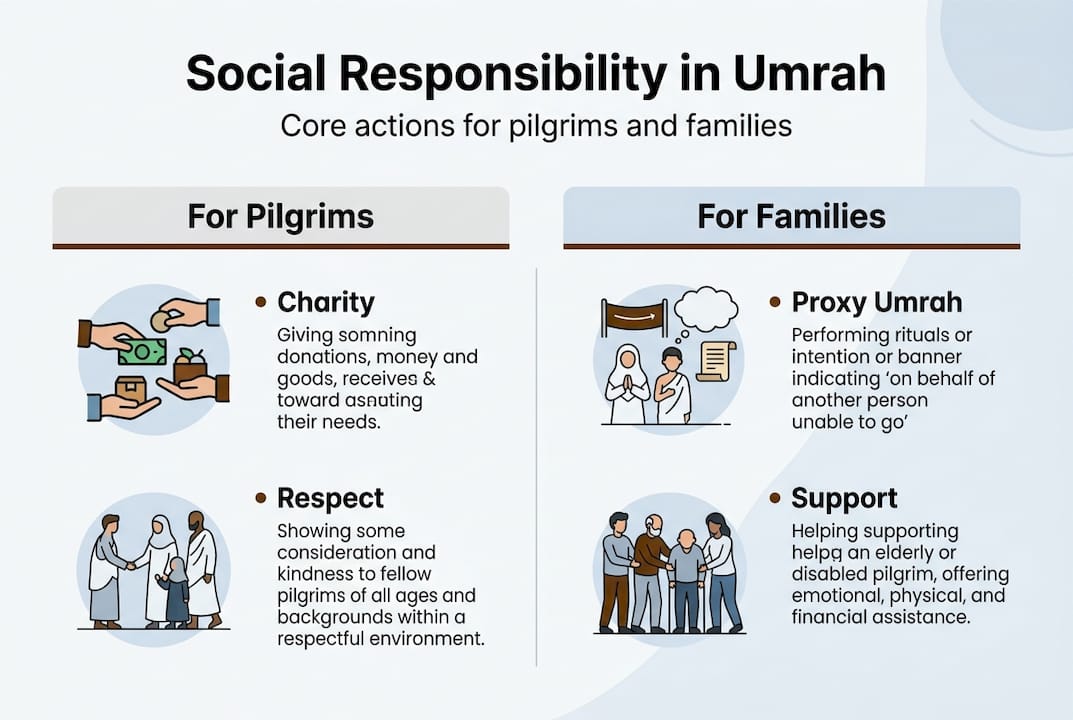
Social responsibility in Umrah refers to the religious and moral duties a Muslim holds toward others in connection with this pilgrimage. It goes beyond completing personal rites like Tawaf (circling the Kaaba), Sa’i (walking between Safa and Marwa), and Tahallul (exiting the state of Ihram). It encompasses how pilgrimage can serve the wider community, especially those who cannot serve themselves.
This responsibility takes two primary forms:
- Ritual responsibility: Performing Umrah on behalf of someone who is physically unable to do so due to illness, old age, disability, or death. This is known as Umrah Badal or proxy Umrah.
- Charitable responsibility: Using the occasion of Umrah to give financially, support humanitarian causes, and advocate for vulnerable communities around the world.
The religious basis for both is well established. Islamic scholarship recognizes that community service in Umrah is not optional generosity but a structured religious duty for those in a position to help. The Prophet Muhammad (peace be upon him) encouraged Muslims to care for the weak and the absent, and proxy pilgrimage is a direct expression of that care.
“Proxy Umrah and charitable acts are fundamental components of social responsibility in pilgrimage, reflecting the collective nature of the Muslim Ummah.”
The societal impact of this understanding is significant. When families arrange proxy Umrah for an ailing parent or a deceased grandparent, they reinforce bonds of love and duty that hold communities together. When pilgrims donate to support humanitarian efforts during their trip, they extend the spiritual energy of Makkah outward to those in need. Umrah, understood this way, becomes a vehicle for collective upliftment rather than individual achievement alone.
Proxy Umrah (Umrah Badal): Rules, priorities, and perspectives
With a clear definition in place, let’s dive into the practical and legal framework for fulfilling Umrah on behalf of others.
All four madhhabs (Hanafi, Shafi’i, Maliki, and Hanbali) permit proxy Umrah under specific conditions, though nuanced differences exist regarding priority and prerequisites.
| School of thought | Permits proxy Umrah? | Key condition |
|---|---|---|
| Hanafi | Yes | Proxy must have completed own Umrah first |
| Maliki | Yes, with restrictions | Preferred for the deceased; living cases need strong justification |
| Shafi’i | Yes | Proxy must be free, Muslim, and have completed own Umrah |
| Hanbali | Yes | Permissible for both living and deceased; proxy must have own Umrah done |
For families looking to arrange proxy Umrah, here is a practical step-by-step overview:
- Confirm eligibility of the beneficiary. The person on whose behalf Umrah is performed must be unable to travel due to a permanent or serious condition, or must be deceased.
- Select a qualified proxy. The person performing the Umrah must be a practicing Muslim who has already completed their own Umrah or Hajj.
- Set the intention (Niyyah) correctly. At the point of entering Ihram, the proxy must clearly intend the Umrah for the named beneficiary.
- Complete all rites fully. Tawaf, Sa’i, and Tahallul must all be performed as if for oneself, with the beneficiary’s name held in intention throughout.
- Document the act. Obtain written confirmation, photos, or video evidence where possible, especially if the family is arranging through a service provider.
Pro Tip: Before booking any proxy Umrah service, verify which school of thought your family follows and confirm the provider’s approach aligns with those rulings. This protects both the spiritual validity and your peace of mind. You can explore the permissibility of proxy Umrah and review legitimate practices for family Umrah to make an informed choice.
For those specifically arranging Umrah for the deceased, the process follows the same steps, but the intent at Ihram must name the deceased clearly.
Charity and community service: Extending Umrah’s impact
Besides ritual obligations, social responsibility in Umrah shines through acts of giving and communal support. Let’s see this in action.
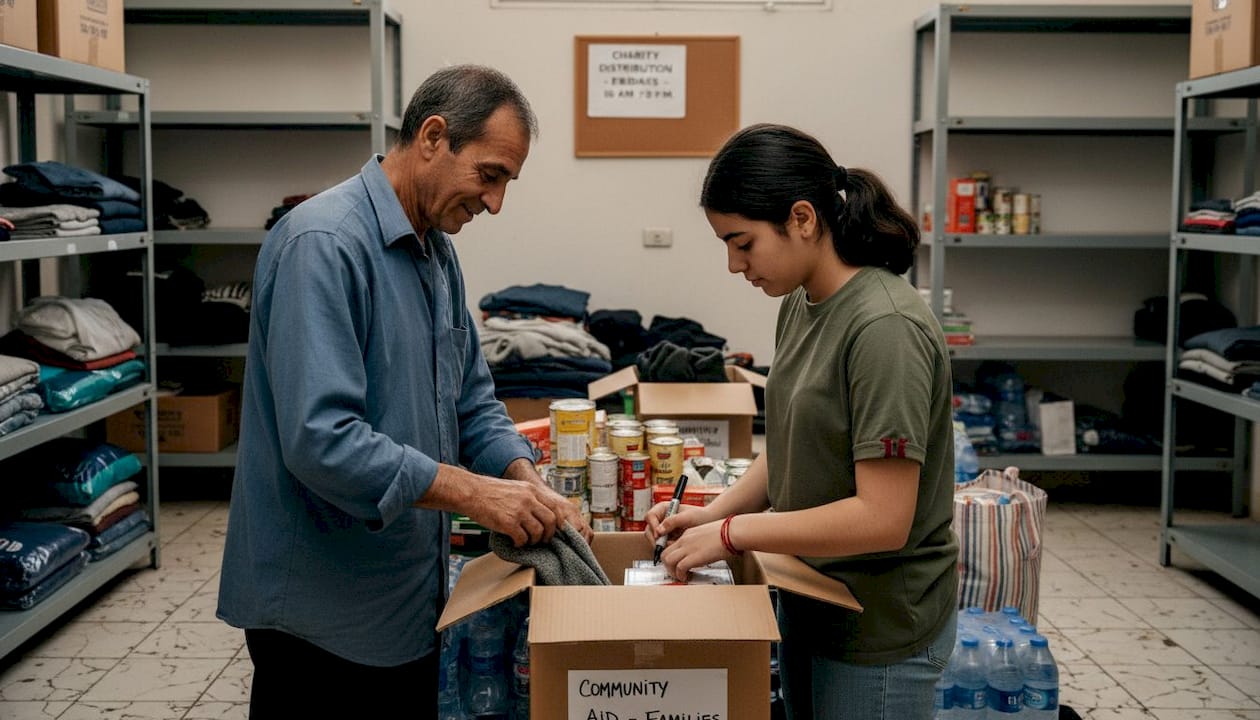
Financial charity (sadaqah), logistical support, and emotional solidarity are all recognized expressions of Islamic social responsibility during pilgrimage. Many pilgrims choose to give at the moment they feel closest to Allah, making Umrah a natural catalyst for generosity.
The scale of organized charity tied to Umrah has grown considerably. Saudi-backed charity campaigns and platforms like Ehsan supported over 3,000 Umrah trips in 2025 during Ramadan alone, demonstrating how institutional giving can amplify individual acts of worship.
| Initiative | Type of support | Estimated reach (2025) |
|---|---|---|
| Ehsan Platform | Funded Umrah trips for deserving individuals | 3,000+ trips |
| Al-Rajhi Foundation | Financial aid and travel logistics | Thousands of beneficiaries |
| Independent family donations | Sadaqah given during Umrah trips | Varies widely |
The types of community-driven efforts tied to Umrah include:
- Sponsored pilgrimages: Wealthy Muslims funding Umrah for those who cannot afford it.
- Charitable donations at holy sites: Giving to verified organizations while in Makkah or Madinah.
- Advocacy and prayer: Using the platform of pilgrimage to raise awareness and pray for crisis-affected communities.
- Post-trip giving: Committing a portion of Umrah-related savings to humanitarian causes after returning home.
The spiritual rewards of Umrah donation are well documented in Islamic scholarship. Giving during a state of spiritual heightening is considered especially meritorious. For families exploring how to structure this, a guide to Umrah on behalf of others can help clarify how charitable acts and proxy rites can work together in a single trip.
The impact flows both ways. Recipients gain access to worship or material relief they could not otherwise reach. Donors experience a deepening of their own faith and a sense of shared purpose with the global Muslim community.
Ethical reflections: Renewing responsibility through Umrah
Charitable giving may be the most visible expression, but Umrah also renews our broader ethical obligations.
In an era of global humanitarian crises, the ethical dimension of Umrah carries particular weight. Muslims performing pilgrimage are not isolated from world events. They bring with them the prayers, hopes, and grief of communities facing suffering, including those in Gaza, Sudan, and beyond.
“Umrah renews a sense of moral responsibility towards the wider Muslim community, especially during times of global crisis.”
This is not abstract theology. It is a practical call to action. When a pilgrim stands before the Kaaba, they stand as part of a global Ummah (community). That position carries responsibility. Praying for the oppressed, donating to verified relief organizations, and returning home with a renewed commitment to advocacy are all legitimate expressions of Umrah’s ethical legacy.
The ongoing crisis in Gaza, for example, has prompted many Umrah service providers and individual pilgrims to direct a portion of their spending toward Palestinian relief. This is not a political act. It is a humanitarian one, grounded in the Islamic obligation to care for fellow Muslims in need.
Pro Tip: Before your Umrah trip, research verified humanitarian organizations that accept donations in Makkah or online. Committing to give a fixed amount before you travel helps ensure your charitable intention is fulfilled, not just felt. Explore how to support humanitarian efforts through your Umrah journey for practical guidance.
Ethical responsibility also means being honest about your intentions, choosing trustworthy service providers, and ensuring that proxy Umrah arrangements are made with sincerity rather than formality.
A deeper look: What most people miss about Umrah’s social responsibility
Most guides on Umrah social responsibility focus on the technical side: which school permits proxy Umrah, how to set the intention, and which charities to support. That information matters. But it misses something important.
True social responsibility in Umrah is not a checklist. It is a posture. It is the decision to see your pilgrimage as part of a larger story, one that includes your elderly mother who cannot travel, your neighbor who cannot afford the journey, and your brothers and sisters in conflict zones who may never see Makkah in their lifetime.
Many families complete proxy Umrah and feel their obligation is done. But the spirit of Umrah Badal points toward something ongoing. The care you show in arranging a proxy, the sincerity of the intention, the follow-through with charity, these are habits of the heart that should outlast the trip itself.
We also believe that special provisions for ill persons within Islamic law are not exceptions to the rule. They are evidence that Islam always intended pilgrimage to be inclusive and communal. Social responsibility in Umrah is not an add-on. It is built into the structure of the ritual itself.
The families who understand this tend to approach proxy Umrah with more care, more documentation, and more lasting impact. That is the standard worth aiming for.
How to fulfill your family’s Umrah responsibilities
Ready to put these principles into action? Here are safe, supportive steps to get started.
If you have a loved one who is unable to travel due to illness, old age, or death, arranging a proxy Umrah is one of the most meaningful acts of care you can offer. At badalumrah.org, we specialize in facilitating Shariah-compliant proxy Umrah with full documentation, video coverage, and personalized certificates so your family has a lasting record of this sacred act.

Our Umrah Badal package is designed to make the process straightforward, trustworthy, and spiritually meaningful. We also donate 10% of every booking to humanitarian efforts in Gaza, so your act of worship extends its impact even further. Browse our full range of Umrah packages to find the option that fits your family’s needs and intentions.
Frequently asked questions
Can I perform Umrah on behalf of a living or deceased relative?
Yes, proxy Umrah is permitted for both living and deceased loved ones. All four madhhabs allow it under specified circumstances, though conditions vary by school of thought.
What are the main conditions for performing Umrah Badal?
The proxy must have already completed their own Umrah and must intend the act for the named beneficiary from the moment of entering Ihram. Some madhhabs require the performer to finish their own Umrah first before performing it for another.
Does charitable giving during Umrah fulfill social responsibility?
Yes, sadaqah and participation in organized charity campaigns are recognized expressions of social responsibility in Umrah. Charity initiatives like Ehsan and Al-Rajhi Foundation are considered integral to modern Umrah social responsibility.
What is the difference between Umrah and Hajj in terms of social responsibility?
Both pilgrimages carry social obligations, but Umrah’s flexibility in timing and accessibility means families can arrange it for others more readily. Umrah access and charitable support have expanded significantly in recent years, making it easier to integrate giving and proxy rites into a single journey.
Recommended
- Guide to performing Umrah on behalf of others in 2026 – Badal Umrah
- Complete guide to Umrah prayers for others in 2026 – Badal Umrah
- Support humanitarian efforts through Umrah: A guide – Badal Umrah
- What is a comprehensive Umrah package? Complete 2026 guide – Badal Umrah
- What Is Responsible Travel and Why It Matters