

Why intention matters in Umrah for others: 5 key rules
Many believe that performing Umrah rituals on behalf of a loved one is simply about going through the physical motions. However, without proper intention, these sacred acts lack spiritual validity. Intention, or niyyah, is what transforms ritual into worship and ensures acceptance. For families seeking to fulfill this noble responsibility for elderly or ill relatives, understanding how to correctly set and maintain intention is essential. This guide clarifies common confusions, explains the Islamic principles behind intention in Badal Umrah, and provides practical steps to ensure your spiritual efforts truly benefit those you represent.
Table of Contents
- Key takeaways
- Why intention is fundamental in performing Umrah for others
- Distinguishing Umrah for yourself versus Umrah on behalf of others
- Common mistakes and misconceptions about intention in Umrah for others
- Practical steps to set and maintain correct intention during Umrah on behalf of loved ones
- Explore premium Umrah services that honor your intentions
- FAQ
Key Takeaways
| Point | Details |
|---|---|
| Intention matters | Niyyah must explicitly represent the specific person for whom the Umrah is being performed to ensure the act is spiritually valid. |
| Declare beneficiary | Before entering ihram, clearly name the person and state your intention to perform Umrah on their behalf. |
| Know the rules | Understanding the rules and correct intention helps ensure spiritual benefits and acceptance. |
| Mistakes invalidate | Mistakes in intention or process can invalidate the Umrah performed for others. |
| Guided support | Guided services and resources help you fulfill intention requirements effectively. |
Why intention is fundamental in performing Umrah for others
Intention, known as niyyah in Arabic, forms the foundation of all Islamic worship. The Prophet Muhammad taught that actions are judged by intentions, making niyyah the spiritual compass that directs every ritual act. When you perform Umrah for yourself, your intention focuses your own heart toward Allah. But when performing Umrah on behalf of someone else, your intention must explicitly represent that specific person.
This distinction matters profoundly. Islamic rulings on Badal Umrah establish that intention is a precondition for acts of worship, including Umrah performed for others. Without correct niyyah, the physical rituals become meaningless movements. You might circle the Kaaba and perform Sa’i, but spiritually, nothing transfers to your loved one.
Many families misunderstand this requirement. They assume hiring someone to perform Umrah automatically fulfills the obligation. However, the performer must consciously set intention for the specific individual at the start of each ritual. This mental and verbal declaration connects the physical acts to the spiritual purpose.
Common misunderstandings include:
- Believing physical performance alone suffices
- Assuming intention can be retroactive or implied
- Thinking one general intention covers multiple people
- Neglecting to verbalize or mentally affirm the specific person’s name
Pro Tip: Before entering ihram, verbally state the person’s name and your intention to perform Umrah on their behalf. This simple practice reinforces spiritual focus and ensures clarity from the start.
As one scholar noted:
The heart’s direction determines whether worship reaches its destination. Without naming the person in your niyyah, the spiritual reward has no recipient.
This principle protects both the performer and the beneficiary, ensuring that this sacred act fulfills its intended purpose.
Distinguishing Umrah for yourself versus Umrah on behalf of others
Performing Umrah personally differs fundamentally from performing it as a representative. The difference between Umrah Badal and normal Umrah centers on intention, permission, and procedural requirements. Understanding these distinctions helps you fulfill this responsibility correctly.

When performing Umrah for yourself, your intention focuses on your own spiritual purification and worship. You need no one’s permission, and the reward belongs entirely to you. However, when performing Umrah on behalf of someone else, specific Islamic jurisprudence governs the process.
| Aspect | Umrah for Yourself | Umrah for Others |
|---|---|---|
| Intention statement | “I intend Umrah for myself” | “I intend Umrah for [person’s name]” |
| Permission required | No | Yes, from living persons or heirs |
| Prior Umrah completion | Not required | Performer must have completed their own Umrah first |
| Spiritual reward | Goes to performer | Goes to named beneficiary |
| Documentation needs | Minimal | Often requires certificates and proof |
The key rulings on Umrah for others establish clear conditions. The person you represent must be unable to perform Umrah themselves due to permanent disability, chronic illness, advanced age, or death. You cannot perform Umrah for someone capable of traveling.
Critical requirements include:
- The performer must have already completed their own obligatory Umrah
- Explicit permission from the beneficiary or their family
- Clear verbal or mental declaration naming the specific person
- Adherence to all ritual requirements as if performing for yourself
- Understanding that mixing intentions for multiple people invalidates the act
The intention statement itself changes fundamentally. For personal Umrah, you might say, “O Allah, I intend to perform Umrah seeking Your pleasure.” For Umrah on behalf of your mother, you must say, “O Allah, I intend to perform Umrah on behalf of my mother, [her name], seeking Your pleasure and asking You to grant her the reward.”
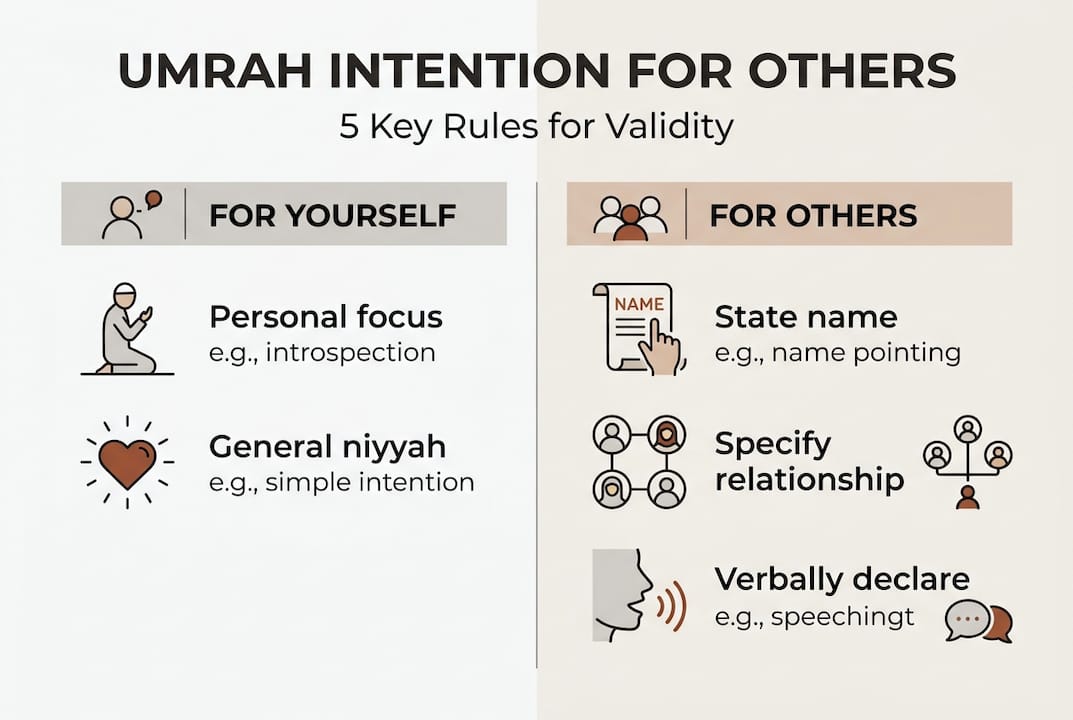
This explicit naming ensures spiritual clarity. The angels recording deeds need to know exactly who receives the reward. Vague intentions like “for my family” or “for whoever needs it” lack the specificity Islam requires for proxy worship.
Another key difference involves the emotional and spiritual preparation. When performing for yourself, you focus on your own repentance and connection with Allah. When representing someone else, you carry their hopes, their inability, and their trust. This responsibility demands even greater attention to correct procedure and sincere intention.
Common mistakes and misconceptions about intention in Umrah for others
Even well-meaning families make critical errors regarding intention when arranging Umrah for loved ones. These mistakes can invalidate the entire spiritual act, wasting time, money, and the opportunity to fulfill this sacred duty. Understanding these pitfalls protects your efforts and ensures spiritual benefit reaches your family member.
The five most common mistakes include:
-
Forgetting to set intention before entering ihram. Some performers assume they can make intention during the rituals or even afterward. However, niyyah must be established before donning ihram. Once you’ve entered the sacred state without proper intention, the Umrah lacks spiritual foundation.
-
Using vague or general intention statements. Saying “I intend Umrah for my family” or “for the deceased” without naming the specific person creates ambiguity. Islamic law requires explicit identification. The spiritual reward must have a clear recipient.
-
Attempting to perform Umrah for multiple people simultaneously. Each Umrah journey can only represent one person. You cannot combine intentions or split the spiritual reward. This fundamental rule surprises many families hoping to maximize a single trip.
-
Performing Umrah for someone capable of traveling. The complete guide to Umrah prayers for others explains that improper knowledge can disqualify the act. Badal Umrah only applies when the beneficiary genuinely cannot perform the pilgrimage themselves due to permanent incapacity.
-
Failing to obtain proper permission from living beneficiaries. If you’re performing Umrah for someone still alive, you must have their explicit consent. Assuming they’d want it or surprising them afterward doesn’t fulfill the requirement.
These mistakes stem from several misconceptions. Many believe that hiring a reputable service automatically guarantees valid Umrah. While professional services help ensure proper procedures, the performer’s intention remains the critical factor. No service can substitute for correct niyyah.
Another common misunderstanding involves thinking intention is purely internal. While the heart’s sincerity matters most, verbalizing the intention reinforces clarity and helps prevent errors. Speaking the words “I intend Umrah for my mother, Fatima” creates both mental and verbal commitment.
Pro Tip: Before your representative departs for Umrah, have them practice stating the intention out loud with you. This simple rehearsal catches potential errors and builds confidence in the spiritual process.
Some families also mistakenly believe they can “transfer” Umrah performed for themselves to someone else after completion. Islamic rulings clearly state this isn’t permissible. The intention must be set correctly from the beginning. There’s no spiritual mechanism for retroactive reassignment.
The consequences of these mistakes range from complete invalidation to spiritual uncertainty. In the best case, you’ve wasted resources on an act that brought no benefit. In the worst case, your loved one remains without the spiritual fulfillment you intended to provide, and you may need to arrange another Umrah with correct procedures.
Practical steps to set and maintain correct intention during Umrah on behalf of loved ones
Setting proper intention requires both knowledge and spiritual preparation. These practical steps ensure you establish and maintain correct niyyah throughout the Umrah journey when performing it for someone else.
Before departure, clarify exactly who will receive the spiritual benefit. Write down their full name and your relationship to them. If performing for a deceased relative, verify their name with family members to avoid errors. This simple preparation prevents confusion when stating intention at critical moments.
When approaching the miqat boundary where ihram begins, prepare your heart and mind. Take a moment to visualize the person you’re representing. Remember their face, their voice, their inability to make this journey themselves. This emotional connection strengthens your spiritual focus.
Verbalizing the intention follows a clear pattern:
- State the person’s full name clearly
- Declare your intention to perform Umrah on their behalf
- Ask Allah to accept the worship and grant them full reward
- Repeat this declaration at each major ritual: tawaf, Sa’i, and hair cutting
Using guided Umrah services provides expert support to fulfill intention requirements effectively with spiritual integrity. Professional guides remind performers about intention at each stage and help maintain focus throughout the journey.
| Ritual Stage | Timing of Intention | Example Phrasing |
|---|---|---|
| Entering Ihram | At miqat boundary | “O Allah, I intend Umrah for my father, Ahmad ibn Abdullah” |
| Beginning Tawaf | Before first circuit | “I perform this tawaf for my mother, seeking Your acceptance” |
| Starting Sa’i | Before first lap | “I perform Sa’i on behalf of [name], asking Your mercy” |
| Hair cutting | Before trimming | “I complete this Umrah for [name], grant them full reward” |
Maintaining spiritual focus throughout the rituals requires conscious effort. Between each stage, remind yourself why you’re there. When fatigue or distraction threatens your concentration, pause and mentally reaffirm your intention. This isn’t merely mechanical repetition but genuine spiritual renewal.
Practical tips for sustained focus:
- Carry a small card with the person’s name and your intention statement
- Set phone reminders before each major ritual to review your intention
- Make du’a specifically for the beneficiary during tawaf and Sa’i
- Avoid conversations that might distract from your spiritual purpose
- Keep the person’s photo as a visual reminder of your sacred responsibility
Pro Tip: Practice setting wellness intentions before departure to strengthen your general intention-setting skills. This mental training helps maintain focus during the actual pilgrimage.
For families coordinating Umrah for loved ones from abroad, Umrah tips for caregivers and essential Umrah preparation tips provide valuable guidance. Proper preparation reduces anxiety and allows the performer to concentrate on spiritual duties rather than logistical concerns.
Community support enhances intention fulfillment. When choosing a guided Umrah service, look for providers who understand the unique requirements of Badal Umrah. They should offer pre-departure briefings about intention, on-ground reminders during rituals, and post-completion documentation confirming proper procedures.
Some services provide video documentation showing the performer stating intention before each ritual. This transparency gives families confidence that their loved one’s Umrah was performed correctly. The visual proof also offers comfort to the beneficiary or their family, knowing the spiritual duty was fulfilled with proper attention to detail.
After completing Umrah, make final du’a asking Allah to accept the worship on behalf of the named person. This closing prayer bookends the journey with clear intention, reinforcing the spiritual purpose from start to finish.
Explore premium Umrah services that honor your intentions
Fulfilling your spiritual responsibility for a loved one requires more than good intentions. It demands reliable service, proper documentation, and expert guidance throughout the journey. Our premium Umrah Badal packages ensure your intentions translate into accepted worship.

The Umrah Badal Barakah Premium Package provides comprehensive support including personalized certificates, photo documentation, and video coverage of key rituals. You receive proof that intention was properly set and maintained throughout the pilgrimage. The Umrah Badal Du’a Package adds special supplications for your loved one at sacred sites.
Our services ensure:
- Verified performers who have completed their own Umrah
- Clear intention statements at each ritual stage
- Photo and video documentation for family peace of mind
- Personalized certificates confirming completion
- Live updates during the pilgrimage
- Expert guidance on Islamic requirements
Browse our complete range of Umrah packages to find the service that matches your family’s needs and budget. Each package prioritizes spiritual integrity while providing the transparency modern families deserve. When you entrust us with this sacred duty, you’re choosing a service that understands intention isn’t just a formality but the heart of valid worship.
FAQ
What is the role of niyyah in Umrah on behalf of others?
Niyyah is the mental and verbal declaration of performing Umrah for a specific person, and it’s essential for acceptance. Without correct intention clearly naming the beneficiary, the Umrah performed on their behalf is spiritually invalid. The intention must be set before entering ihram and renewed at each major ritual. Learn more about Islamic rulings on Badal Umrah to understand the complete requirements.
Can I perform Umrah for someone who is unable due to health issues?
Yes, Islam permits Umrah to be performed by proxy when someone cannot travel due to permanent disability, chronic illness, or advanced age. The performer must have proper intention and follow all Islamic requirements for valid Badal Umrah. Careful preparation ensures the spiritual benefit reaches the person you’re representing. Review key rulings on Umrah for others to confirm your situation qualifies.
What are common mistakes to avoid regarding intention in Umrah?
Avoid vague intentions that don’t name the specific person, forgetting to set niyyah before ihram, or attempting to perform Umrah for multiple people simultaneously. Each of these errors can invalidate the entire spiritual act. Clear, focused intention stated at each ritual stage is necessary for valid Umrah on behalf of others. The complete guide to Umrah prayers for others details these mistakes and how to prevent them.
How can guided Umrah services help with intention fulfillment?
Professional services provide expert support ensuring niyyah is correctly stated and rituals properly performed according to Islamic law. They offer reminders at each stage, documentation proving proper procedures, and peace of mind for families. Services typically include photos, videos, and certificates confirming your loved one’s Umrah was completed with spiritual integrity. Explore options for guided Umrah services that prioritize correct intention and transparent documentation.
Recommended
- Is Umrah for Others Allowed? Key Rulings and Process – Badal Umrah
- Complete guide to Umrah prayers for others in 2026 – Badal Umrah
- 7 Essential Umrah Preparation Tips for Families Worldwide – Badal Umrah
- Umrah Badal in Ramadan in Sweden | Rules, Rewards & Islamic Guidance – Badal Umrah
- What Is Ramadan in Morocco: Local Customs and Insights