

5 meaningful ways to fulfill Umrah duties for loved ones
TL;DR:
- Umrah Badal allows proxy performance on behalf of those unable to travel due to permanent illness or death.
- The proxy must have completed their own obligatory Umrah or Hajj before performing for others.
- Rewards from Umrah Badal benefit the intended person, emphasizing sincerity, proper process, and Islamic eligibility.
When a parent grows too frail to travel, or a sibling faces a permanent illness that prevents them from performing Umrah, the weight of that unfulfilled obligation can rest heavily on the whole family. Islam, in its wisdom, does not leave believers without a path forward. The practice of Umrah Badal, meaning proxy Umrah performed on behalf of another, offers a Shariah-supported solution that has been recognized by scholars across major Islamic legal schools for centuries. This article walks you through the Islamic foundations, the correct steps, practical options, and the spiritual rewards involved, so you can act with confidence and sincerity.
Table of Contents
- Understanding Umrah Badal: The foundation of proxy pilgrimage
- Step-by-step guide: How to perform Umrah Badal for someone else
- Comparing options: Physical, proxy, and service-based Umrah fulfillment
- Maximizing spiritual and community impact
- A fresh perspective: Why intention and due diligence matter most
- Ready to fulfill religious duties for your loved ones?
- Frequently asked questions
Key Takeaways
| Point | Details |
|---|---|
| Proxy Umrah is legitimate | Islam allows Umrah Badal for those who are deceased or permanently unable due to illness or age. |
| Follow correct process | You must perform your own Umrah first and use clear intentions for each beneficiary. |
| Choose representatives wisely | Only qualified Muslims or trusted organizations can serve as valid proxies if they meet Shariah requirements. |
| Maximize spiritual impact | Both the proxy and the beneficiary gain spiritual rewards and strengthen community ties. |
| Documentation adds value | Proof of performance and transparent practices help ensure Shariah compliance when using services. |
Understanding Umrah Badal: The foundation of proxy pilgrimage
With the challenge clear, let’s first clarify the Islamic foundations for proxy performance of Umrah.
Umrah Badal refers to the performance of Umrah by one person on behalf of another who is unable to do so themselves. It is not a modern invention. Scholars have discussed and validated this practice for generations, drawing on authentic Hadith and the principles of Islamic jurisprudence.
“Umrah Badal is permissible in Islam for those permanently unable to perform it, or for the deceased, based on strong scholarly consensus across major legal schools.”
The foundational Hadith comes from Sahih Bukhari (1852), where the Prophet Muhammad (peace be upon him) permitted a companion to perform Hajj on behalf of his deceased or incapacitated mother. Scholars extended this ruling to Umrah through Qiyas, meaning analogical reasoning, as confirmed by Islamic scholars who have examined the evidence closely.
Not everyone qualifies to receive Umrah Badal, however. The rules are specific and important to understand before proceeding. You can read the key rulings on Umrah proxy for a detailed breakdown.
Who qualifies as a beneficiary?
- A deceased Muslim who did not perform Umrah during their lifetime
- A person with a permanent physical disability or chronic illness that prevents travel
- An elderly person who is too frail to make the journey
- Someone in a persistent medical condition with no realistic hope of recovery
Who does NOT qualify:
- A healthy adult who simply hasn’t gotten around to performing Umrah
- Someone with a temporary illness who may recover
- A person facing financial difficulty (this alone does not permit proxy Umrah)
- Non-Muslims
For a scholarly discussion of Umrah Badal and the evidence behind these rulings, it is worth consulting reputable Islamic sources before proceeding. Understanding eligibility is the first step toward fulfilling this duty correctly.
Step-by-step guide: How to perform Umrah Badal for someone else
Once you understand what Umrah Badal is, the logical next question is how to do it correctly.
The process follows a clear sequence that scholars have outlined based on established Islamic rulings. It is not complicated, but it does require attention to detail, especially regarding intention (niyyah, meaning the internal resolve to perform an act of worship).
Who can serve as a proxy?
The proxy must be an adult Muslim of sound mind who has already completed their own obligatory Umrah or Hajj. This is a firm condition. You cannot perform Umrah Badal for another before fulfilling your own religious obligation first.
Step-by-step process:
- Perform your own Umrah first. Enter Ihram (the sacred state of ritual purity and dress) from the designated Miqat (the boundary point for entering the sacred state), make your niyyah for yourself, and complete the full Umrah: Tawaf (circumambulation of the Kaaba seven times), Sa’i (walking seven times between Safa and Marwa), and Tahallul (exiting the sacred state by cutting hair).
- Return to Tan’eem. Tan’eem is the nearest point outside the Haram boundary in Makkah, where you can re-enter Ihram. It is where the Masjid Aisha is located.
- Enter Ihram again with the new niyyah. State clearly in your intention that this Umrah is being performed on behalf of the named individual, whether living or deceased.
- Repeat the full Umrah. Complete Tawaf, Sa’i, and Tahallul again, this time on behalf of the beneficiary.
- Make dua. Supplicate for the beneficiary throughout the rituals, asking Allah to accept the Umrah on their behalf.
For a full Umrah process for proxies, including detailed guidance for 2026, consult the linked resource.
Important note: If the beneficiary is alive and mentally capable of giving consent, their permission is required before you proceed.
Pro Tip: If you intend to perform Umrah Badal for more than one person, you must return to Tan’eem and repeat the entire Umrah process separately for each individual. Keep written documentation of each intention, including the name of the beneficiary and their relationship to you, to maintain clarity and Shariah compliance.
Comparing options: Physical, proxy, and service-based Umrah fulfillment
With the method clarified, let’s weigh the practical options you have for fulfilling Umrah on behalf of a loved one.
Not everyone can travel to Makkah personally. This is where understanding your options becomes essential.
| Option | Who performs it | Shariah validity | Documentation |
|—|—|—|—|
| Family member travels personally | You or a relative | Valid if conditions met | Self-managed |
| Trusted friend or scholar | A qualified Muslim | Valid if conditions met | Informal or formal |
| Certified Umrah Badal service | Qualified representative | Valid if Shariah-compliant | Photos, video, certificate |
Each option carries its own considerations. A family member performing the proxy Umrah personally brings emotional closeness to the act. A trusted friend or local scholar may be more accessible. A certified service can provide structured documentation and peace of mind, especially for families who cannot travel.
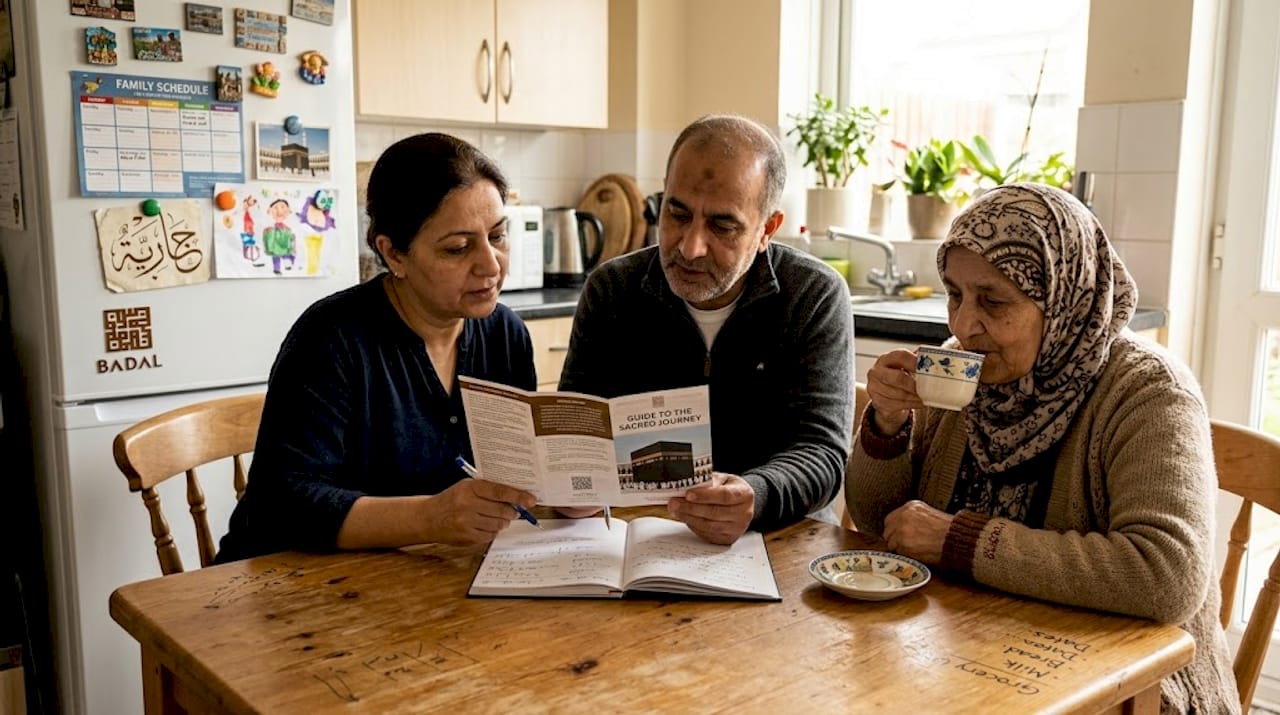
When evaluating any service, Islamic guidelines for Umrah Badal make clear that Shariah compliance and proof of performance are non-negotiable. Some services exist to perform Umrah Badal for others, but you must verify they are compliant and provide credible evidence.
What to look for in a legitimate Umrah Badal service:
- Clear documentation of the proxy’s qualifications (adult Muslim, own Umrah completed)
- Video and photo evidence of the rituals being performed
- A personalized certificate naming the beneficiary
- Transparent process with named representatives
- Acknowledgment of Islamic rulings and eligibility requirements
- Responsive communication before, during, and after the service
For those whose loved ones face illness or physical limitations, the Umrah provisions for illness offer additional context. You can also learn more about how proxy faith fulfillment works within a community framework.
Maximizing spiritual and community impact
Having compared the practical options, it’s essential to understand the lasting impact your chosen method can have.
Umrah Badal is not simply a logistical transaction. It carries profound spiritual weight for both the proxy and the beneficiary. Understanding how rewards are distributed helps frame the act with the seriousness it deserves.
According to Islamic teaching, the full Umrah reward goes to the beneficiary, whether living or deceased. The proxy, in turn, earns rewards for performing an act of worship, for the charity involved in helping another, and for the additional good deeds completed during the journey.
| Recipient | Spiritual reward received |
|—|—|
| Beneficiary | Full reward of Umrah as if performed personally |
| Proxy | Reward for worship, charity, and service to others |
| Family | Spiritual comfort and fulfillment of duty |
Beyond the individual, there are community and emotional benefits worth recognizing. Families often report a sense of relief and closure when a loved one’s religious obligation is fulfilled. It strengthens family bonds and reinforces the Islamic value of collective responsibility.
Best practices to maximize the impact:
- Make sincere dua throughout the rituals, mentioning the beneficiary by name
- Give additional charity (Sadaqah) in the beneficiary’s name before or after the Umrah
- Inform close family members so they can share in the spiritual moment
- Keep a record of the performance for the family’s peace of mind
Pro Tip: Consider pairing your Umrah Badal with a charitable contribution to a cause the beneficiary cared about. This amplifies the spiritual benefit and reflects the Islamic principle of combining worship with service. You can explore how supporting humanitarian efforts connects faith and community action.
A fresh perspective: Why intention and due diligence matter most
In reflecting on all these details, it’s worthwhile to consider what truly makes fulfilling these religious duties meaningful.
Many people focus almost entirely on logistics when arranging Umrah Badal. They want to know the steps, the costs, the documentation. These things matter. But they are secondary to something more fundamental: sincerity of intention.
Niyyah is not a formality. It is the spiritual engine of the act. An Umrah performed with the correct steps but without genuine concern for the beneficiary’s wellbeing loses much of its meaning. Conversely, an act performed with deep sincerity and proper process carries real weight in the sight of Allah.
Selecting a Shariah-compliant representative or service is equally serious. It is not enough to find someone willing. You need someone qualified, accountable, and genuinely committed. Documentation matters, but only when it reflects a real, sincere performance.
Umrah Badal also serves as a form of sustained family unity and ongoing charity. When done thoughtfully, it is an act that binds generations together and honors those who came before. Focus on ensuring spiritual legitimacy at every stage, not just completing a checklist.
Ready to fulfill religious duties for your loved ones?
When you’re ready to support a loved one, you may want to explore a trusted partner who upholds the same commitment to Shariah compliance and transparency.
At BadalUmrah.org, every service is designed with religious integrity and family peace of mind at its center. Qualified representatives perform the rituals correctly, and every package includes photo and video documentation along with a personalized certificate for the beneficiary.
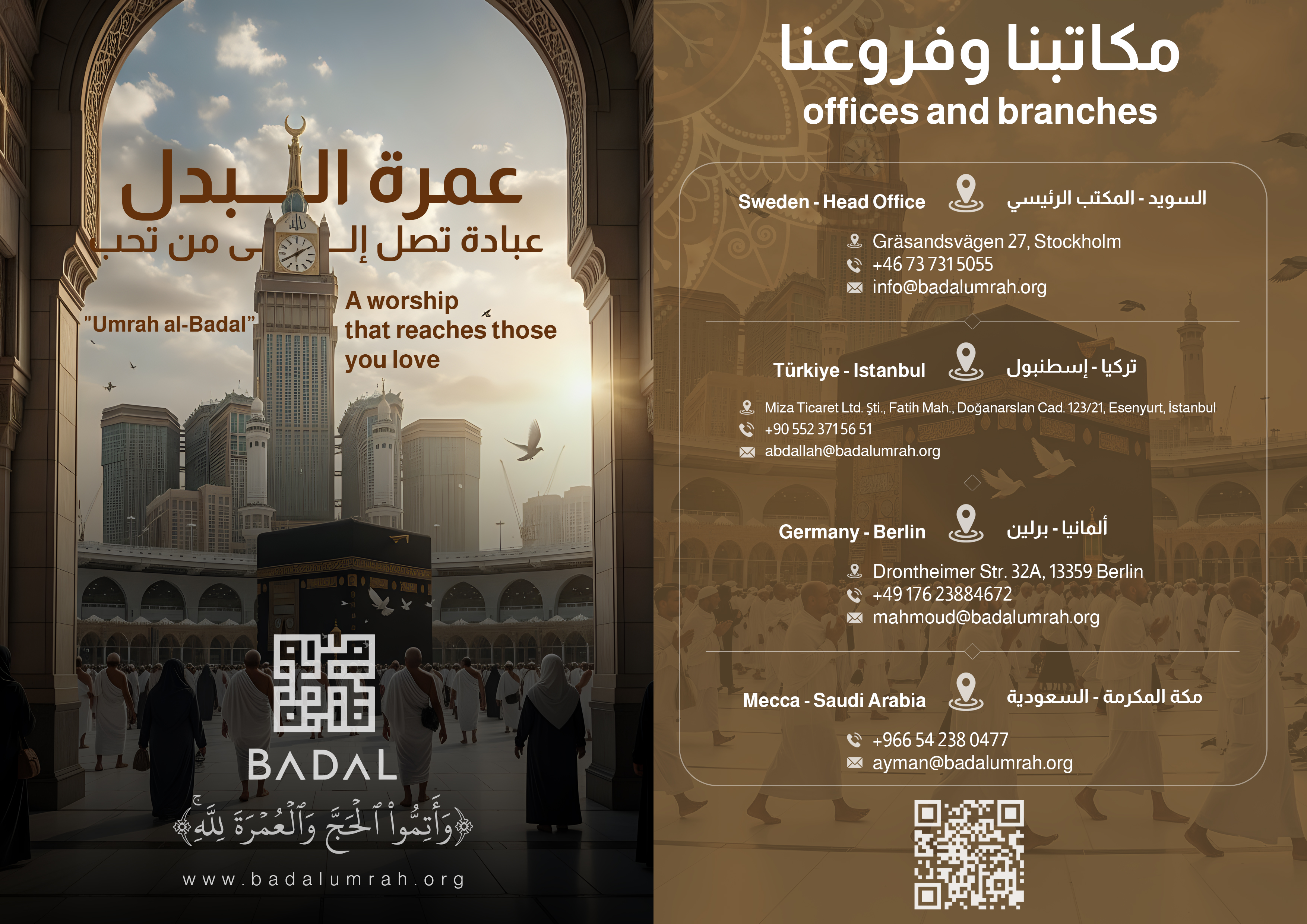
Whether you’re looking for an accessible entry point or a more complete offering, the Umrah Badal Du’a package and the Barakah Premium Package provide clear, trustworthy options. A portion of every booking supports humanitarian efforts in Gaza, so your act of faith extends even further.
Frequently asked questions
Can I perform Umrah Badal for more than one person on the same trip?
Yes, but you must repeat from Tan’eem each time, completing the full Umrah process with a separate intention for each individual.
Who is eligible to be a proxy for Umrah Badal?
The proxy must be an adult Muslim of sound mind who has already performed their own obligatory Umrah or Hajj before acting on behalf of another.
Is permission required to perform Umrah Badal for living relatives?
Yes, if the beneficiary is alive and mentally capable of giving consent, their permission is required before the proxy proceeds.
What rewards do the proxy and the beneficiary receive?
The beneficiary receives the full Umrah reward as if they performed it personally, while the proxy earns rewards for worship, charity, and service.
Is Umrah Badal allowed for someone only temporarily ill or lacking funds?
No. Umrah Badal is only permitted for those who are permanently incapable or deceased. Temporary illness or financial hardship alone does not meet the required conditions.