

What compassion means in Umrah services: A complete guide
TL;DR:
- Modern Umrah services now include proxy arrangements and accessibility support for vulnerable pilgrims.
- Compassionate Umrah aligns with Islamic principles of mercy, allowing those unable to travel to fulfill their vows.
- Choosing a trustworthy provider involves transparency, proper documentation, and post-ritual communication for peace of mind.
For many Muslim families, watching a loved one grow too frail or ill to perform Umrah is a quiet heartbreak. The assumption that Umrah belongs only to those who can physically travel and complete its rites has long left vulnerable community members feeling excluded from this sacred act of worship. That assumption is no longer accurate. Modern compassionate Umrah services, including proxy (Badal) Umrah, accessible pilgrimage support, and humanitarian-focused providers, now make it possible for nearly anyone to participate in this blessed journey. This guide covers the spiritual roots of compassion in Umrah, practical support for vulnerable pilgrims, the ethics of proxy Umrah, and how families can find providers who truly care.
Table of Contents
- Defining compassion in Umrah: Spiritual roots and humanitarian practice
- How compassionate Umrah services support the vulnerable
- The process and ethics of proxy (Badal) Umrah
- Why compassion matters: Impact on families and the Ummah
- Perspective: The hidden strengths of compassion in faith journeys
- How to choose a truly compassionate Umrah provider
- Frequently asked questions
Key Takeaways
| Point | Details |
|---|---|
| Compassionate Umrah services | Modern offerings extend meaningful pilgrimage opportunities to the elderly, ill, and disabled with dignity and care. |
| Proxy Umrah guidelines | Badal Umrah requires specific qualifications, sincere intention, and follows Islamic legal and ethical standards. |
| State-led humanitarian support | Saudi Vision 2030 enhancements and dedicated services enable inclusion and safety for millions of vulnerable pilgrims. |
| Choosing the right provider | Prioritize transparency, ethical process, and family-centered aftercare when selecting a compassionate Umrah service. |
Defining compassion in Umrah: Spiritual roots and humanitarian practice
Compassion in Islam is not a soft concept. It is a core religious obligation. The Arabic word Rahma (mercy) appears over 500 times in the Quran, and the Prophet Muhammad, peace be upon him, is described as a mercy to all of creation. Applying this principle to Umrah means recognizing that the sacred journey was never meant to exclude those who are unable to complete it due to illness, disability, or old age.
“The believers, in their mutual love, mercy, and compassion, are like one body: when one part suffers, the rest responds with sleeplessness and fever.” (Sahih al-Bukhari)
This Hadith speaks directly to why compassionate Umrah services exist. When a member of the Muslim community cannot fulfill a religious aspiration, others step forward on their behalf. This is precisely the foundation of mercy and proxy Umrah, which transforms individual devotion into a communal act of care.
Proxy Umrah, known as Badal Umrah, is one of the most recognized expressions of this principle. It allows a qualified Muslim to perform the full Umrah ritual on behalf of someone who is genuinely unable to do so. According to Umrah Badal: A Guide, the proxy must be an adult Muslim who has already performed their own Umrah or Hajj. They must make a specific niyyah (intention), such as “I intend Umrah on behalf of [name],” then complete Ihram (the state of ritual purity), Tawaf (circling the Kaaba), Sa’i (walking between Safa and Marwa), and Halq or Taqsir (shortening or shaving hair). For living persons who are capable of consent, permission should ideally be obtained.
Beyond proxy Umrah, compassionate Umrah services also include:
- Physical assistance for pilgrims with mobility limitations
- Emotional and spiritual support from trained guides
- Making sincere intentions on behalf of the sick or elderly
- Transparent family communication throughout the journey
The humanitarian Umrah efforts being developed globally reflect a broader shift. Saudi Vision 2030 compassion enhancements have prioritized inclusive pilgrimage infrastructure, helping millions of pilgrims access the holy sites. Compassion in Umrah is no longer a niche concept. It is becoming the standard.
How compassionate Umrah services support the vulnerable
Modern Umrah services have evolved significantly to accommodate pilgrims with special needs. Saudi Arabia has invested heavily in accessibility, and certified providers now offer support that goes far beyond travel logistics.
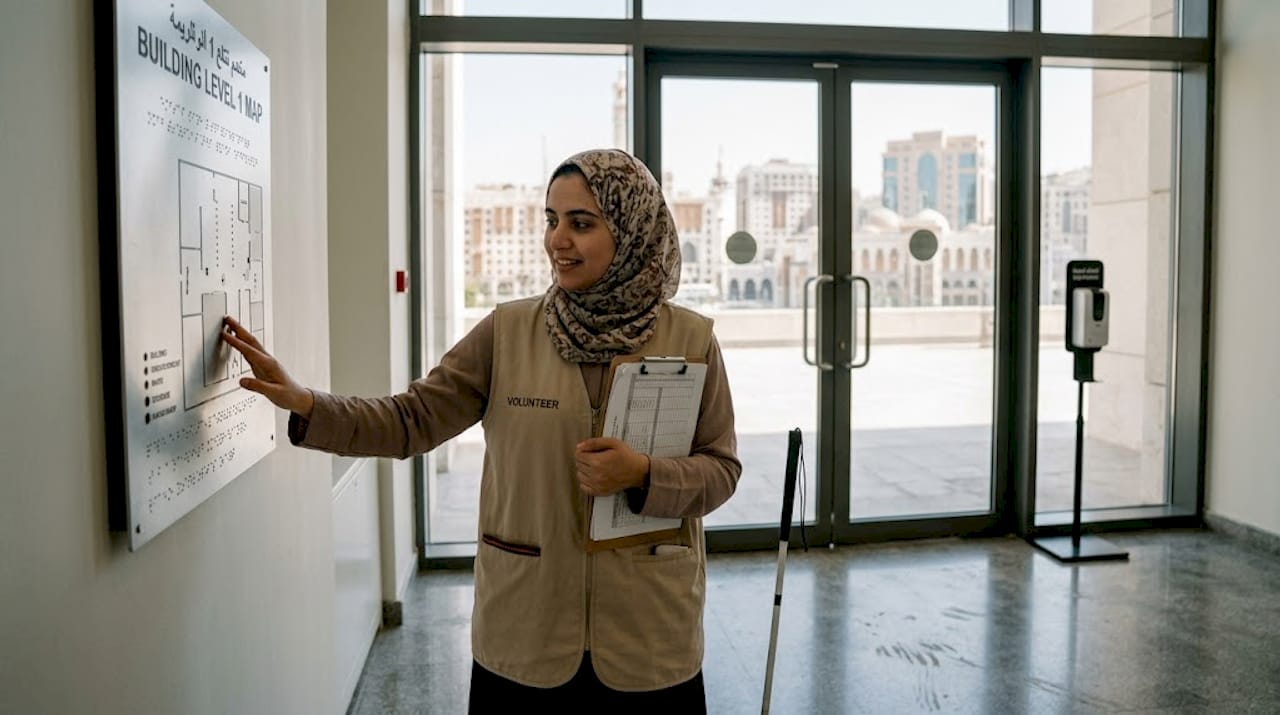
Wheelchair assistance, accessible Tawaf lanes, electric scooters, and on-site medical support at Saudi airports and the Haram are available, often at no cost when requested in advance. These are not luxury extras. They are structured services built into the pilgrimage infrastructure.
Here is a comparison of what basic versus enhanced compassionate Umrah packages typically offer:
| Feature | Basic Package | Compassionate Enhanced Package |
|---|---|---|
| Wheelchair support | Not included | Included upon request |
| Medical assistance | Emergency only | On-call, proactive |
| Family communication | Minimal | Regular updates, photos |
| Proxy Umrah option | Not available | Fully managed |
| Documentation | Standard | Certificate, video, photos |
For families arranging Umrah for a vulnerable loved one, here is how Umrah accessibility enhancements are coordinated step by step:
- Submit advance notice of your loved one’s specific needs when booking, whether that is wheelchair support, medical monitoring, or proxy Umrah.
- Receive confirmation from the provider detailing exactly what assistance will be arranged and by whom.
- On arrival, a trained volunteer or guide meets the pilgrim and coordinates all required support.
- During the rites, volunteers assist with Tawaf, Sa’i, and other stages, ensuring the pilgrim or proxy can fulfill each step with dignity.
- Post-Umrah, the family receives documentation, including certificates or video confirmation of the completed rites.
Pro Tip: Register your loved one’s accessibility needs at least four to six weeks before travel. Saudi Arabia’s Nusuk platform allows advance registration for special provisions for ill pilgrims, which helps secure priority services without added cost.
In 2024, 16.92 million Umrah pilgrims visited, up 101% from 2022, supported by 300 Nusuk service points and 153,000 volunteers across Mecca and the holy sites. These numbers reflect a system that is actively scaling compassionate infrastructure to meet real demand.
The process and ethics of proxy (Badal) Umrah
Understanding how Badal Umrah works gives families the confidence to proceed with both religious clarity and emotional peace. Let’s explore the key requirements and the ethical framework that makes this act valid.
Who can serve as a proxy? The essential requirements include:
- The proxy must be an adult Muslim of sound mind
- They must have already completed their own Umrah or Hajj
- They must hold sincere, specific intention for the person they represent
- For a living person, permission is preferred if the individual is capable of giving it
Here is a summary of the stages involved in performing Badal Umrah:
| Stage | Description |
|---|---|
| Niyyah (Intention) | Declare intent for a named individual before entering Ihram |
| Ihram | Enter the state of ritual consecration at the Miqat |
| Tawaf | Perform seven circuits of the Kaaba with the stated intention |
| Sa’i | Walk seven times between Safa and Marwa |
| Halq or Taqsir | Shave or shorten hair to complete Tahallul (exiting Ihram) |
According to established Islamic proxy Umrah rulings, the proxy’s own spiritual state matters greatly. The act must be carried out with humility and sincere care for the person being represented, not merely as a transactional service.
The ethics of proxy worship rules are equally important. Providers who take this responsibility seriously will document the process, maintain transparency with families, and ensure the proxy is fully qualified. Families should ask for proof of the proxy’s prior Umrah before confirming any booking.
For a detailed walkthrough of each step, the step-by-step proxy Umrah guide offers practical guidance rooted in authentic Islamic scholarship.
Compassion is not just a motivating value here. It is actually a condition for validity. A proxy who performs these rites carelessly or without genuine regard for the person they represent is missing the spiritual core of the act.
Why compassion matters: Impact on families and the Ummah
The effects of compassionate Umrah services stretch well beyond the individual pilgrim. Families, caregivers, and entire communities benefit in measurable and meaningful ways.
Consider the scale: with 12.4 million Umrah visas issued in 2025 alone, Umrah has become one of the most widely performed religious obligations in the world. Within that massive volume, a growing portion involves vulnerable pilgrims and proxy arrangements, reflecting the Ummah’s expanding commitment to inclusion.
For caregivers specifically, the benefits are both spiritual and emotional:
- Spiritual merit: Arranging or enabling Umrah for a loved one carries its own reward in Islam
- Emotional relief: Knowing a parent or spouse has had this obligation fulfilled brings genuine peace
- Community connection: Participating in compassionate pilgrimage reinforces bonds within the Ummah
- Shared responsibility: It models for younger generations that faith includes caring for those who cannot care for themselves
The broader proxy Umrah community impact also reshapes how Islamic society approaches worship. When Umrah becomes accessible to the ill, elderly, and homebound, it sends a clear message: belonging to the Ummah means no one is left behind spiritually.
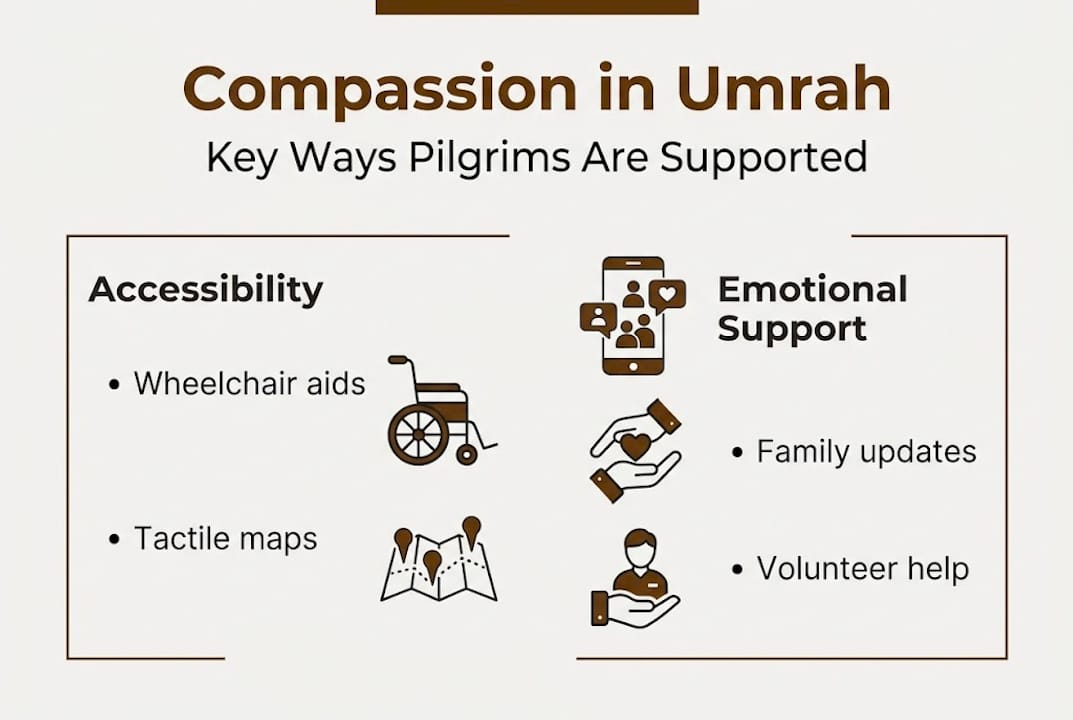
Saudi Arabia’s Vision 2030 accessibility reforms demonstrate state-level compassion, with the Nusuk app and dedicated volunteer networks now serving millions of vulnerable pilgrims annually. These meaningful ways to fulfill Umrah reflect a global shift toward more inclusive religious practice.
Pro Tip: When evaluating providers, look for those who offer post-Umrah family briefings, not just a certificate. Genuine providers will share photos, videos, and a sincere account of the rites performed. This transparency is a strong indicator of the provider’s Umrah social responsibility and overall integrity.
Perspective: The hidden strengths of compassion in faith journeys
It is easy to focus on logistics when discussing Umrah services for vulnerable pilgrims. The wheelchair arrangements, the paperwork, the proxy qualifications. These details matter. But the deeper impact of compassion in pilgrimage is often found in quieter places.
When a caregiver arranges Badal Umrah for an ailing parent, something shifts in that family. Children observe how adults respond to vulnerability with action, not helplessness. That lesson travels forward through generations. When a proxy performs the rites of meaningful mercy in Islamic acts with sincerity, they return changed, carrying a heightened sense of responsibility for their community.
Compassionate Umrah services are not just a workaround for those who cannot travel. They are a living practice of Islamic values, teaching humility, renewing communal bonds, and spreading hope in ways that ordinary pilgrimage alone cannot. The kindness shown in Mecca has a way of returning home.
How to choose a truly compassionate Umrah provider
Choosing the right provider is the most important practical step you will take for your loved one’s Umrah. Not all services are equal, and the difference between a trustworthy provider and a careless one matters deeply for both spiritual and practical reasons.
Look for providers who offer clear communication from day one, documented proxy qualifications, ethical transparency throughout the process, and meaningful aftercare such as photo and video records. At Badal Umrah, every package is designed with these standards at its core. The Umrah Badal Du’a Package offers an accessible entry point, while the Barakah Premium Package provides full documentation, video coverage, and personalized certificates, giving your family complete peace of mind. Take the step today and secure a compassionate, qualified service for the person you love.
Frequently asked questions
What is proxy (Badal) Umrah and who can use it?
Proxy Umrah, or Badal Umrah, is performed by a qualified adult Muslim on behalf of someone who cannot complete Umrah themselves due to illness or old age, following specific religious and ethical guidelines. It is available for both living and deceased individuals, provided the correct conditions and permissions are observed.
How do Umrah services show compassion for the elderly and disabled?
Providers offer wheelchair and medical support, accessible Tawaf lanes, electric scooters, and regular caregiver communication, many of which are available at no added cost when arranged in advance. These services ensure that vulnerable pilgrims can experience or have fulfilled the full spiritual value of Umrah.
Is it allowed to do Umrah for a living person?
Yes, Umrah may be performed on behalf of a living person if they are genuinely unable due to chronic illness or advanced age, and permission is preferred from the individual whenever possible. Scholars widely agree this is a valid and rewarded act of care within Islamic law.
What should caregivers look for in a compassionate Umrah provider?
Caregivers should prioritize providers who offer transparent documentation, proven proxy qualifications, consistent family communication, and post-Umrah follow-up. These qualities distinguish a genuinely compassionate provider from one offering only a basic transactional service.