

How to perform proxy Umrah: A spiritual guidance workflow
TL;DR:
- Proxy Umrah is permissible for those who are permanently incapacitated or deceased individuals.
- The proxy must have performed their own Umrah or Hajj before acting on someone else’s behalf.
- Trusted services provide video, GPS proof, and certificates to ensure legitimacy and spiritual sincerity.
When a parent grows too frail to travel, or a spouse passes before fulfilling their wish for Umrah, the question weighs heavily on the family: can someone else perform this sacred rite on their behalf? The answer, rooted in centuries of Islamic scholarship, is yes, under specific conditions. Proxy Umrah, known as Umrah Badal or Niyabah, is a validated practice that allows a capable Muslim to perform Umrah on behalf of another. This guide walks you through every stage of that process, from confirming eligibility to choosing a trustworthy service, so you can fulfill this duty with confidence and religious integrity.
Table of Contents
- Understanding proxy Umrah: Permissibility and prerequisites
- Step-by-step workflow: Performing proxy Umrah correctly
- Choosing a trusted proxy service: Criteria and verification
- Handling edge cases and common mistakes
- Our take: What most guides miss about spiritual guidance workflow
- Ready to honor your loved one? Trusted Umrah Badal packages
- Frequently asked questions
Key Takeaways
| Point | Details |
|---|---|
| Proxy Umrah eligibility | Proxy Umrah is only for permanently incapacitated or deceased loved ones; not for temporary illness or financial issues. |
| Step-by-step workflow | Each proxy must perform their own rites and follow the prescribed intention and rituals to fulfill Umrah for another. |
| Trusted proxy services | Choose services offering proof, certification, and compliance with Sharia to ensure legitimacy and peace of mind. |
| Avoiding mistakes | Do not combine Umrah for multiple persons or rely on marketing; always consult reliable sources for guidance. |
| Emotional and spiritual fulfillment | Beyond rituals, prioritizing emotional closure and spiritual legitimacy completes the proxy Umrah experience. |
Understanding proxy Umrah: Permissibility and prerequisites
Let’s explore what proxy Umrah actually means before diving into the workflow. Umrah Badal, sometimes called Niyabah (deputyship), is the act of performing Umrah on behalf of someone else. This is not a casual substitute. It is a carefully regulated act with clear conditions drawn from classical Islamic jurisprudence.
The most important condition is that proxy Umrah is permitted for permanently incapacitated individuals or those who have passed away. If your parent has a chronic illness with no prospect of recovery, or has died without performing Umrah, a proxy may act on their behalf. This is where many families find deep comfort.
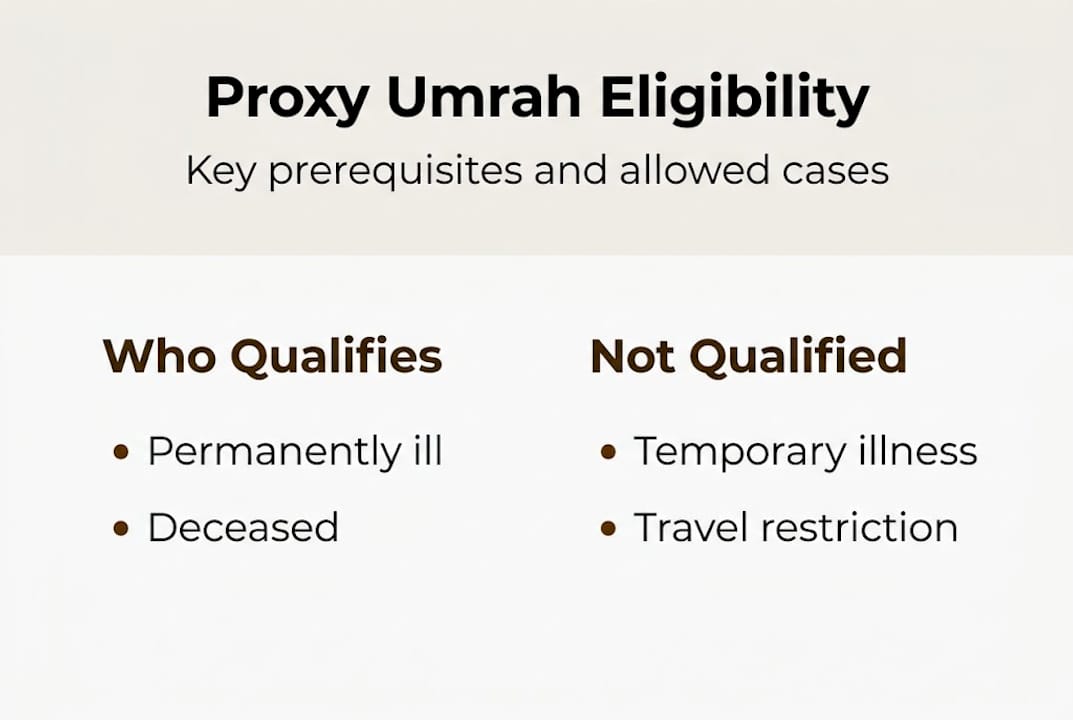
However, not every situation qualifies. The ruling is clear: temporary illness or travel bans with a reasonable hope of resolution, financial difficulty, or general busyness do not permit proxy Umrah. The incapacity must be permanent and genuine.
Here is a quick comparison of who qualifies and who does not:
| Situation | Proxy Umrah permitted? |
|---|---|
| Permanent physical disability | Yes |
| Deceased loved one | Yes |
| Temporary illness with recovery expected | No |
| Travel ban with hope of lifting | No |
| Financial hardship | No |
| Busy schedule or work obligations | No |
Beyond the recipient’s eligibility, the proxy themselves must meet important prerequisites. These include:
- Having already performed their own Umrah or Hajj. A person cannot perform Umrah for another if they have not first fulfilled it for themselves.
- Obtaining explicit permission from the recipient if they are living, or from their family if they have passed.
- Being a trustworthy and practicing Muslim who can complete all rites correctly.
- Accepting payment transparently, if any. Paying a proxy is permitted in Islam, provided the proxy is reliable and the arrangement is clear.
For a thorough review of the scholarly positions, the Islamic rulings for proxy Umrah offer detailed guidance rooted in authentic sources.
Step-by-step workflow: Performing proxy Umrah correctly
With eligibility and prerequisites clarified, here is how to execute the proxy Umrah step by step. Following this order matters for both validity and sincerity.
- Confirm eligibility and obtain permission. Verify that the recipient qualifies (permanent incapacity or deceased). If the person is living, secure their verbal or written permission. Document this for your records.
- Ensure the proxy has completed their own Umrah. The proxy must have already fulfilled their personal Umrah or Hajj before proceeding. This is non-negotiable in all major scholarly opinions.
- Enter Ihram at the Miqat. The proxy dons the Ihram garments at the designated boundary (Miqat). For those already in Makkah, Tan’eem is a valid alternative entry point.
- Make the Niyyah (intention). The proxy recites: “Labbayk Allahumma Umratan an [Name of recipient].” This verbal intention names the person on whose behalf the Umrah is being performed.
- Perform Tawaf. The proxy circles the Kaaba seven times, beginning and ending at the Black Stone, making supplications on behalf of the recipient throughout.
- Complete Sa’i. Walk seven times between the hills of Safa and Marwah, following the same ritual as a personal Umrah.
- Perform Halq or Taqsir. Shave the head (Halq) or trim the hair (Taqsir) to exit the state of Ihram. This completes the Umrah.
- Perform one Umrah per person. One proxy session covers one recipient only. Intentions cannot be merged.
Here is a simple summary table:
| Step | Action | Note |
|---|---|---|
| 1 | Confirm eligibility | Permanent incapacity or deceased only |
| 2 | Verify proxy’s own Umrah | Must be completed first |
| 3 | Enter Ihram at Miqat | Tan’eem allowed if in Makkah |
| 4 | State Niyyah | Include recipient’s name |
| 5 | Tawaf and Sa’i | Identical to personal Umrah |
| 6 | Halq or Taqsir | Completes the rite |
For further detail on each stage, the step-by-step Umrah Badal guide and Umrah proxy certification resources explain documentation requirements in 2026.
Pro Tip: When using a paid service, request video footage of the Niyyah declaration. This single piece of evidence confirms the intention was correctly stated for your loved one by name.
Choosing a trusted proxy service: Criteria and verification
Once you know the rites and workflow, choosing the right service is crucial for spiritual legitimacy and peace of mind. Not all services operate with the same standards, and the difference matters deeply.
A trustworthy proxy Umrah service should meet several clear criteria:
- Scholar-performed rites. The proxy should be a knowledgeable, practicing Muslim, ideally verified by a recognized Islamic authority.
- Video and GPS proof. Reputable platforms provide GPS and video evidence, giving families visual confirmation of each completed step.
- Personalized certificates. A proper certificate naming the recipient adds an important layer of documentation and emotional closure.
- Transparent pricing and process. Ambiguity about who performs the rite or how it is documented is a red flag.
- Positive, verified reviews. Look for reviews from families who have used the service, not just general testimonials.
Pro Tip: Do not rely solely on marketing language. Search for the service name alongside terms like “Islamic compliance” or “scholar review” to find unbiased assessments.
For families managing complex situations, such as a recipient with a degenerative condition or an elderly parent with unclear legal capacity, it is worth consulting a local scholar before booking. They can assess your specific case through the lens of Fiqh (Islamic jurisprudence) in a way no website can fully replicate.
“Spiritual assurance does not come from a polished website. It comes from verified actions, credible witnesses, and alignment with recognized Islamic scholarship.”
Resources such as special provisions for ill persons and guidance on spiritual legitimacy proxy Umrah can help you frame the right questions for your scholar consultation.

Handling edge cases and common mistakes
Finally, understanding special scenarios and avoiding mistakes ensures your proxy Umrah is both valid and spiritually meaningful. Many errors occur not from bad intentions, but from misunderstanding the conditions.
Here are the most common mistakes to avoid:
- Combining multiple recipients in one Umrah. Each Umrah is valid for one person only. If you want to honor two loved ones, two separate Umrahs must be performed.
- Choosing services without verifiable proof. A service that cannot show you video, GPS location, or a named certificate should not be trusted with this sacred duty.
- Assuming all incapacity qualifies. The ruling is clear: only permanent disability or death justify proxy Umrah. Temporary conditions, including financial hardship or short-term illness, do not.
- Skipping documentation. Even if you trust the proxy, always request and retain the certificate and video for your records.
Pro Tip: Before finalizing any arrangement, send a written summary to the service confirming the recipient’s name, the reason for proxy (e.g., permanent illness or deceased), and what proof you will receive. This protects both parties and ensures clarity.
“The integrity of the arrangement is what gives the act its spiritual weight. Shortcuts in verification are shortcuts in sincerity.”
For families in 2026 navigating these decisions, resources on legitimate Umrah practices for family and ways to support humanitarian Umrah efforts provide additional context on responsible service selection.
Our take: What most guides miss about spiritual guidance workflow
Most articles on proxy Umrah stop at the checklist. They tell you the steps and move on. But from working closely with families through this process, we have seen something most guides overlook: the emotional and spiritual dimension of verification.
Families are not just looking for a completed ritual. They are looking for closure. They want to know, with confidence, that their mother or grandfather was named correctly, that the intention was sincere, and that the rites were completed with care. That is not something a transaction alone can provide.
This is why fiqh consensus matters more than marketing. A service that cites specific scholarly opinions, names its proxy performers, and provides timestamped video is doing far more than selling a package. It is honoring a trust.
We also believe that proxy faith fulfillment is a community act. When families invest in legitimate, scholar-aligned services, they strengthen a practice that has served Muslim communities for centuries. The spiritual workflow is not just procedural. It carries the weight of love, duty, and sincerity.
Ready to honor your loved one? Trusted Umrah Badal packages
For those ready to take action, here are respected, compliant service options to honor your loved one. Badalumrah.org offers packages built around religious integrity, with photo and video documentation, personalized certificates, and rites performed by verified Muslim proxies.

Whether you are honoring a parent, a spouse, or a community member, you can explore the Barakah Premium Package for full documentation and certification, or the Umrah Badal Du’a Package for a sincere, prayer-focused service. Browse all Umrah package options to find the one that best fits your family’s needs and budget. Every booking also contributes 10% of profits to humanitarian support in Gaza, so your act of worship extends compassion beyond your family.
Frequently asked questions
Is proxy Umrah allowed for anyone with a temporary illness?
No. Proxy Umrah is permitted only for those with permanent incapacity or who have passed away. A temporary illness or circumstance that may resolve does not qualify.
Should the proxy have completed their own Umrah or Hajj before performing for someone else?
Yes. The proxy must have already fulfilled their own Umrah or Hajj before they are eligible to act on behalf of another person.
Can multiple people be included in a single Umrah Badal?
No. Each proxy Umrah must be performed for one person only. Intentions for multiple recipients cannot be merged into a single performance.
How can I verify that a proxy service is legitimate and compliant?
Prioritize services that offer GPS and video proof, scholar-performed rites, named certificates, and verifiable reviews. Consulting a local scholar for your specific situation adds another layer of assurance.
Is it permissible to pay someone to perform proxy Umrah?
Yes. Paying a trustworthy proxy is permitted in Islam. Ensure the arrangement is transparent, the proxy is reliable, and the terms are agreed upon before the rites begin.