

Health and spirituality in pilgrimage: A complete guide
TL;DR:
- Over one-third of pilgrims have chronic health conditions, making health preparedness spiritually essential.
- Managing health risks through vaccinations, physical training, and medical support improves spiritual fulfillment.
- Proxy rites like Badal Umrah enable the ill or elderly to fulfill their spiritual obligations legally and sincerely.
Over one-third of pilgrims carry chronic health conditions into one of the most physically demanding spiritual journeys on earth. 36.3% of pilgrims have chronic diseases, making health preparedness not just practical but spiritually essential. Whether you are preparing for your own Umrah, supporting an elderly parent, or exploring proxy options like Badal Umrah for a loved one who cannot travel, this guide covers the full picture. We will walk through required vaccinations, chronic condition management, the spiritual rewards tied to physical readiness, community support resources, and how proxy rites allow every Muslim to fulfill their obligation regardless of health status.
Table of Contents
- Healthcare essentials before pilgrimage
- Managing chronic conditions on pilgrimage
- The spiritual role of health in fulfilling pilgrimage
- Education, community, and nonprofit support for pilgrim health
- What most people miss: True fulfillment requires both health and intention
- Support loved ones with Umrah Badal: Secure, spiritually legitimate proxy services
- Frequently asked questions
Key Takeaways
| Point | Details |
|---|---|
| Health is fundamental | Physical and mental wellness are at the core of a safe and spiritually rewarding pilgrimage. |
| Preparation is essential | Vaccinations, fitness training, and medical checkups significantly reduce risks for both Hajj and Umrah. |
| Proxy rites offer solutions | Umrah Badal allows those unable to travel to fulfill spiritual obligations through legitimate proxy practices. |
| Education prevents harm | Community and nonprofit initiatives can mitigate major risks by promoting health awareness and support. |
| Mindset matters most | Blending health preparation with spiritual intention transforms the pilgrimage experience. |
Healthcare essentials before pilgrimage
After understanding why health matters, let’s explore the necessary steps to stay physically prepared for Umrah or Hajj. Preparation is not optional. It is a form of responsibility to yourself, your fellow pilgrims, and the sacred journey itself.
Required vaccinations
Saudi Arabia mandates specific vaccines for all incoming pilgrims. Mandatory vaccines include the ACWY meningococcal vaccine for all pilgrims, with polio and yellow fever vaccines required depending on your country of origin. Here is a quick reference:
| Vaccine | Who needs it | Timing |
|---|---|---|
| Meningococcal ACWY | All pilgrims | At least 10 days before travel |
| Polio (OPV or IPV) | Pilgrims from at-risk countries | Before departure |
| Yellow fever | Pilgrims from endemic regions | 10 days before travel |
| Influenza | Recommended for all | Annually |
| COVID-19 | Per current Saudi requirements | Per current guidelines |
Key health preparation steps
Physical training for pilgrimage includes daily walking, hydration habits, completing all vaccinations, and scheduling medical checkups well before departure. Here is a practical checklist:
- Schedule a full medical assessment with your physician at least 8 weeks before travel
- Begin a daily walking program to build stamina for the extensive movement required during Tawaf and Sa’i
- Practice hydration by drinking at least 2 to 3 liters of water daily in the weeks leading up to travel
- Gather all medical records, prescriptions, and emergency contact information in one accessible folder
- Review provisions for ill Umrah pilgrims to understand what accommodations Islam allows
Pro Tip: Book your vaccinations at least 6 to 8 weeks before departure. Some vaccines require multiple doses or a waiting period to reach full effectiveness, and last-minute shots may not provide adequate protection.
A common misconception is that younger, seemingly healthy pilgrims do not need medical checkups. In reality, the physical demands of pilgrimage, including hours of walking in intense heat, can reveal underlying conditions that were previously unnoticed. Anyone planning to perform Umrah should also review performing Umrah for others and legitimate Umrah practices to understand how Islamic rulings accommodate varying health situations.
Managing chronic conditions on pilgrimage
With basic health steps covered, it is critical to address chronic conditions that affect many pilgrims. The data is clear and worth taking seriously.
Prevalence of chronic conditions among pilgrims
| Condition | Prevalence among pilgrims |
|---|---|
| Hypertension | 16% |
| Diabetes | 11.6% |
| Respiratory conditions | Significant minority |
| Cardiovascular disease | Notable subset |
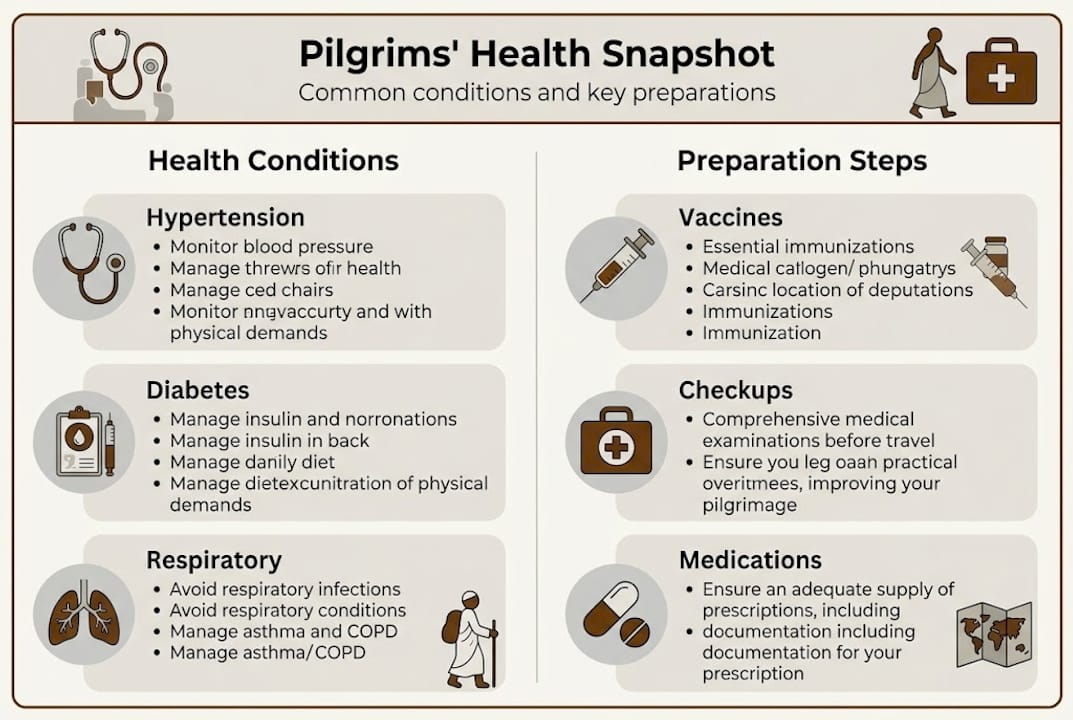
Beyond these numbers, risky behaviors affect 36.6% of pilgrims, including skipping medications, overexerting themselves, or ignoring early warning signs. This significantly raises the chance of serious complications.
Steps for managing chronic conditions during pilgrimage
- Consult your specialist before travel. Ask specifically about adjusting medication schedules for time zone changes and increased physical activity.
- Carry a full medication supply plus a two-week backup. Keep medications in your carry-on bag, never in checked luggage.
- Monitor your condition daily. Pilgrims with diabetes should check blood glucose levels regularly, especially during long walking periods.
- Avoid peak heat hours. Heatstroke, infections, and trauma are major risks. Rest indoors between noon and 4 PM whenever possible.
- Use a medical alert card written in both English and Arabic that lists your conditions and medications.
- Know your limits. Islam permits modifications to rituals for those in poor health. Review Umrah tips for caregivers if you are supporting someone with chronic illness.
Pro Tip: Pack a small emergency health kit with oral rehydration salts, a thermometer, basic pain relief, bandages, and any condition-specific supplies. Keep it accessible at all times, not buried in a large bag.
For pilgrims whose conditions make travel genuinely unsafe, Islamic scholars recognize that managing symptoms in care settings or at home does not diminish one’s spiritual standing. Proxy rites exist precisely for this situation. Consider Umrah for family as a valid and spiritually recognized option.
The spiritual role of health in fulfilling pilgrimage
Next, consider why maintaining health is the key to unlocking deeper spiritual benefits on pilgrimage. Physical readiness and spiritual readiness are not separate goals. They reinforce each other.
Spiritual outcomes enabled by good health
Health enables full spiritual rewards and mental and emotional benefits that pilgrims seek. When the body is strong, the mind is clearer, and the heart is more open to the experience. Key spiritual outcomes include:
- Unity (Ummah): Being physically present and engaged allows you to feel the collective power of millions of Muslims worshipping together
- Humility: Completing Tawaf, the circumambulation of the Kaaba, and Sa’i with full awareness deepens one’s sense of submission to Allah
- Self-reflection: Mental clarity, which is supported by good physical health, allows for genuine introspection during Ihram and Du’a
- Emotional well-being: Completing the pilgrimage without health crises brings a sense of peace and spiritual accomplishment
- Gratitude: The ability to perform each rite fully, from entering Ihram to Tahallul, fosters deep thankfulness
“Pilgrimage is not merely a physical journey. It is a transformation of the heart, and the body must be prepared to carry the spirit through it.”
For those who cannot attend due to illness, disability, or age, proxy fulfills spiritual obligation for incapacitated individuals according to established Islamic rulings. This is not a lesser option. It is a recognized and honored path. Learn more about performing Umrah for others and the proxy Umrah legitimacy that supports this practice.
For families navigating end-of-life care or serious illness, spiritual care in hospice settings often highlights how fulfilling religious obligations, even through proxies, brings profound comfort. Explore proxy faith fulfillment and Umrah donation benefits to understand the full scope of spiritual reward available through these acts.
Education, community, and nonprofit support for pilgrim health
Thinking beyond individual preparation, let’s examine how collective action supports safe pilgrimages. No pilgrim should navigate health risks alone.
How education reduces risk
Heatstroke, infections, and trauma are the three leading preventable health risks during pilgrimage. Education and community support can significantly reduce risky behavior and improve outcomes for everyone. Key education and community initiatives include:
- Pre-travel health workshops offered by mosques and Islamic centers that cover vaccination schedules, hydration, and emergency protocols
- Multilingual health guides distributed by Saudi health authorities and international organizations at entry points and accommodation sites
- Peer support networks where experienced pilgrims mentor first-timers on managing physical demands and recognizing warning signs
- On-site medical teams stationed throughout the Haram and along pilgrimage routes to provide immediate care
- Digital resources including apps and websites that offer real-time health alerts, prayer schedules, and emergency contacts
Community practices that boost safety
Collective awareness matters. When pilgrims look out for each other, the risk of preventable harm drops sharply. Simple practices make a real difference:
- Checking on elderly or unwell companions during Tawaf and Sa’i
- Sharing water and shade during peak heat periods
- Reporting signs of heatstroke or distress to medical staff immediately
- Traveling with a designated health contact who holds copies of all medical documents
Nonprofit initiatives for pilgrim health play an important role in funding these programs, especially for pilgrims from lower-income countries who may lack access to pre-travel medical care. Organizations focused on Umrah social responsibility are working to close this gap by providing education, funding, and community outreach.
What most people miss: True fulfillment requires both health and intention
Most pilgrimage health guides treat preparation as a checklist. Vaccinate. Hydrate. Pack medications. Check, check, check. But that framing misses something important.
Health is not just a requirement for entry into Saudi Arabia. It is the foundation that allows every moment of Umrah to carry its full spiritual weight. A pilgrim who is exhausted, dehydrated, or managing an uncontrolled condition is physically present but spiritually distracted. The body and the spirit travel together.
The same principle applies to proxy rites. Choosing Badal Umrah for a loved one is not a workaround. It is an act of love and religious sincerity. The intention behind the act is what transforms it into worship. Explore proxy faith fulfillment to see how this intention is honored in Islamic scholarship.
Pro Tip: Before each stage of your pilgrimage preparation, pause and renew your intention (Niyyah). Health steps taken with conscious spiritual purpose carry far more meaning than those done out of obligation alone.
True fulfillment is not about completing every rite perfectly. It is about approaching each one, whether in person or through a trusted proxy, with a prepared body, a clear mind, and a sincere heart.
Support loved ones with Umrah Badal: Secure, spiritually legitimate proxy services
If you or your loved ones face health barriers to pilgrimage, here is how you can still fulfill the spiritual obligation securely.

At Badal Umrah, we specialize in performing Umrah on behalf of those who cannot travel due to age, illness, or other valid reasons. Our Umrah Badal package includes full documentation, video and photo coverage, and a personalized certificate, so your family can witness the fulfillment of this sacred obligation. For a more complete experience, our Umrah Badal premium package offers enhanced coverage and additional spiritual services. Every booking also contributes 10% of profits to humanitarian support in Gaza, honoring both your loved one’s faith and the broader Muslim community.
Frequently asked questions
What are the mandatory vaccines for pilgrimage in 2026?
Pilgrims must have the ACWY meningococcal vaccine, and, depending on their origin country, polio and yellow fever vaccines may also be required.
Can Umrah be performed on behalf of someone with chronic illness?
Yes, proxy rites like Umrah Badal allow you to fulfill the obligation for incapacitated loved ones, and proxy fulfills spiritual obligation for such individuals according to established Islamic rulings.
How can pilgrims with hypertension or diabetes manage their health during Umrah?
They should consult their doctor, bring essential medications, stay hydrated, avoid risky behaviors, and prepare emergency health kits, since 16% hypertension and 11.6% diabetes prevalence among pilgrims makes proactive management essential.
What are the spiritual benefits of maintaining good health during pilgrimage?
Good health allows for full participation in all rituals, leading to deeper feelings of unity, humility, and self-reflection, as health enables full spiritual rewards and meaningful emotional outcomes.
How do nonprofits and community initiatives support pilgrim health?
They provide education, medical assistance, and resources to minimize preventable risks, and education and community support reduces risky behaviors and improves health outcomes during pilgrimage.
Recommended
- Understanding Islamic pilgrimage and performing Umrah for others – Badal Umrah
- 4 pillars of Umrah: complete guide and practical tips – Badal Umrah
- What is a comprehensive Umrah package? Complete 2026 guide – Badal Umrah
- Umrah tips for caregivers: 2026 guide to smooth Badal – Badal Umrah
- Increase vitality: A step-by-step guide to holistic energy – LifeUnlocked