

Performing Umrah on Behalf of the Deceased: A How-To
Losing a loved one is painful enough without the weight of unfulfilled religious duties. Many Muslims carry a quiet concern: their parent, spouse, or relative passed away before completing Umrah. The good news is that performing Umrah on behalf of the deceased is not only permissible in Islam, it's considered an act of immense reward for both the living and the dead. Scholars across the major schools of thought, backed by authentic hadith, affirm that this practice is valid and encouraged.
But knowing it's allowed is only half the picture. You still need to understand who qualifies to perform it, how to make the correct niyyah (intention), and what specific steps to follow from start to finish. Getting these details right matters, this is a sacred act of worship, and it deserves to be done properly. That's exactly what this guide covers: a clear, step-by-step walkthrough of how Umrah Badal works for a deceased person.
At Badal Umrah, we help families fulfill this obligation by assigning dedicated performers in Mecca who carry out the full Umrah ritual on behalf of your loved one, complete with documentation, personalized duʿā, and a completion certificate. Whether you choose to perform it yourself or have it done through our service, this article will give you the knowledge you need to move forward with confidence.
What Umrah Badal is and when it is allowed
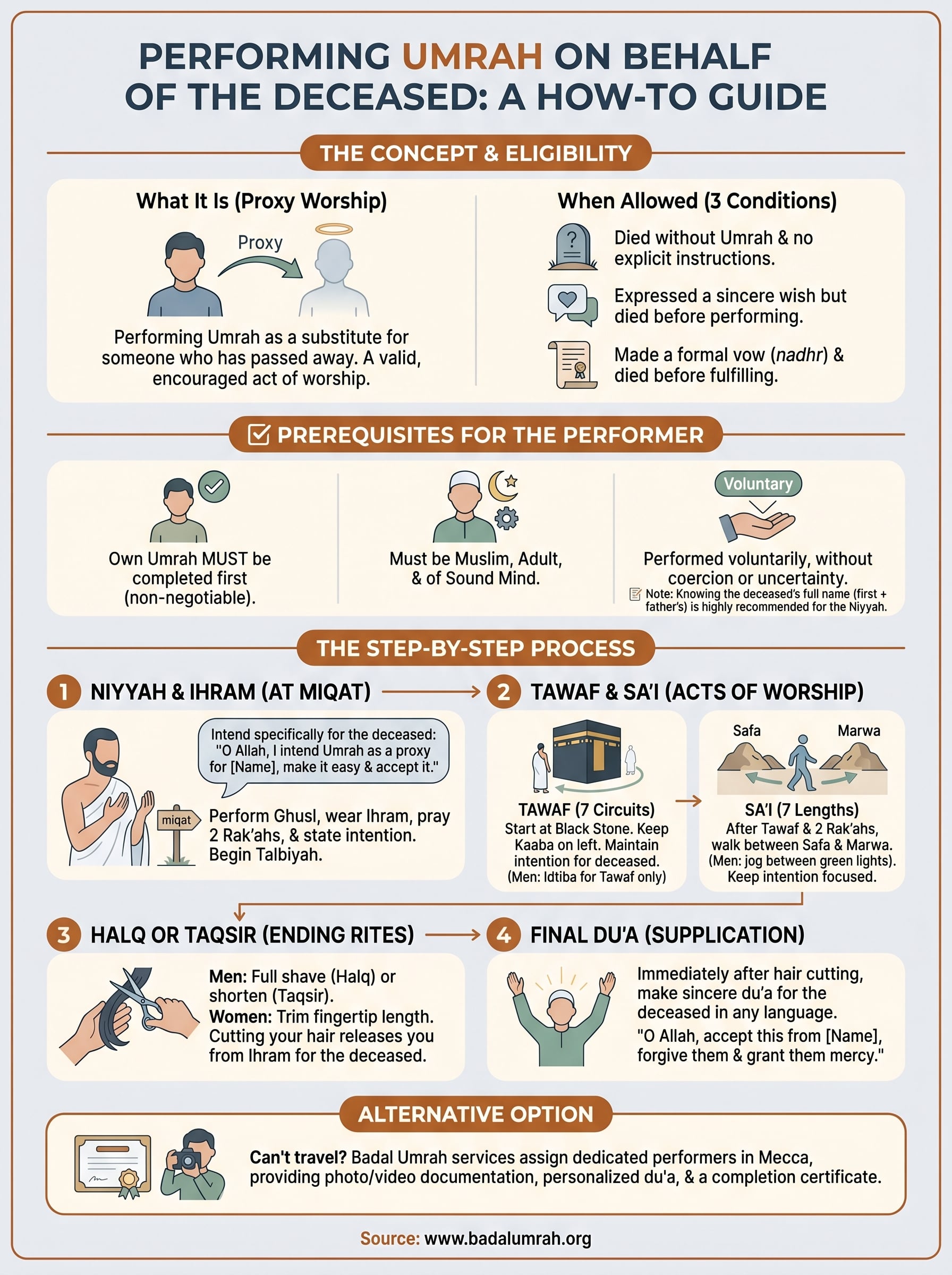
Umrah Badal, also called Umrah Niyaba, is the practice of performing Umrah as a proxy on behalf of another person. The word "badal" means substitute or replacement in Arabic. When you perform it for a deceased person, you step into their place spiritually, completing the rites of ihram, tawaf, sa'i, and halq or taqsir as though acting for them directly. This practice is distinct from performing Umrah for yourself, and it requires a clear, deliberate shift in intention from the very beginning of the ritual.
The Islamic evidence behind Umrah Badal
Scholars base the permissibility of Umrah Badal on direct hadith evidence. A well-known narration recorded by Ibn Abbas (may Allah be pleased with him) describes a woman who asked the Prophet (peace be upon him) whether she could perform Hajj on behalf of her deceased mother, who had vowed to perform it but died before doing so. The Prophet confirmed she should, affirming the validity of proxy pilgrimage. Scholars from the Shafi'i, Hanbali, and Maliki schools extend this ruling to Umrah as well, making it one of the most broadly accepted positions in classical Islamic jurisprudence.
Performing umrah on behalf of deceased relatives is valid according to the majority of classical scholars, provided the one performing it has already completed their own Umrah first.
When exactly is it allowed?
Umrah Badal is permitted in three specific situations. First, the deceased passed away without having performed Umrah and left no explicit instructions. Second, the deceased expressed a sincere wish to perform Umrah but was unable to complete it before death. Third, the deceased made a formal vow (nadhr) to perform Umrah and died before fulfilling it. Outside of these situations, performing it for a living person follows slightly different conditions, typically limited to someone with a permanent physical incapacity who cannot travel to Mecca themselves.
You do not need a special bequest or written request from the deceased to proceed. If you know they intended to perform Umrah, that is sufficient grounds to act on their behalf. When using a professional performer, you simply provide the deceased person's full name and their father's name. The performer then states the intention on their behalf before entering ihram, which is the point at which the ritual formally begins.
Rules you must meet before doing Umrah for others
Before performing Umrah on behalf of deceased relatives, three core conditions must be satisfied. These conditions exist to protect the validity of the ritual and ensure the proxy performance carries full religious weight. Ignoring them does not just create doubt; it can invalidate the entire act of worship from the start.
Your own Umrah must come first
The most critical rule is straightforward: you must have already completed your own Umrah before performing it as a proxy for someone else. This condition is agreed upon by the majority of scholars and is non-negotiable. The reasoning is practical and spiritual: you cannot give what you have not yet received. If you travel to Mecca intending to do both your personal Umrah and a proxy Umrah in the same trip, perform yours first, then re-enter ihram with a fresh intention for the deceased.
If you have never performed Umrah yourself, you are not eligible to perform it on behalf of another person until your own is complete.
Additional personal conditions the performer must meet
Beyond completing your own Umrah, you must be a Muslim, an adult, and of sound mind. A child who has not reached puberty cannot validly perform a proxy Umrah, and neither can someone acting under confusion about who the Umrah is intended for. Before entering ihram, confirm the following:
- Full name of the deceased (first name and father's name)
- Your own Umrah has been completed on a previous occasion or earlier in the same trip
- You are performing this voluntarily, without coercion or uncertainty about the intention
Knowing the deceased person's name is not strictly required for validity, but it is strongly recommended so the intention is clear and specific when you state it aloud.
Step 1. Set the niyyah and enter ihram correctly
The niyyah is what transforms a physical act into an act of worship, and when performing Umrah on behalf of deceased relatives, it carries even more weight than usual. Unlike your personal Umrah, where the intention points inward toward yourself, a proxy niyyah must specifically name the person you are acting for. Everything that follows, including tawaf, sa'i, and the final rites, flows from this single moment of deliberate, clear intention.
How to state the niyyah for the deceased
You state the niyyah verbally at the miqat, just before entering ihram. The intention does not have to be in Arabic, but using the established Arabic phrase follows the practice of scholars and ensures precision. Use this template:
"Allahumma inni uridu al-Umrata niyabatan 'an [full name of the deceased, son/daughter of their father's name], fa-yassirha li wa taqabbalha minhu/minha."
This translates as: "O Allah, I intend to perform Umrah as a proxy for [name], so make it easy for me and accept it from him/her." Hold this intention clearly in your heart as you recite it aloud. If a hired performer is completing the ritual, give them the deceased's first name and father's name so the niyyah is specific and cannot be confused.
What to do at the miqat to enter ihram
At the miqat, follow the same physical preparation as a standard Umrah. Complete the ghusl (full body wash), put on the two white ihram sheets (men) or modest permitted clothing (women), and pray two rak'ahs of nafl. Then state the niyyah for the deceased and begin the talbiyah:
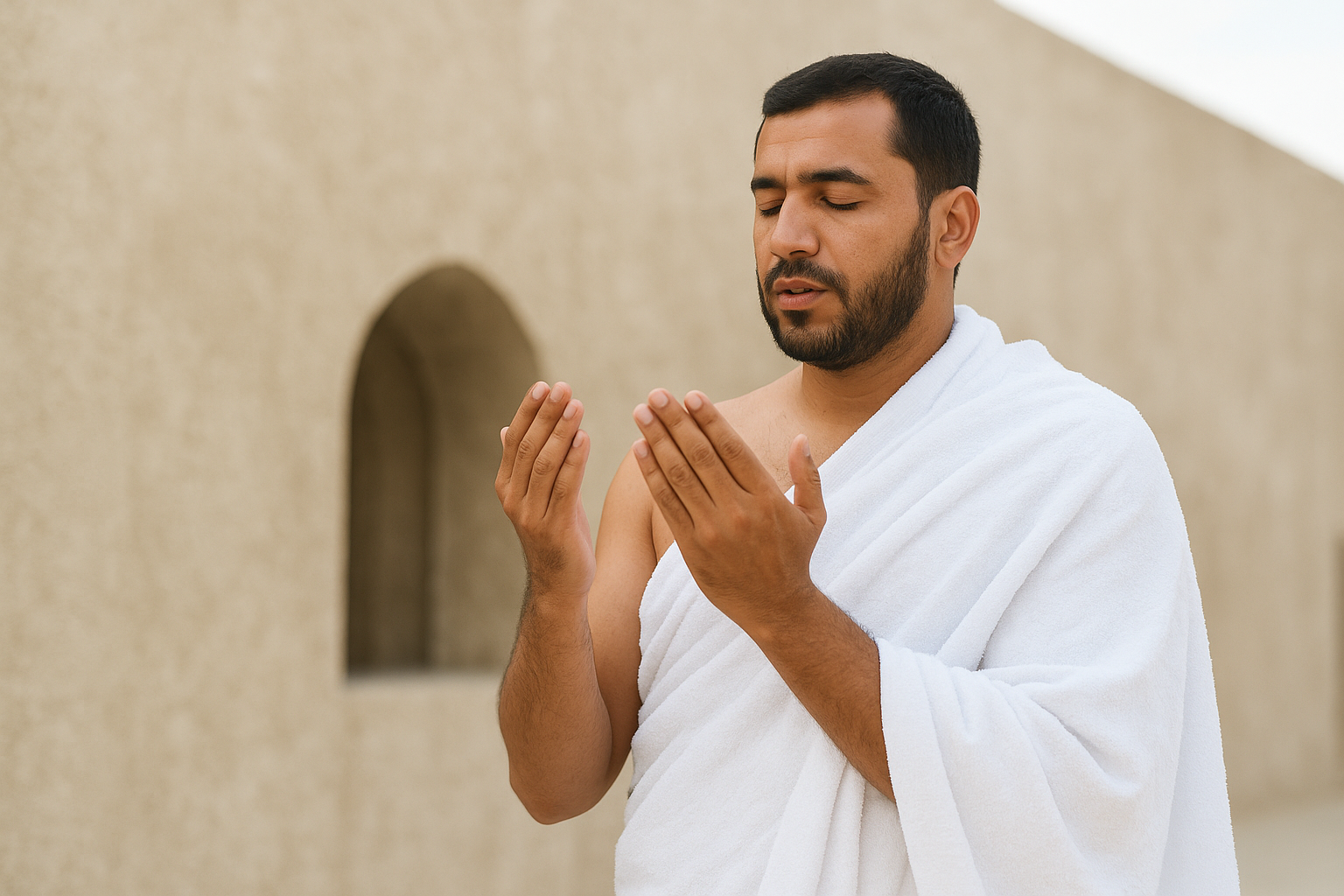
- Recite: "Labbayk Allahumma labbayk, labbayk la sharika laka labbayk, innal-hamda wan-ni'mata laka wal-mulk, la sharika lak"
- Continue reciting the talbiyah until you begin tawaf
- Men must keep their heads uncovered; women must not cover their faces
Step 2. Perform tawaf and sa'i on their behalf
Once you pass through the door of the Grand Mosque, stop reciting the talbiyah and keep the deceased in your intention throughout. The physical acts of tawaf and sa'i look identical to a standard Umrah, but your intention anchors every movement to the deceased person, not to yourself. Do not shift that intention mid-ritual. If you break your focus or lose track, simply renew your niyyah quietly in your heart before continuing.
How to complete the seven circuits of tawaf
Begin at the Black Stone (Hajar al-Aswad). Make a gesture toward it and say "Bismillah, Allahu Akbar" to mark the start of your first circuit. Walk counterclockwise around the Kaaba for all seven laps, keeping the Kaaba on your left at all times. Men perform idtiba (right shoulder uncovered) during tawaf only, not during sa'i.
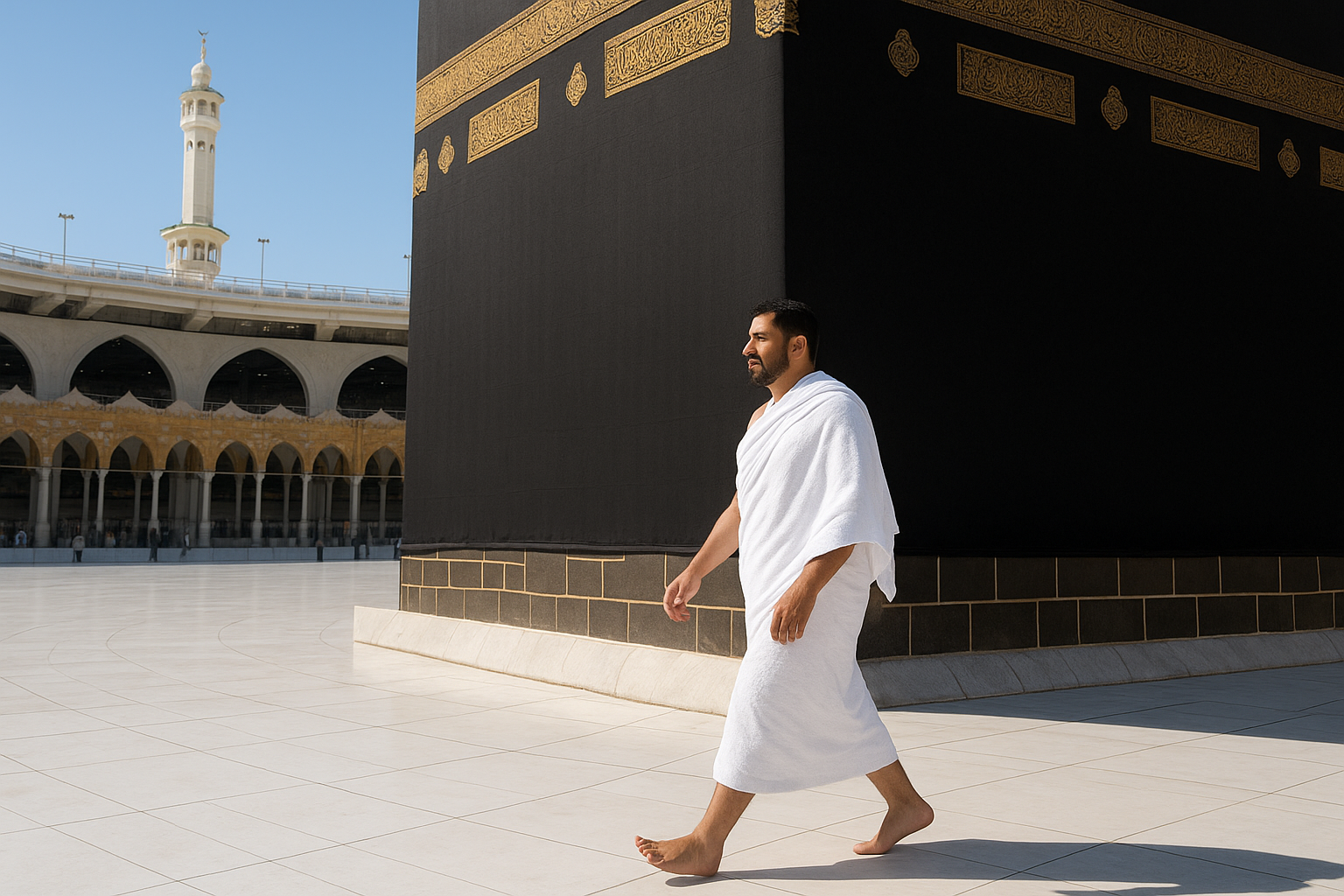
When performing umrah on behalf of deceased relatives, every step of tawaf counts as their act of worship, so maintain the intention with each circuit.
Use the time during circuits to make sincere duʿā for the deceased. There is no required specific supplication for each lap, but asking Allah to accept the tawaf on their behalf after each circuit is a recommended practice among scholars.
How to complete the seven lengths of sa'i
After tawaf, pray two rak'ahs near Maqam Ibrahim, then proceed to Safa for sa'i. Begin at Safa and walk toward Marwa, covering the full distance seven times total. Safa to Marwa counts as one, Marwa back to Safa counts as two. Men jog lightly between the green lights during each length. Maintain your intention for the deceased throughout all seven lengths without interruption.
Step 3. End the rites, make du'a, avoid common errors
After completing sa'i, only two actions remain to formally close the Umrah: cutting or shaving the hair, and making a sincere duʿā for the person on whose behalf you performed the pilgrimage. Both steps are brief, but they carry significant weight when performing Umrah on behalf of deceased relatives, because they bring the proxy ritual to a proper, intentional close.
Complete the hair cutting (halq or taqsir)
Halq (full shaving) and taqsir (shortening) are both valid for men; women only trim a small amount equal to a fingertip's length. When performing this rite as a proxy, you are cutting your own hair, not symbolically acting on theirs. The act of cutting your hair is what releases you from ihram and marks the formal end of the ritual. Do it with the same intention held in your heart: that this entire Umrah was completed on their behalf.
Once you cut your hair with the correct intention in place, the Umrah is considered complete and valid for the deceased person.
Make du'a for the deceased
Immediately after the hair cutting, pause and raise your hands in duʿā. This is the most emotionally significant moment in the entire proxy ritual. Use clear, personal language when addressing Allah on their behalf:
"O Allah, accept this Umrah from [name], forgive their sins, elevate their rank, and grant them mercy in the grave."
You are not limited to Arabic for this supplication. Speak in whatever language allows you to be most sincere and present.
Common errors to avoid
Several mistakes can undermine an otherwise correctly performed proxy Umrah. Avoid each of the following:
- Starting with a dual intention: entering ihram for both yourself and the deceased simultaneously is not valid
- Forgetting to renew niyyah after your personal Umrah if you perform both in the same trip
- Losing focus on whose Umrah you are performing during tawaf or sa'i without renewing the intention
- Omitting the father's name when naming the deceased, which weakens the specificity of the niyyah
A Simple Wrap-Up and Next Step
Performing Umrah on behalf of deceased loved ones is valid, supported by scholars, and within reach for any Muslim who meets the core conditions. You now have everything you need: the Islamic basis for the practice, the eligibility rules for the performer, and a clear step-by-step process covering niyyah, tawaf, sa'i, and the final rites. Follow each step with the correct intention, and the Umrah carries its full spiritual weight for the person you are honoring.
If traveling to Mecca yourself is not possible right now, you still have a reliable path forward. Badal Umrah assigns dedicated performers based in Mecca who carry out the full ritual on your loved one's behalf, complete with photo and video documentation, a personalized duʿā, and a completion certificate. Book a proxy Umrah for your loved one today and give them this act of worship with full confidence.