

Is Umrah for Others Allowed? Key Rulings and Process
Every year, many Muslim families face the challenge of honoring elderly parents or remembering loved ones who passed before making the sacred journey to Mecca. The option of Badal Umrah offers a meaningful way to fulfill these spiritual obligations when travel is not possible due to age, illness, or passing. Discover how this widely-accepted Islamic practice allows you to perform all the rites of Umrah by proxy and what you need to know about choosing services that respect both tradition and authenticity.
Table of Contents
- What Is Badal Umrah And Who Qualifies
- Islamic Rulings On Performing Umrah For Others
- Steps And Documentation For Badal Umrah Services
- Responsibilities And Rights Of The Nominated Representative
- Common Pitfalls And How To Ensure Validity
Key Takeaways
| Point | Details |
|---|---|
| Badal Umrah as a Substitute | Badal Umrah allows a person to perform the pilgrimage on behalf of someone unable to do so, channeling spiritual rewards to the beneficiary. |
| Eligibility Criteria | Beneficiaries must be unable to travel due to age, health, or financial issues, while performers must be sane, adult Muslims capable of completing the pilgrimage. |
| Intention and Documentation | Clear intention (Niyyah) is required to transfer rewards, supported by proper documentation to verify the beneficiary’s identity and the authorization to perform on their behalf. |
| Observing Ritual Integrity | Performers must meticulously complete all rituals as specified by Islamic guidelines to ensure the validity and spiritual significance of the pilgrimage. |
What Is Badal Umrah and Who Qualifies
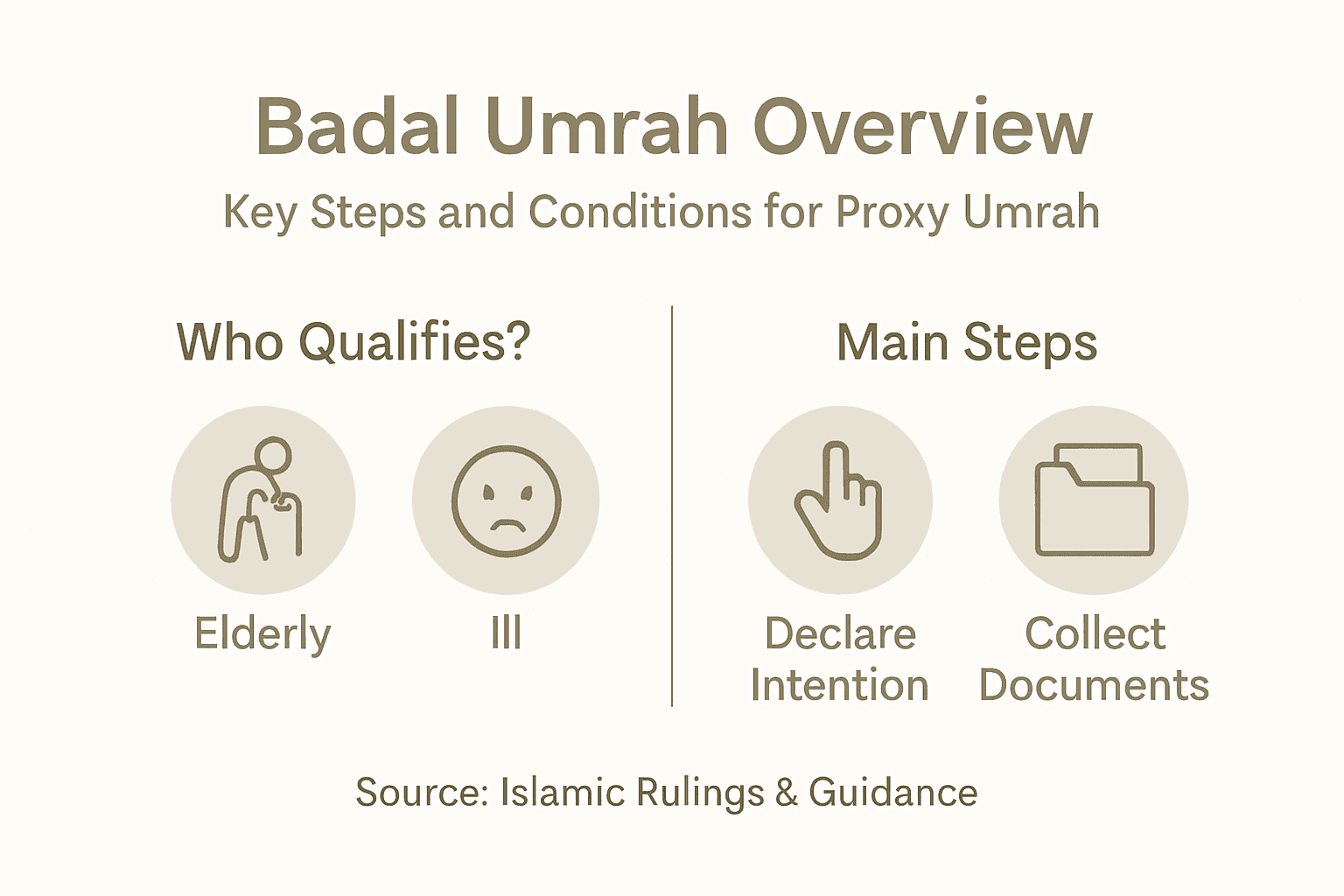
Badal Umrah represents a legitimate Islamic practice that allows someone to perform the Umrah pilgrimage on behalf of another person who cannot complete it themselves. The term “Badal” means substitute or proxy in Arabic, and this arrangement has deep roots in Islamic jurisprudence and practice. Unlike performing Umrah for yourself, which focuses on your personal spiritual journey, Badal Umrah channels the rewards and spiritual benefits to the person you represent. This becomes especially meaningful when that person is elderly, bedridden, financially unable to travel, or has already passed away. When you perform Badal Umrah, you complete all the same rituals and stages as a regular pilgrimage, but with the explicit intention that the rewards transfer to your designated beneficiary. The Umrah pilgrimage itself consists of specific acts of worship performed in and around Mecca that can be carried out any time throughout the year, making it distinct from the once-in-a-lifetime Hajj pilgrimage that occurs during specific Islamic calendar dates.
Qualifying to request or perform Badal Umrah involves clear Islamic and practical criteria. On the beneficiary side (the person for whom Umrah is being performed), they typically must be someone physically unable to travel, such as an elderly parent suffering from mobility issues, a spouse dealing with a chronic health condition, or a deceased family member whose wishes included completing Umrah before they passed. Financial inability also qualifies someone for Badal Umrah. A person who can demonstrate they lack the financial resources to travel to Mecca can request another Muslim to perform Umrah on their behalf. On the performer’s side, the person completing Badal Umrah must be a sane, adult Muslim capable of performing the pilgrimage physically and meeting its financial requirements. This means you must possess the mental clarity to understand the rituals, the physical ability to complete them, and sufficient funds to cover your own journey plus any agreed compensation for the service. You don’t need special qualifications beyond being a practicing Muslim in good standing.
Here is a comparison of who qualifies to request or perform Badal Umrah and the typical requirements:
| Role | Who Qualifies | Core Requirement | Special Consideration |
|---|---|---|---|
| Beneficiary | Elderly, chronically ill, deceased | Unable to travel physically | May be financially unable |
| Representative | Sane, adult Muslim | Can perform Umrah physically | Pays own and service expenses |
The qualification process centers on intention and legitimacy. When you intend to perform Badal Umrah, you must explicitly declare during your intention (Niyyah) that you perform these rites on behalf of the named individual. This verbal or mental declaration transforms a regular Umrah into a substitute pilgrimage carrying spiritual weight for your chosen beneficiary. The person requesting Badal Umrah should provide you with their full name and, if applicable, their date of birth or family information. For deceased individuals, their full name and the date they passed are typically recorded. Religious scholars across different Islamic schools have confirmed that this practice, when performed with sincere intention and proper procedure, is valid and transfers the spiritual rewards to the beneficiary. What makes Badal Umrah distinct from other Islamic practices is that it requires no special paperwork or formal religious permission, though working with reputable Badal Umrah services ensures everything proceeds correctly and provides documentation for your records.
Pro tip: Before arranging Badal Umrah, discuss with the beneficiary whether they have any specific duas (prayers) or intentions they’d like you to make during the pilgrimage, as this personal connection deepens the spiritual significance for both parties.
Islamic Rulings on Performing Umrah for Others
The Islamic legal position on performing Umrah for others is clear and well-established across major schools of Islamic jurisprudence. Scholars have consistently ruled that performing Umrah on behalf of others is permissible, whether the beneficiary is alive or deceased, and whether you perform it for one person or multiple people simultaneously. This ruling rests on centuries of Islamic scholarship and is grounded in the principles established by the Prophet Muhammad and his companions. The consensus among religious scholars is that when you perform Umrah with the sincere intention of channeling its spiritual rewards to a specific person, both you and that person receive the benefits of this act of worship. This principle extends to Tawaf (circumambulation around the Kaaba) and other optional acts of worship performed within the pilgrimage framework. The theological foundation recognizes that good deeds performed with proper intention can be transferred to others as a gift of spiritual reward, making Badal Umrah not just permissible but a meaningful expression of religious devotion and family care.
The conditions for validity in proxy pilgrimage follow specific Islamic guidelines that ensure the practice remains authentic and spiritually significant. Performing Umrah by proxy is allowed and may be obligatory when the principal cannot perform the pilgrimage themselves due to financial constraints, physical disabilities, advanced age, or other legitimate barriers. The agent or performer must meet fundamental requirements: they must be a mentally sound adult Muslim with the physical capacity to complete all rituals, the financial ability to cover their own pilgrimage expenses, and most importantly, they must hold clear intention to perform the Umrah specifically on behalf of the named beneficiary. This intention, known as Niyyah in Arabic, must be explicit and sincere. You cannot perform Umrah for yourself while secretly intending it for someone else. The moment you step into the sacred state of Ihram (the ritual state for pilgrimage), your stated intention becomes binding. Different Islamic schools have slightly varying perspectives on secondary details, but all major schools recognize the fundamental validity and permissibility of this practice.
What makes this ruling particularly significant for families is that it removes barriers between those who can travel to Mecca and those who cannot. An elderly father unable to walk long distances can have his devoted son or daughter complete the pilgrimage on his behalf. A widow managing finances alone can arrange for a trusted family member to fulfill this obligation. Deceased parents and grandparents can have their wishes honored through a representative who travels with their memory and intention. The spiritual continuity this creates within families reflects one of Islam’s core principles: supporting one another in matters of faith and worship. Some Islamic scholars note that when Umrah is performed on behalf of a deceased person, the deceased’s family may also experience spiritual benefit through this act of remembrance and devotion. This interconnected reward system strengthens family bonds while fulfilling individual spiritual obligations. The permission to perform Umrah for others demonstrates Islam’s flexibility in accommodating human circumstances while maintaining the sanctity and purpose of this sacred pilgrimage.
Pro tip: When performing Badal Umrah, write down the exact name of your beneficiary and keep this intention clear in your heart from the moment you begin preparations, as this clarity of purpose strengthens the spiritual legitimacy of your pilgrimage.
Steps and Documentation for Badal Umrah Services
The process of arranging and completing Badal Umrah follows a structured pathway that ensures both spiritual authenticity and practical clarity. When you decide to perform Umrah on behalf of someone else, the first critical step is obtaining clear authorization and identifying information from the beneficiary or their family. This means collecting their full legal name, date of birth (or passing date if deceased), contact information, and ideally a written statement authorizing you to perform this service on their behalf. For deceased individuals, you may need documentation like a death certificate or family records confirming their identity and your relationship to them. This documentation phase matters because it creates a clear record that ties the Umrah being performed to the specific person you represent. Many families keep these records as keepsakes of their loved one’s spiritual journey completed by proxy. The authorization typically includes any special intentions the beneficiary may have requested, such as specific duas to recite or charitable acts to perform during the pilgrimage.
Once documentation is prepared, the actual pilgrimage follows the same ritual steps as any standard Umrah, but with one crucial difference: your intention must explicitly name the person you represent. When you reach the Meeqat (the designated boundary for entering the sacred state), you must assume Ihram with a clear intention, stating aloud or in your heart that you perform this Umrah specifically for your named beneficiary. From that moment forward, you proceed through the complete sequence: reciting the Talbiyah (the sacred chant), performing Tawaf by circling the Kaaba seven times, completing the Sa’i by walking between the hills of Safa and Marwah, and concluding with hair trimming or shaving. Each step carries the weight of your stated intention, transferring the spiritual rewards to your beneficiary. The procedural approach remains unchanged from standard Umrah because the Islamic framework recognizes that intention transforms the nature of the worship without requiring different physical actions. Your presence, movement, and devotion in performing these rituals faithfully on behalf of another person constitutes the complete act of proxy worship.
Documentation also plays a role after your pilgrimage concludes. Reputable Badal Umrah services typically provide certification or documentation confirming that the Umrah was performed on behalf of the named individual, often including your receipt of the service, dates of travel, and sometimes photographic or video evidence of your presence in Mecca. This documentation serves multiple purposes: it provides the beneficiary’s family with tangible proof that the pilgrimage was completed, it creates a spiritual record that can be shared with other family members, and it ensures transparency in the service delivery. Some families frame these certificates or keep them in family records as a lasting memorial. The complete documentation package usually includes your full identification, the beneficiary’s full identification, the specific dates of Umrah performance, and sometimes details about duas or intentions fulfilled during the pilgrimage. When working with professional Badal Umrah services, proper preparation includes cleansing and entering Ihram at the Meeqat while possessing all required documentation in organized form. This systematic approach ensures nothing is overlooked and that the spiritual significance of the act is honored through practical diligence.
This summary shows major documentation needed for Badal Umrah arrangements:
| Document Type | Purpose | When Needed | Issued By |
|---|---|---|---|
| Beneficiary details | Identify recipient of Umrah | Always | Beneficiary/family |
| Death certificate | Verify deceased status for proxy | If beneficiary passed | Local authority |
| Authorization letter | Grant permission to representative | Recommended for clarity | Beneficiary/family |
| Service certificate | Confirm Umrah completion by proxy | After pilgrimage | Badal Umrah provider |
Pro tip: Before departing for Umrah, photograph or scan all documentation and send copies to a family member, keeping originals with you in a separate secure location to protect against loss while traveling.
Responsibilities and Rights of the Nominated Representative
When you accept the role of performing Badal Umrah on behalf of someone else, you assume both significant responsibilities and meaningful spiritual rights. Your primary responsibility is to perform all pilgrimage rituals with complete sincerity, precision, and adherence to Islamic guidelines. This is not a casual arrangement where you simply travel to Mecca and go through the motions. Every movement, every intention, and every ritual step must be executed faithfully and consciously, knowing that your actions directly affect the spiritual journey of another person. The nominated representative must perform the rituals sincerely and according to Islamic guidelines, fulfilling all requirements completely for the proxy Umrah to be valid. This means you cannot skip any part of the Umrah process, take shortcuts, or modify the procedures based on personal preference. You must maintain the sanctity of Ihram, follow the prescribed sequence of Tawaf and Sa’i, perform the ritual hair trimming or shaving, and complete every aspect exactly as the Islamic framework prescribes. This responsibility extends beyond the physical acts to include your mental and spiritual state. You must enter this pilgrimage with a clear heart free of distractions, focused entirely on channeling spiritual benefit to your beneficiary.

Your responsibilities also include maintaining detailed records and communication throughout the process. Before you depart, confirm with the beneficiary or their family that you have their correct full name, any special intentions they wish included in your duas, and clear understanding of their relationship to you. During your pilgrimage, you carry the weight of representing not just one person but often their family’s collective hopes and prayers. After returning, you should report back to the family with details of your experience, photographs if possible, and certification documents confirming the Umrah was completed on their behalf. This communication responsibility transforms Badal Umrah from a transaction into a deeply personal spiritual service. Many representatives find themselves emotionally moved by this responsibility, experiencing the pilgrimage on multiple levels: their own connection to worship and their role as a spiritual representative. You must also ensure that nothing invalidates the pilgrimage, which means avoiding actions that break Ihram, maintaining ritual purity, and following all Islamic guidelines throughout your journey.
In exchange for these responsibilities, you gain meaningful spiritual rights and rewards. The representative gains merit for fulfilling this religious service, while the person on whose behalf Umrah is performed receives full spiritual benefit and reward. This means you do not lose the opportunity to benefit from the pilgrimage yourself. Islamic tradition teaches that both the performer and the beneficiary receive rewards from this act of worship. Your dedication to fulfilling someone else’s religious obligation demonstrates compassion, family loyalty, and devotion to Islamic principles, and these qualities earn their own spiritual merit. You also gain the personal growth that comes from serving others in matters of faith, the satisfaction of enabling someone who could not otherwise fulfill this pilgrimage, and often deeper family bonds forged through this shared spiritual endeavor. Many representatives describe the experience as profoundly moving, combining their own pilgrimage experience with the honor of representing their loved one. Your right extends to maintaining your own spiritual connection to the Umrah while faithfully representing another. The Islamic framework recognizes that you can simultaneously benefit from your own devotion while transferring the primary spiritual rewards to your beneficiary. This dual benefit reflects Islam’s recognition that acts of worship performed for others can enrich both parties.
Pro tip: Before your journey begins, sit with your beneficiary or their family and ask them to share memories or personal duas they want remembered during the pilgrimage, which transforms your role from service into a deeply shared spiritual experience.
Common Pitfalls and How to Ensure Validity
Performing Badal Umrah requires careful attention to detail because even small oversights can compromise the spiritual validity of the entire pilgrimage. One of the most common pitfalls occurs at the very beginning: improper assumption of Ihram or failing to state a clear intention. Many people enter the sacred state without explicitly declaring that they perform this Umrah on behalf of a specific named individual. Your intention must be crystal clear, stated either aloud or firmly in your heart, identifying the exact person you represent. This is not something you can assume or handle casually. You must say or think something like: “I intend to perform Umrah on behalf of full name of beneficiary].” Without this explicit declaration at the Meeqat, the Umrah may not validly transfer its rewards to your beneficiary. Another critical error involves skipping or rushing through required rites. Some people feel pressured by crowds, fatigue, or time constraints and inadvertently skip portions of Tawaf or Sa’i, or perform them incompletely. [Common pitfalls during Umrah include improper assumption of Ihram, neglecting the intention, or skipping required rites such as Tawaf or Sa’i. Each of these elements is mandatory for validity. You cannot compromise on completeness. The Tawaf must consist of seven full circles around the Kaaba, and the Sa’i requires walking between Safa and Marwah seven times. Anything less invalidates the pilgrimage for your beneficiary.
Another significant area where people stumble involves inadvertently breaking Ihram through forbidden actions. During Ihram, you must avoid specific behaviors: clipping nails, cutting hair, applying perfume, hunting, sexual relations, and wearing certain types of clothing. Many pilgrims accidentally invalidate their Ihram by using scented products they did not realize contained fragrance, trimming a nail without thinking, or wearing prohibited garments. For Badal Umrah specifically, breaking Ihram means your beneficiary does not receive the full spiritual benefit. To ensure validity, the proxy must renew the intention explicitly for the person represented, perform all obligatory acts meticulously, and avoid forbidden actions during Ihram. If you do accidentally break Ihram, you may need to offer expiation, which typically involves sacrificing an animal or making a charitable donation. This is why knowing the restrictions beforehand is crucial. Study them carefully before departing. Many people bring written reminders or checklists of what is forbidden during Ihram, which helps prevent accidental violations.
Documentation and authorization represent another area where validity can become questionable. When performing Badal Umrah, you should have clear written or verbal authorization from the beneficiary or their family. This protects against potential disputes and ensures transparency. Keep records showing you have permission to represent this person. For deceased individuals, document that the family requested this service and that you have their consent. This documentation does not affect the spiritual validity of the Umrah itself, but it protects the legitimacy of the arrangement and prevents misunderstandings. To ensure complete validity, renew your intention multiple times throughout the pilgrimage, especially at key moments like the beginning of Tawaf and Sa’i. Many experienced pilgrims recommend renewing the intention before each major ritual to reinforce your commitment to representing your beneficiary. Additionally, maintain a calm, focused mental state throughout the pilgrimage. The emotional and spiritual weight of representing someone else can feel overwhelming, but approaching it with mindfulness and reverence strengthens the spiritual acceptance of your work. Avoid distractions, negative thoughts, or casual behavior while in Ihram. This pilgrimage is not a tourist experience but a sacred duty undertaken on behalf of another person.
Pro tip: Write down the complete list of Ihram restrictions on a card and keep it in your pocket throughout the pilgrimage, reviewing it daily to prevent accidental violations that could compromise your beneficiary’s spiritual benefit.
Fulfill Spiritual Obligations with Trusted Badal Umrah Services
The article sheds light on the essential rulings and process of performing Umrah on behalf of others, addressing challenges faced by those physically unable to undertake this sacred journey themselves. If you are seeking a reliable way to honor the spiritual needs of elderly, ill, or deceased loved ones, understanding the clear Islamic guidelines around Badal Umrah is crucial. Key concerns such as ensuring proper intention (Niyyah), following ritual steps meticulously, and securing valid authorization highlight the importance of a trustworthy service that upholds these principles.
Discover tailored Umrah Packages – Badal Umrah designed specifically for proxy pilgrims who want to deliver authentic, documented spiritual benefits to their beneficiaries. At Badal Umrah, you will find comprehensive solutions that combine religious compliance, transparent documentation, and a compassionate approach aligned with Islamic values. Take the important step today and honor your family’s spiritual journey securely and sincerely by partnering with experts committed to this sacred responsibility. Start now by exploring our Home page – Badal Umrah and see how we simplify this profound act of worship on behalf of others.
Frequently Asked Questions
Is it permissible to perform Umrah for someone else?
Yes, performing Umrah on behalf of another person is permissible in Islam. This practice is known as Badal Umrah and is supported by various Islamic scholars.
Who qualifies to request someone to perform Badal Umrah?
Individuals who are elderly, chronically ill, financially unable to travel, or deceased can qualify for others to perform Badal Umrah on their behalf.
What are the core requirements for someone performing Badal Umrah?
The representative must be a sane, adult Muslim, capable of performing all Umrah rituals and must also assume the financial costs of their pilgrimage along with any agreed compensation for the service.
How is the intention (Niyyah) declared for Badal Umrah?
The intention to perform Badal Umrah must be explicitly stated, either aloud or in the heart, during the assumption of Ihram, clearly identifying the beneficiary for whom the Umrah is being performed.