

How to perform Umrah on behalf of a deceased: full guide
Many families believe that once a loved one has passed, the opportunity to perform Umrah on their behalf is simply gone. That belief is incorrect. Performing Umrah for the deceased is permitted according to the majority of Islamic scholars, and families around the world are increasingly turning to this practice as a meaningful act of love and devotion. This guide covers the scholarly basis, the exact conditions, the step-by-step process, and the practical options available to you, so you can fulfill this duty with confidence and sincerity.
Table of Contents
- Understanding Umrah Badal: Permissibility and foundation
- Who can perform Umrah Badal and for whom?
- Step-by-step process: How to arrange Umrah on behalf of the deceased
- Comparing Umrah Badal, Hajj Badal, and direct Umrah: Key differences
- Arranging Umrah Badal: Practical options and costs
- Spiritual impact for the deceased and their families
- How Badal Umrah can help you fulfill Umrah for your loved one
- Frequently asked questions
Key Takeaways
| Point | Details |
|---|---|
| Permissible act | Performing Umrah on behalf of deceased loved ones is allowed in Islam with scholarly backing. |
| Qualifications required | The proxy must be a Muslim who has already completed their own Umrah to perform for someone else. |
| Step-by-step process | Umrah Badal follows a clear process from intention to fulfillment, allowing one proxy per person at a time. |
| Proxy services available | Trusted providers offer affordable proxy Umrah arrangements globally, with documentation for families. |
| Spiritual value prioritized | Du’a remains most important, but Umrah Badal is a meaningful form of ongoing charity for the deceased. |
Understanding Umrah Badal: Permissibility and foundation
Umrah Badal (also written as Badal Umrah) refers to performing the Umrah pilgrimage on behalf of another person who is unable to do so themselves. The word “badal” means substitute or proxy in Arabic. This practice is rooted in Islamic jurisprudence and draws its legitimacy from established rulings on Hajj by proxy.
The permissibility of Umrah Badal is derived by analogy from Hajj by proxy, which is accepted by the majority of scholars across the four Sunni schools of thought. The Hanafi, Shafi’i, and Hanbali schools all permit proxy Umrah, though with some variation in conditions. The Maliki school is more restrictive but does not outright reject the concept.
For families, the spiritual value of this act is significant. When you arrange Umrah Badal for a deceased loved one, it functions as a form of sadaqah jariyah (ongoing charity), meaning the reward continues to flow to the deceased even after death. As the proxy Umrah explanation from Islamic sources notes, combining this act with sincere du’a (supplication) and charitable giving maximizes the spiritual benefit for the deceased.
Here is a summary of what grounds this practice:
- Hajj by proxy is established in authentic hadith literature
- Umrah Badal is permitted by scholarly analogy to Hajj Badal
- The Hanafi, Shafi’i, and Hanbali schools accept it with conditions
- It counts as sadaqah jariyah for the deceased
- Du’a alongside the act is strongly recommended by scholars
“The majority of scholars hold that performing Umrah on behalf of a deceased person is valid, drawing on the same principles that permit Hajj by proxy.” For a deeper look at what this means in Islamic law, the Umrah Badal meaning explained resource provides clear context, and the Islamic rulings on Badal Umrah page covers scholarly positions in detail.
Who can perform Umrah Badal and for whom?
Not everyone can serve as a proxy, and not every situation qualifies. Understanding these conditions ensures the act is valid and spiritually sound.
According to the shar’i ruling on proxy, the proxy must be a Muslim who has already performed their own Umrah, and the act cannot be performed on behalf of a non-Muslim. These are firm conditions across the schools that permit it.
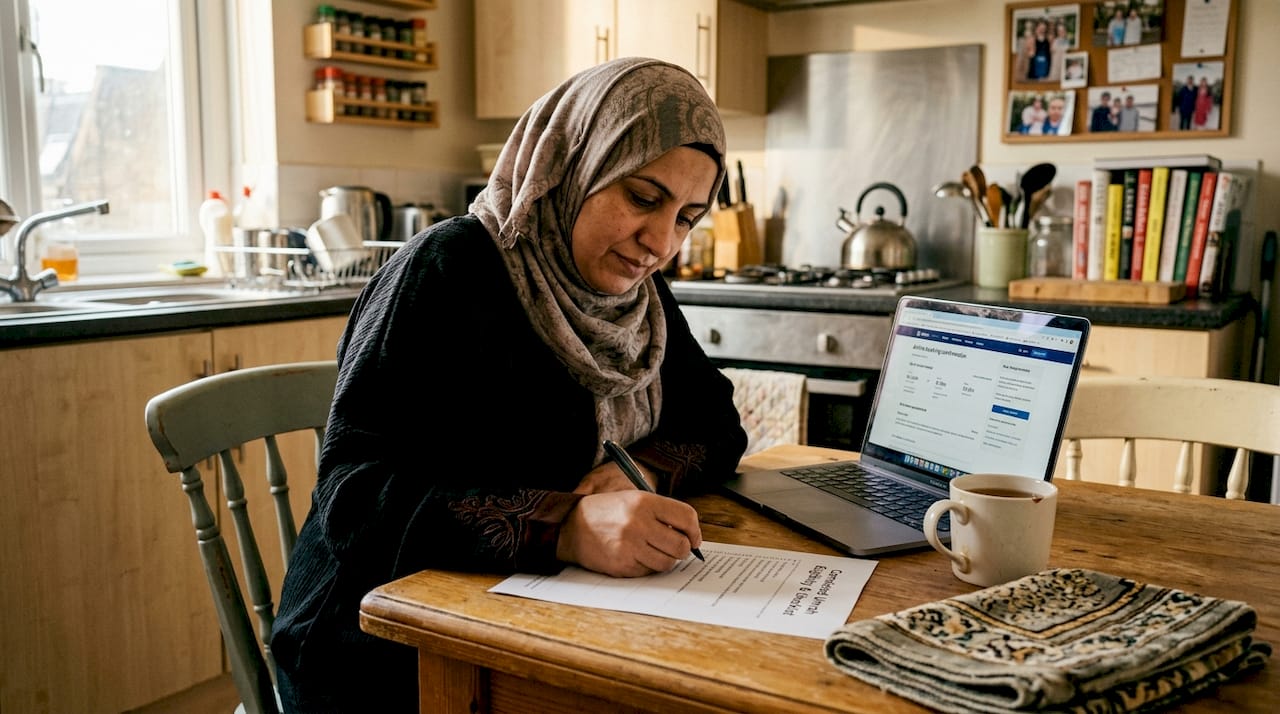
Here is a clear breakdown of the eligibility rules:
Who can serve as a proxy:
- Must be an adult Muslim
- Must have already completed their own Umrah (this is obligatory before acting as proxy)
- Can be male or female
- Should be physically capable of completing all rites
For whom is Umrah Badal valid:
- A deceased Muslim who wished to perform Umrah but was unable to
- A living Muslim who is permanently incapacitated due to illness or old age, with their consent
- Cannot be performed for a healthy, able-bodied living person
- Cannot be performed for a non-Muslim
One important financial point: it is permissible to use the deceased person’s estate to fund the proxy Umrah, similar to how debts are settled before inheritance is distributed. This is addressed in detail in the guide on performing Umrah for others and the family Umrah Badal practices resource.
Pro Tip: If you are arranging Umrah Badal for a living incapacitated person, always obtain their verbal or written consent beforehand. This is a condition for validity according to most scholars.
Step-by-step process: How to arrange Umrah on behalf of the deceased
The process follows the standard Umrah rites with specific adjustments for intention and niyyah (intention). Here is how it works, step by step.
According to Islamic guidance on proxy Umrah, the proxy must first complete their own Umrah, then make a separate niyyah in the deceased’s name and complete all rites again.
- Complete your own Umrah first. The proxy must have already fulfilled their personal Umrah obligation before acting on behalf of another.
- Make a clear niyyah. State the intention aloud or in your heart: “I am performing this Umrah on behalf of [name of deceased].”
- Enter Ihram from the correct miqat. The miqat (designated boundary) or Tan’eem (a nearby location in Makkah) is used depending on your situation.
- Recite the Talbiyah on the deceased’s behalf. Say: “Labbayk Allahumma 'an [name].”
- Perform Tawaf. Complete seven circuits around the Ka’bah with the intention maintained for the deceased.
- Perform Sa’i. Walk seven times between Safa and Marwa.
- Complete Tahallul. Shave or trim the hair to exit the state of Ihram.
- Make du’a for the deceased. Supplicate sincerely for the person on whose behalf you performed the Umrah.
One Umrah covers one person. If you wish to perform Umrah Badal for multiple deceased relatives, each must be done separately.
| Step | Action | Key note |
|---|---|---|
| 1 | Complete own Umrah | Obligatory prerequisite |
| 2 | State niyyah | Name the deceased clearly |
| 3 | Enter Ihram | From miqat or Tan’eem |
| 4 | Tawaf | Seven circuits, full intention |
| 5 | Sa’i | Seven rounds, Safa to Marwa |
| 6 | Tahallul | Hair shaving or trimming |
| 7 | Du’a | Supplication for the deceased |
For a clear comparison of how this differs from a standard pilgrimage, the difference between Umrah types article is a helpful reference. Families with loved ones who have health conditions may also find the special provisions for ill page useful.
Pro Tip: If you cannot travel to Makkah yourself, hiring a trusted and verified proxy service is a valid and accepted option. Ensure the agent is a qualified Muslim who has performed their own Umrah.
Comparing Umrah Badal, Hajj Badal, and direct Umrah: Key differences
Understanding how these three practices relate to each other helps families make informed decisions. Let’s look at the key distinctions.
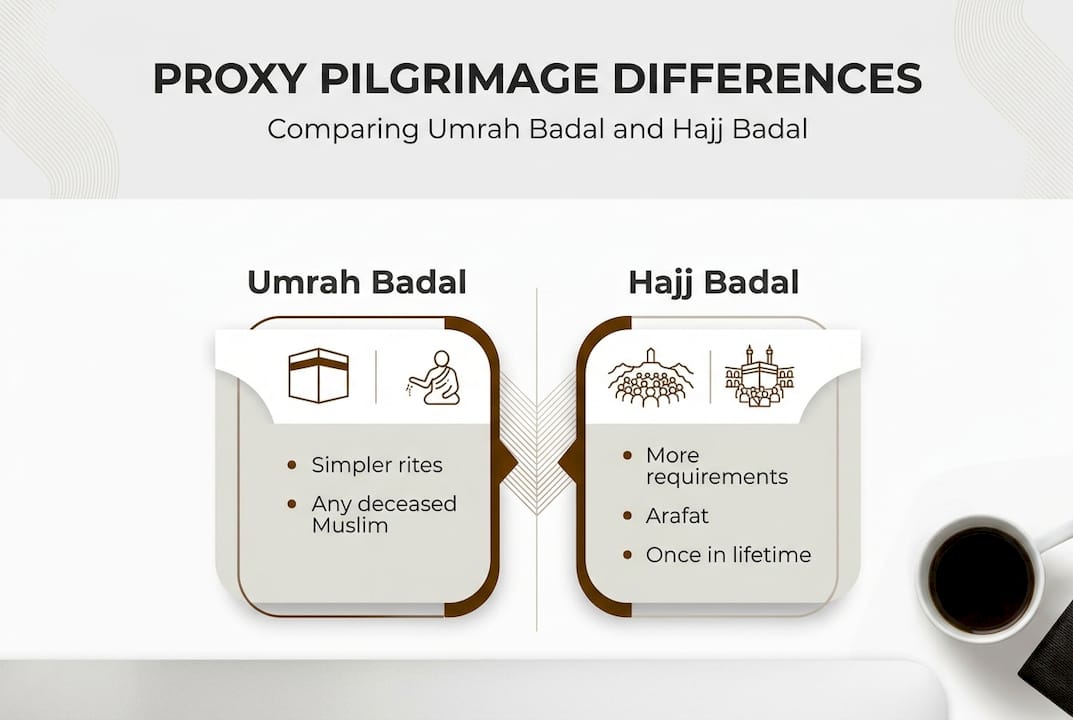
All four Sunni schools accept Hajj by proxy and apply the principle variably to Umrah, with the majority permitting Umrah Badal under the same conditions.
| Feature | Personal Umrah | Umrah Badal | Hajj Badal |
|---|---|---|---|
| Performed for | Yourself | Deceased or incapacitated | Deceased or incapacitated |
| Proxy required | No | Yes | Yes |
| Proxy must have own Umrah/Hajj | N/A | Yes (Umrah) | Yes (Hajj) |
| Scholarly consensus | Universal | Majority accept | All four schools accept |
| Counts as sadaqah jariyah | For self | For the deceased | For the deceased |
| Du’a recommended | Always | Always | Always |
The Hajj proxy explained resource provides further detail on how Hajj Badal is structured. For rulings specific to Umrah, the Umrah for others rulings page is a reliable reference.
“Scholars across all four Sunni schools agree that du’a for the deceased is always recommended, regardless of whether proxy rites are performed. It is the most direct and universally accepted form of spiritual benefit for those who have passed.”
For families who want to go beyond the ritual itself, the community service and Umrah proxy article explores how combining charitable acts with proxy Umrah deepens the spiritual impact.
Arranging Umrah Badal: Practical options and costs
Not every family can send a relative to Makkah. Fortunately, verified proxy Umrah services exist to help families fulfill this duty from anywhere in the world.
Several services perform proxy Umrah for the deceased, with prices typically ranging from $199 to $399, often including certificates and media documentation. The proxy Umrah services available today vary in what they offer, so knowing what to look for matters.
What to look for in a trustworthy provider:
- Confirmation that the proxy has performed their own Umrah
- Clear documentation of the niyyah made on behalf of the deceased
- Photo or video evidence of the rites being performed
- A personalized certificate with the deceased’s name
- Transparent pricing with no hidden fees
- Positive reviews from verified customers
| Package type | Typical price range | Includes |
|---|---|---|
| Basic du’a package | $99 to $149 | Du’a at Haram, certificate |
| Standard Umrah Badal | $199 to $249 | Full rites, certificate, photos |
| Premium Umrah Badal | $299 to $399 | Full rites, video, certificate, personalized report |
For families who want to understand the broader value of this act, the Umrah donation advantages article explains the spiritual rewards in detail. Those interested in the humanitarian dimension can also read the humanitarian Umrah guide.
Spiritual impact for the deceased and their families
Beyond the legal and procedural aspects, Umrah Badal carries deep spiritual meaning for both the deceased and the family arranging it.
Scholars confirm that Umrah Badal functions as ongoing charity for the deceased, but they also emphasize that sincere du’a remains the most important gift a living person can offer.
Here is what families can expect spiritually from this act:
- The deceased receives the reward of the Umrah as sadaqah jariyah
- The family fulfills a religious duty, bringing peace of mind
- The act strengthens the family’s own connection to worship and remembrance
- It serves as a reminder of mortality and the importance of spiritual preparation
“Du’a for the deceased is the most universally accepted and spiritually powerful act. Umrah Badal adds to this by providing a structured act of worship that carries its own reward.”
Many families who arrange proxy Umrah through services like those listed on Umrah Badal services report a sense of closure and spiritual connection. The act of intentionally honoring a loved one through worship is itself a form of remembrance that benefits the living as much as the deceased. For more on how this connects to community and faith, the community service in Umrah article is worth reading.
How Badal Umrah can help you fulfill Umrah for your loved one
If you are ready to arrange Umrah Badal for a deceased family member but cannot travel to Makkah yourself, Badal Umrah offers verified, trustworthy packages designed to make this process simple and spiritually sound.
Every package at badalumrah.org is performed by qualified proxies who have completed their own Umrah, ensuring full compliance with Islamic conditions. Families receive personalized certificates, photo and video documentation, and the assurance that every rite was completed with sincerity and care. The Umrah Badal du’a package is a meaningful starting point, while the Barakah Premium Package offers the most complete documentation and coverage. Browse all available options through the full Umrah package options page and take the first step toward honoring your loved one today.
Frequently asked questions
Is Umrah Badal valid for any relative, or only parents?
Umrah Badal can be performed for any deceased Muslim, not just parents, as long as the proxy meets the required conditions. There is no restriction based on family relationship.
Can I use inheritance money to pay for Umrah Badal?
Yes, using a deceased person’s estate for Umrah Badal is allowed. Scholars permit using the estate before distributing inheritance, similar to how debts are settled first.
Is there an official certificate or proof when someone arranges Umrah by proxy?
Many proxy Umrah providers offer certificates and media including photos or videos upon completion, giving families documented confirmation of the rites performed.
Can women serve as proxies for Umrah Badal?
Yes, both Muslim men and women can perform Umrah Badal. The eligibility conditions apply equally regardless of gender, as long as the proxy has completed their own Umrah.
Is performing Umrah Badal better than making constant du’a for the deceased?
Scholars emphasize that du’a is superior, but Umrah Badal is a valid and rewarding act that adds sadaqah jariyah for the deceased. Both together are the most complete approach.