

Essential donation checklist for Muslims: maximize blessings
TL;DR:
- Proper intention, organization verification, and completing personal worship are essential in Islamic charitable giving.
- Donating on behalf of others during Umrah requires specific conditions, including performing one’s own Umrah first.
- Combining worship with structured donations through trusted, Shariah-compliant services maximizes spiritual rewards and impact.
Many Muslims feel a deep sense of responsibility when it comes to charitable giving, especially when it intersects with sacred acts like Umrah. When you are performing Umrah on behalf of an elderly parent, an ill spouse, or a departed loved one, the stakes feel even higher. You want every dollar and every deed to count. But without a clear framework, it is easy to overlook important steps, make unintentional mistakes, or miss the full spiritual reward available to you. This article gives you a practical, faith-based donation checklist designed specifically for Muslims who want to fulfill their religious obligations with confidence, care, and lasting impact.
Table of Contents
- Understand the religious priorities for donations
- Donation checklist: Preparation and verification steps
- Comparing donation methods: Which fits your situation best?
- Best practices and common mistakes in Umrah-related donations
- Why most checklists miss the heart of true giving
- Ready to fulfill meaningful donations in your next Umrah?
- Frequently asked questions
Key Takeaways
| Point | Details |
|---|---|
| Check donation priorities | Clarify religious obligations and proper intentions before giving charity. |
| Follow a preparation checklist | Verify organizations, documentation, and Shariah compliance for all donations. |
| Choose the right method | Compare donation methods to fit your family’s needs and maximize impact. |
| Avoid common mistakes | Steer clear of intention errors and use only trusted, compliant charities. |
| Connect with meaning | Focus on sincere intention and lasting spiritual benefit for truly impactful giving. |
Understand the religious priorities for donations
Before opening your wallet or filling out an online form, it helps to understand why and how Islamic teachings shape charitable giving. Intention is everything in Islam. The Prophet Muhammad (peace be upon him) said that actions are judged by intentions, and this principle applies directly to every act of charity you perform.
Islam recognizes several core categories of giving:
- Zakat: The obligatory annual almsgiving calculated on your wealth, approximately 2.5% of eligible assets held for one lunar year.
- Sadaqah: Voluntary charity given at any time, for any person, living or deceased.
- Waqf: A charitable endowment that benefits a cause or community indefinitely, often connected to mosques, schools, or water projects.
When you connect these acts of giving to Umrah, particularly Umrah Badal (performing Umrah by proxy for someone unable to do so), the rewards multiply. Donating on behalf of others is a valid and rewarding act in Islam, especially in connection with major acts of worship. Understanding the spiritual rewards of Umrah donations helps you appreciate why this combination holds such significance.
Key priorities before making any Umrah-related donation:
- Confirm your own Zakat obligations are fulfilled first
- Set a clear, sincere intention (niyyah) for every act of giving
- Identify whether the recipient is living, ill, elderly, or deceased, as this affects rulings
- Verify that the cause or organization is Shariah-compliant
- Specify whom the donation or act is made on behalf of, clearly and explicitly
A common mistake families make is combining multiple intentions without proper separation. For example, assuming one donation covers both Zakat and Sadaqah for a relative is not permissible. Each obligation requires its own distinct intention and act.
“The best charity is that given when you are in good health and fear poverty, and hope for wealth.” (Sahih Bukhari)
Pro Tip: If you are new to Umrah for others explained, consult a trusted scholar or verified Islamic resource before proceeding, so your acts of worship are valid from the start.
Donation checklist: Preparation and verification steps
With religious priorities in mind, let’s move to the practical steps every Muslim should take before and during the donation process. This checklist is designed to be used in sequence, from the moment you set your intention to the moment you receive confirmation.
- Set your niyyah: Clearly state in your heart and, if helpful, verbally whom you are donating for and why.
- Calculate the amount: Know exactly how much you owe in Zakat or how much you wish to give as Sadaqah.
- Research the organization: Look for Islamic certification, transparent financial reporting, and clear fund allocation practices.
- Confirm Shariah compliance: Ensure the charity does not invest in or support anything prohibited in Islam (interest-based finance, alcohol, etc.).
- Verify humanitarian impact: Review reports or testimonials showing how funds are actually used.
- Complete your own worship first: As performing Umrah correctly requires, you must complete your own Umrah and exit Ihram before acting as a proxy or making connected donations for others.
- Document the donation: Save receipts, screenshots, or emails for both tax and religious record-keeping purposes.
- Inform the family: If donating on behalf of a relative, let the family know so they can make Du’a (supplication) together.
- Follow up: Check back with the organization to confirm funds were received and allocated correctly.
For a detailed walkthrough of the proxy process, the step-by-step Umrah proxy guide provides clear, updated guidance for 2026.
Pro Tip: Keep a dedicated folder, physical or digital, where you store all donation records. This is especially useful during Ramadan and Hajj season when multiple donations may overlap. It also simplifies Zakat calculations in the following year.
Beyond documentation, think about social responsibility in Umrah as an extension of your personal piety. Your giving is not just a transaction. It is a statement of values.
Comparing donation methods: Which fits your situation best?
Once you know how to prepare and vet donations, your next question is likely about which methods to use and when. Not every giving method suits every family or situation.
| Donation method | Best for | Key benefit | Main risk |
|---|---|---|---|
| Cash (in-person) | Local giving, direct need | Immediate and tangible | No documentation trail |
| Online transfer | Remote donors, global causes | Fast, traceable, convenient | Requires vetting the platform |
| Umrah donation package | Families of elderly or ill relatives | Combines worship and charity | Must confirm Shariah compliance |
| Direct humanitarian support | Crisis situations like Gaza | Urgent, high-impact | Funds may be difficult to trace |
For families supporting elderly or ill relatives, Umrah donation packages are often the most meaningful option. They combine the act of worship (performing Umrah by proxy) with structured charitable giving, and reputable providers include documentation so families have spiritual and practical proof of fulfillment.
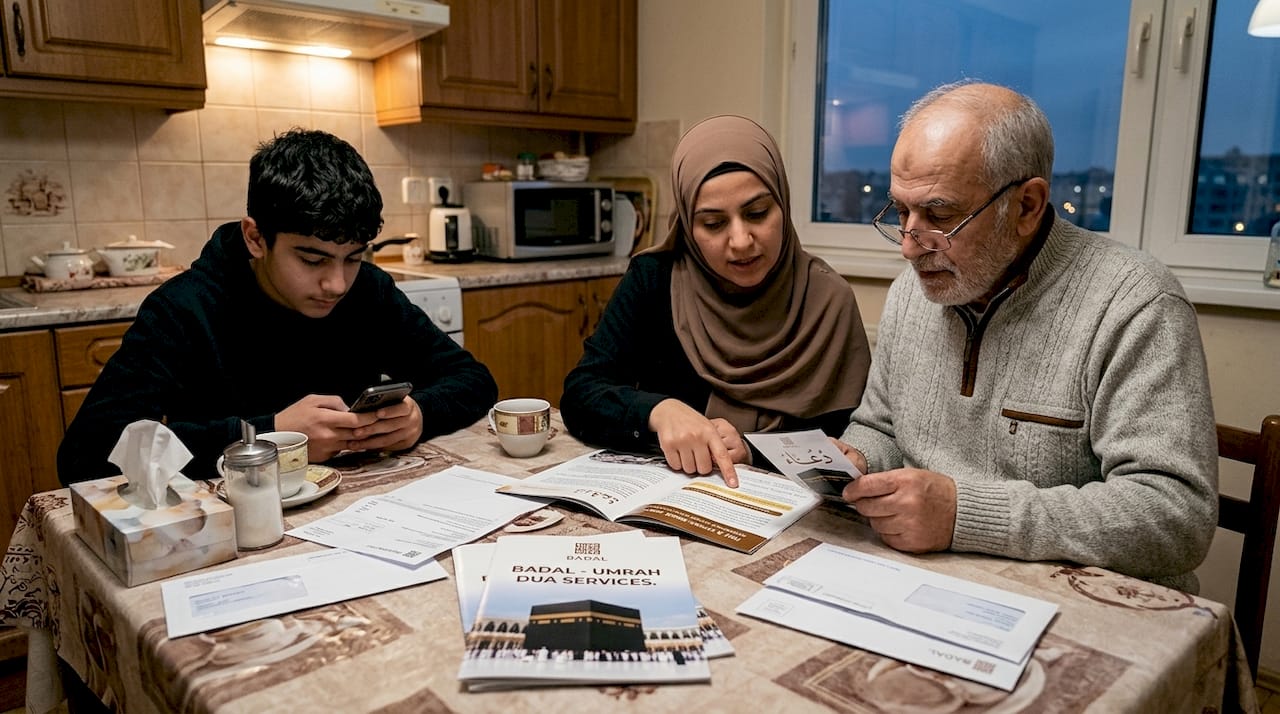
Supporting humanitarian efforts through your Umrah package adds another layer of purpose. Some providers, including badalumrah.org, donate 10% of profits directly to humanitarian efforts in Gaza, meaning your package gives beyond your immediate family.
When choosing a method, consider:
- Is the recipient local or abroad?
- Do you need formal documentation for religious or tax purposes?
- Is this a one-time gift or an ongoing commitment?
- Are you combining the donation with an act of worship like Umrah Badal?
It is also worth noting that multiple proxies in one trip require a new intention and Ihram each time according to Islamic rules. This affects how families plan donations connected to proxy worship. For full guidance on what each package includes, the Umrah package guide covers the most current options available in 2026.
Best practices and common mistakes in Umrah-related donations
Choosing the right method is important, but to truly maximize your giving, you need to know what works best in practice and where others go wrong.
Best practices from experienced donors and scholars:
- Always specify the beneficiary’s full name and relationship when donating on their behalf
- Give charity regularly, not only during Ramadan or Hajj season, to build consistent spiritual habits
- Choose organizations that provide detailed impact reports, not just receipts
- Pair your donation with sincere Du’a for the person you are giving on behalf of
- Learn the four pillars of Umrah so you understand what the proxy performer is completing on your relative’s behalf
Common mistakes to avoid:
- Failing to set a clear, specific intention before donating
- Donating to unverified organizations without checking their Islamic compliance
- Assuming one payment covers multiple distinct obligations
- Skipping documentation, which creates uncertainty in both spiritual and practical terms
- Performing or arranging proxy Umrah without completing your own first
As Islamic scholarship affirms, proper sequence and clear intention are especially important. Donors should perform Umrah for themselves first, then for others. This order is not optional.
| Scenario | Relative reward level | Key condition |
|---|---|---|
| Sadaqah during Ramadan | Very high | Sincere intention required |
| Zakat on time | Obligatory, high | Must meet nisab threshold |
| Umrah Badal with donation | High | Proxy must complete own Umrah first |
| On-site giving in Makkah | High | Must be Shariah-compliant use |
For more on charity in Ramadan and how timing affects reward, dedicated resources explain the Islamic reasoning in full.
“Charity does not decrease wealth.” (Sahih Muslim)
This reminder from prophetic tradition is particularly meaningful when families feel financially stretched but still want to fulfill obligations for their loved ones.
Why most checklists miss the heart of true giving
Most donation guides focus almost entirely on mechanics: which form to fill out, which account to use, which percentage to calculate. And while those steps matter, they can quietly shift your focus away from what giving is really about.
We have seen families complete every item on a checklist with precision, yet feel spiritually empty afterward. Why? Because they treated giving as a transaction rather than an act of worship. True giving begins before you open your phone or reach for your bank card. It begins with genuine care for the person you are giving on behalf of and a real connection to the cause you are supporting.
When you read about true spiritual rewards and reflect on them before donating, something shifts. You pray for your relative. You feel their absence. You make Du’a that Allah accepts it. That sincerity is what transforms a routine transfer into a lasting legacy. A checklist is a tool. Intention is the soul.
Ready to fulfill meaningful donations in your next Umrah?
If this checklist has helped you think more clearly about how to give, and especially how to give on behalf of someone you love, then you are already ahead of most. The next step is finding a trusted, Shariah-compliant service that handles the details with care and sincerity.

Badal Umrah offers fully documented, spiritually guided proxy Umrah services with structured giving built in. Whether you are looking for the Umrah Badal Barakah Premium Package or the more accessible Umrah Badal Du’a Package, each option is designed to fulfill your obligation completely and compassionately, with 10% of profits supporting humanitarian efforts in Gaza.
Frequently asked questions
Can I donate on behalf of someone unable to perform Umrah themselves?
Yes, you can make charitable donations and perform Umrah by proxy on behalf of ill or elderly relatives, as long as all Islamic requirements are followed. Donating and performing Umrah for others is valid and rewarding in Islam when done with proper intention.
Do I need to perform Umrah for myself before donating or doing Umrah on behalf of others?
Yes, you must complete your own Umrah and exit Ihram before acting as a proxy for others or making connected donations. Undertaking one’s own worship first is a required condition according to Islamic scholars.
How do I verify that a donation is Shariah-compliant?
Check the charity’s transparency, Islamic certification, and published details on how funds are used before donating. Organizations that provide clear impact reports and avoid prohibited financial practices are generally the most trustworthy.
Are there special rewards for donating during Umrah or Ramadan?
Charity made during Umrah or in Ramadan is considered especially blessed in Islam and is widely understood to carry multiplied spiritual rewards. Timing your giving to coincide with these sacred periods is a recognized way to increase both impact and reward.