- badal umrah in dhul hijjah
Badal Umrah in Dhul Hijjah: Saudi Permits Decide When You Go
Published on Oct 12, 2026

Yes, Badal Umrah is permitted in principle, but whether you can actually perform one in Dhul Hijjah depends entirely on the official Umrah permit schedule during the Hajj season. If permits are suspended when you want to book, the practical path is to arrange an authorized proxy service that either operates within whatever window remains open or executes your Umrah on the first available date once issuance resumes.
TL;DR:
- Confirm the beneficiary is either deceased without completing an obligatory Umrah or permanently unable to travel; temporary busyness does not qualify.
- In 2026, Nusuk permits and most non Hajj Makkah entry were suspended from April 18 through May 31, with reopening on June 1.
- If your proxy cannot enter during the suspension, choose a service with valid Hajj season access or schedule completion after permits reopen.
- Ask whether the named performer personally completes the rites, and get written contingency, refund, or rescheduling terms for permit delays before paying.
- A trustworthy provider should supply dated photos or video and a certificate naming the beneficiary, completion date, and performer, rather than generic proof.
Table of Contents
- What Badal Umrah Is and What the Scholars Say About It
- Conditions, Eligibility, and the Correct Niyyah
- Timing and Permits During Dhul Hijjah: What the Calendars Mean for You
- How to Arrange a Trustworthy Badal Umrah During Dhul Hijjah
- Why Trustworthy Vetting Matters More Than Ever
- Why Dhul Hijjah Carries Special Weight for Badal Umrah
- Booking Timelines and Package Selection for This Month
- Documentation and Certification You Should Expect
- Charitable Giving Tied to Badal Umrah
- A Note on Getting This Right
- How We Help You Arrange a Verified Badal Umrah
- FAQ
- Sources
What Badal Umrah Is and What the Scholars Say About It
Badal Umrah means appointing someone else to perform the Umrah rites on your behalf, or on behalf of a person who cannot do it themselves. It most commonly applies to someone who has died without completing an obligatory Umrah, or a living person who is permanently unable to travel because of serious illness, advanced age, or disability. The proxy wears ihram, performs tawaf around the Kaaba, completes sa’i between Safa and Marwah, and cuts their hair, all while intending the ritual for the person they represent rather than for themselves.
The permissibility of this practice rests on fairly solid scholarly ground and aligns with Islamic inheritance principles explained in Inheritance For Muslims | Goodhand UAE. BinBaz guidance on Hajj and Umrah for the deceased confirms that Hajj and Umrah performed on behalf of a deceased person are valid acts of charity from which the deceased benefits, and the same guidance clarifies that someone who has already completed their own Hajj may perform Umrah on another’s behalf along the way. This is a mainstream position within Saudi scholarly circles, not a fringe opinion invented by booking platforms.
IslamQA’s answer on the reward for doing Umrah for others adds useful nuance. Fatwa collections generally affirm that performing Umrah for someone who died, or for someone permanently unable to perform it themselves, is permissible, but they stress that the person appointing the proxy should choose someone trustworthy. On the question of reward, scholars hold two related views:
- The primary spiritual reward is credited to the person on whose behalf the Umrah was performed, whether living or deceased.
- The proxy also earns a reward for their effort and sincerity in carrying out the task on someone else’s behalf.
Neither view treats Badal Umrah as a hollow formality. Both frame it as a genuine act of worship that benefits two people at once: the one who could not go, and the one who went in their place. That dual benefit is part of why the practice has remained common across generations, especially for parents who died before completing an intended Umrah or elderly relatives who are no longer fit to travel.
What the rulings do not support is treating Badal Umrah as interchangeable with any random errand. The person acting as proxy needs to understand the rites well enough to perform them correctly, and the appointment itself needs to be clear: who is performing it, for whom, and under what terms. That distinction becomes more important once you start looking at who qualifies as an eligible proxy and what the correct intention looks like in practice, which is where the next section picks up.
Conditions, Eligibility, and the Correct Niyyah
Not everyone qualifies to receive a Badal Umrah, and not everyone qualifies to perform one. On the receiving end, the two accepted categories are a deceased person who never completed an obligatory Umrah, and a living person who is permanently prevented from traveling by illness, frailty, or disability, rather than someone who is simply busy or could feasibly go later. On the performing end, the proxy should be a Muslim who already understands the rites, ideally someone who has performed their own Hajj or Umrah before, and who is honest enough that the family or client can trust the task was actually carried out as agreed.
The ritual sequence itself does not change much from a personal Umrah. What changes is the intention and, in some cases, the entry point. If someone has just finished their own Umrah and wants to immediately perform one on behalf of another person, they do not need to travel back to the original miqat boundary. According to IslamQA’s guidance on performing Umrah for someone else after one’s own, they can go to Al-Tan’eem or another point just outside the Haram boundary, re-enter ihram there with the new intention, and proceed with tawaf and sa’i for the person they are representing.
A workable sequence looks like this:
- Confirm the beneficiary’s eligibility (deceased or permanently unable) and gather any documentation the family wants recorded.
- Enter ihram at the correct boundary point, whether that is the original miqat or a point like Al-Tan’eem for a second, consecutive Umrah.
- Form the niyyah clearly before starting tawaf, naming the intention for the specific person.
- Complete tawaf, sa’i, and hair cutting exactly as in a personal Umrah.
- Record proof of completion, ideally timestamped photos or video, for the family’s peace of mind.
A commonly used transliterated niyyah is: “Allahumma inni uridu al-Umrah 'an [name], fa yassirha li wa taqabbalha minhu/minha,” meaning “O Allah, I intend to perform Umrah on behalf of [name]; make it easy for me and accept it from him/her.” The intention should be formed before entering ihram or, at the latest, before beginning tawaf, since that is the point at which the rites formally begin.
Gender and guardianship questions come up often, particularly when a daughter wants to arrange Umrah for a deceased father, or a family wants to confirm whether a female proxy needs a mahram for the specific leg of the journey. Our guide to gender rules for Badal Umrah proxies covers those eligibility details in more depth, including what to verify before assigning a female performer.
Pro Tip: Ask any provider directly whether a mahram or chaperone arrangement applies to your chosen proxy, since this detail is often skipped in general package descriptions but matters for Sharia compliance.
Timing and Permits During Dhul Hijjah: What the Calendars Mean for You
Dhul Hijjah is the month the Hajj season dominates, and that has direct consequences for anyone trying to arrange Umrah, proxy or otherwise, during the same window. The Sharia ruling on Badal Umrah does not change because of the season, but your practical ability to execute one does, because the Saudi authorities manage Makkah access tightly while Hajj is underway.
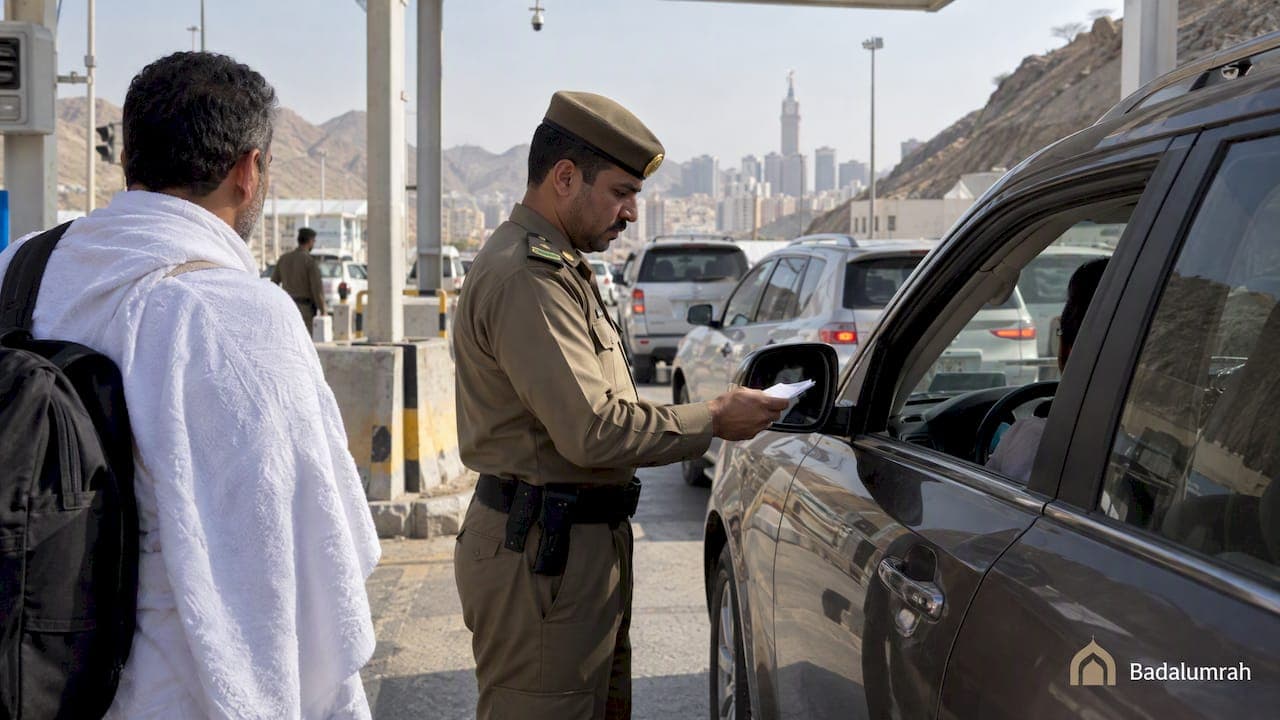
Key dates to know: according to an SPA notice on Hajj season measures, the authorities suspended issuance of Nusuk Umrah permits and restricted entry to Makkah for many visa types from Dhu Al-Qi’dah 1, 1447 AH (April 18, 2026) until Dhul-Hijjah 14, 1447 AH (May 31, 2026), with Umrah permit issuance and entry resuming on Dhul-Hijjah 15 (June 1). This is not a minor administrative footnote. It means roughly six weeks each year where non-Hajj Umrah access is effectively paused across much of Dhul Hijjah and the preceding month.
The Ministry of Hajj and Umrah’s season calendar for 1448 AH confirms the same restart point, stating that Umrah visa and Nusuk permit issuance resumes on Dhul-Hijjah 15, alongside the seasonal windows that govern the rest of the year. Separately, a Ministry of Interior-related notice summarized by PEP warns that holders of Umrah visas must leave by a set date ahead of the Hajj season, and that unauthorized entry to Makkah during the restricted period carries penalties.
In practice, this creates two different situations depending on when in Dhul Hijjah you want the Umrah performed:
- If you are trying to send a proxy into Makkah personally during the suspended window, that proxy is very likely to be turned back unless they already hold Hajj-specific authorization.
- If you book through an authorized Badal service with performers already present in Makkah under valid residency or Hajj-season permissions, execution may still be possible, or the provider can simply schedule the ritual for the first open date once issuance resumes on Dhul-Hijjah 15.
The sensible approach is to treat the suspension window as a scheduling constraint, not a theological one. Book early, ask your provider directly whether they can execute during the restricted dates or whether they will queue your Umrah for the reopening, and confirm what happens to your payment if there is a delay. A provider with no clear answer to that question is one to avoid, regardless of how polished their package page looks.
How to Arrange a Trustworthy Badal Umrah During Dhul Hijjah
Arranging a proxy Umrah during the busiest month of the Islamic calendar takes a bit more care than booking one in a quieter month. A short checklist keeps the process straightforward.
- Check the permit calendar first. Confirm whether Nusuk Umrah issuance is open or suspended for your target dates before you commit to a provider or a specific day.
- Vet the service before paying. Ask explicitly whether the named performer will carry out the Umrah personally, and insist that the provider does not quietly hand the task to a third party. This matters because, per IslamQA’s guidance on delegation and trust in appointing proxies, scholars including Ibn Uthaymin warn against chain-delegation, where a proxy passes the task to someone else without the client’s knowledge, since this can undermine the validity and trustworthiness of the arrangement.
- Confirm the booking details in writing. Get clear dates, a contingency plan for what happens if permits block entry during your chosen window, and a specific list of what documentation will be delivered, whether that is photos, video, or a written certificate.
- Use documented authorization. A legitimate provider will ask you to formally authorize the Umrah on behalf of the named beneficiary and will state its refund or rescheduling policy in plain terms before you pay.
Pro Tip: Save screenshots of the ministry’s permit-calendar page and your provider’s written confirmation on the day you book, since these records are what you would reference if a dispute or delay ever comes up.
Why Trustworthy Vetting Matters More Than Ever
Scholars have been specific about one risk in particular: chain-delegation. Per IslamQA’s answer on delegation and trust, Ibn Uthaymin’s position holds that a proxy who quietly passes the appointed task to someone else, without the client’s consent, can make the arrangement unlawful or at least deeply questionable. BinBaz’s broader guidance reinforces the same principle: the person performing the rites needs to be the person who was actually entrusted with them.
That is exactly what documentation is for. A verification process built around named performers, timestamped proof, and a certificate of completion gives readers something concrete to check rather than a vague promise.
- A trustworthy provider names the performer and does not sub-contract the task without telling you.
- Documentation should include dated photos or video from the actual rites, not stock imagery.
- A certificate of completion should reference the specific beneficiary and date, not a generic template.
- Charitable commitments, where a provider states them, should be stated plainly rather than buried in fine print.
Reviewing these details before you pay is the single most effective safeguard against the exact risk the scholars flagged.
Why Dhul Hijjah Carries Special Weight for Badal Umrah
Dhul Hijjah holds a distinct status in the Islamic calendar as the month that hosts Hajj and the days widely regarded among the most virtuous of the year. Many families specifically choose this month to arrange a Badal Umrah for a deceased parent or an ailing relative, hoping to align the act with a period of heightened reward.
The ruling on Badal Umrah itself does not change based on the month. What changes is the logistics, since Makkah’s infrastructure and permit system shift almost entirely toward Hajj operations for several weeks. A Badal Umrah performed just before Dhul Hijjah begins, or right after permits reopen on Dhul-Hijjah 15, avoids the bottleneck entirely while still falling close to this sacred stretch of the year.
For many clients, the appeal of doing it specifically in Dhul Hijjah is emotional as much as procedural: completing an act of worship on behalf of a loved one during a month associated with forgiveness and reward carries a particular comfort. That makes timing coordination worth the extra planning, rather than something to leave until the last week before travel restrictions tighten.
Booking Timelines and Package Selection for This Month
Booking a Badal Umrah for Dhul Hijjah works best when you start before the Nusuk suspension window begins, since that gives your provider room to either execute early or queue your request for the reopening on Dhul-Hijjah 15. Waiting until the middle of the suspended period limits your options to scheduling rather than immediate execution.
Package selection should match the beneficiary’s situation and the level of documentation the family wants. A straightforward Umrah for a deceased relative with basic proof of completion fits an entry-level package, while a family that wants fuller video documentation, faster turnaround, or priority scheduling around the Dhul Hijjah rush benefits from a higher tier.
Procedurally, Dhul Hijjah bookings sometimes need an extra step: confirming with the provider whether the performer already holds valid Hajj-season access to Makkah or whether the Umrah will be scheduled for the first open date after permits resume. Ask for this in writing before paying, along with a clear statement of what happens to your booking if the suspension period extends.
For a family arranging Umrah shortly after a death, our guide on Umrah after a loved one’s death walks through timing and package decisions in more detail.

Documentation and Certification You Should Expect
Proof of completion is what turns a Badal Umrah from a promise into something verifiable. At minimum, a reputable provider should supply dated photographic evidence of the performer at the key rites, tawaf and sa’i, along with a written certificate naming the beneficiary and the date the Umrah was completed.
Stronger packages typically add video proof, which gives families direct visual confirmation rather than a handful of static images. This matters particularly for Dhul Hijjah bookings, where the performer’s access during a restricted period is itself worth documenting, since it demonstrates the Umrah was carried out through a legitimate, authorized channel rather than an informal workaround.
When you receive your documentation, check that the certificate references the specific beneficiary by name, the date of completion, and ideally the performer’s details. A generic certificate with no specific details attached is a signal to ask more questions before accepting the booking as complete.
Charitable Giving Tied to Badal Umrah
Beyond the spiritual benefit to the person on whose behalf the Umrah is performed, some Badal Umrah providers extend the act of worship into a wider charitable commitment. We pledge to donate a portion of profits to support Gaza, a practice that aligns the service with the Islamic emphasis on charity alongside ritual worship.
For clients booking during Dhul Hijjah specifically, a month closely tied to generosity and heightened reward, this additional layer of giving can make the act feel more complete: the family fulfills an obligation on behalf of a loved one while the underlying transaction also contributes to humanitarian relief. It is worth asking any provider directly what percentage of profits, if any, goes toward such causes and how that commitment is tracked, since transparency here matters just as much as transparency in the ritual documentation itself.
A Note on Getting This Right
Badal Umrah is a meaningful act, not a box to check. The scholarly ground for it is solid, but the value of the act depends heavily on getting two things right: confirming the dates actually work against the ministry’s permit calendar, and vetting whoever you trust with the task so there is no chain-delegation or uncertainty about who performed the rites.
If you are ever unsure whether your specific situation, timing, or beneficiary qualifies, the right move is to ask a local scholar directly or check the Ministry of Hajj and Umrah’s calendar yourself rather than relying on secondhand summaries. A few extra minutes of verification before booking saves considerable worry afterward.
— anas
How We Help You Arrange a Verified Badal Umrah
We arrange proxy Umrah with documented performers, certificates, and a straightforward booking process for situations such as a deceased parent, an elderly relative, or anyone permanently unable to travel.
Our package tiers cover a range of documentation levels and turnaround speeds:
- The Du’a Package at $150 one-off includes basic proof of completion and a certificate.
- The Noor Package at $250 one-off adds extra proof and faster execution.
- The Barakah Package at $400 one-off includes verified performers and enhanced documentation.
- The Jariyah Premium Package at $500 one-off adds full video proof and priority scheduling.
If your timing falls inside Dhul Hijjah, ask us directly about contingency scheduling around the permit calendar before you book. You can review every tier and start your booking here.
FAQ
What is Hajj e Badal?
Hajj e Badal is the practice of appointing someone else to perform the Hajj rites on behalf of a person who has died or who is permanently unable to travel due to illness or old age. It follows the same underlying principle as Badal Umrah, with the Hajj rites performed on the beneficiary’s behalf rather than the proxy’s own pilgrimage.
What are the Umrah rules during Dhul Hijjah this year?
Nusuk Umrah permit issuance and Makkah entry for most non-Hajj visa holders were suspended from Dhu Al-Qi’dah 1 until Dhul-Hijjah 14, with issuance and entry resuming on Dhul-Hijjah 15. The Ministry of Hajj and Umrah’s season calendar confirms this restart date for the 1448 AH season.
Is Hajj compulsory after completing Umrah?
No, completing Umrah does not make Hajj an immediate obligation; Hajj becomes obligatory once a Muslim is physically and financially capable, regardless of whether they have already performed Umrah. The two rituals are separate obligations with their own conditions for eligibility.
How do I check if a Badal Umrah provider is trustworthy?
Ask whether the named performer will personally carry out the rites rather than delegating the task to someone else, since scholars warn specifically against unauthorized chain-delegation. Request documented proof of completion, such as dated photos, video, and a certificate naming the beneficiary, before considering the booking finalized.
Sources
- SPA notice on Hajj season and related measures
- Ministry of Hajj and Umrah — Umrah season calendar for 1448 AH
- IslamQA — Reward for Doing Umrah for Others
- BinBaz — Fatwa on Hajj and Umrah for the deceased