- badal umrah medina visit
Badal Umrah for Families: Check Nusuk, Demand Madinah Proof
Published on Oct 10, 2026
Badal Umrah for Families: Check Nusuk, Demand Madinah Proof

Yes, Badal Umrah can include a visit to Madinah, but the visit itself is a recommended addition rather than a required part of the Umrah ritual. What matters most is that your proxy secures the correct official permits, including a Nusuk booking and, where possible, a Rawdah Sharif slot, and returns with verifiable proof. Ask any provider directly how they handle Nusuk booking and what documentation you will receive.
TL;DR:
- The proxy should ideally have completed their own Umrah first; scholars commonly recommend this, although it is not a strict requirement in every school.
- Book Rawdah through Nusuk early because slots fill quickly; for visitors already in Madinah, Immediate Path checks for newly available appointments roughly every 20 minutes.
- Missing a confirmed Rawdah appointment can block advance rebooking for up to 365 days, so leave enough time for travel and arrival.
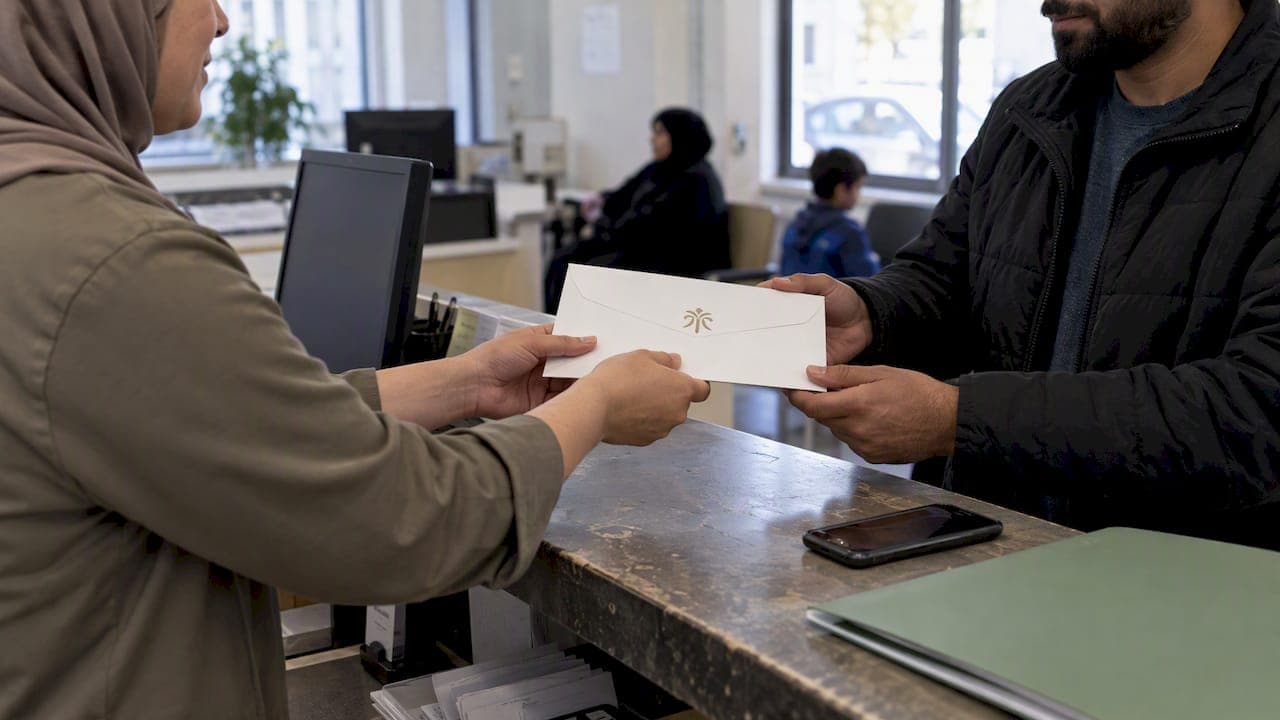
- Request a completion certificate, photos or video showing timestamps, Nusuk confirmation, and imam attestation where available; check that names and dates match.
Table of Contents
- What Badal Umrah is and why it is religiously accepted
- Is visiting Madinah required, and which sites do families usually request
- Official permit rules and booking mechanics: Nusuk, Rawdah, and practical tips
- How Madinah fits into a Badal Umrah itinerary: travel logistics
- Step-by-step: arranging a Badal Umrah that includes Madinah
- Documentation and verification: what proof actually confirms completion
- How to pick a trustworthy Badal Umrah provider
- How we meet religious compliance and verification expectations
- What I have learned organizing Badal Umrah with Madinah visits
- How our packages deliver a verified Madinah visit with every Badal Umrah
- FAQ
- Sources
What Badal Umrah is and why it is religiously accepted
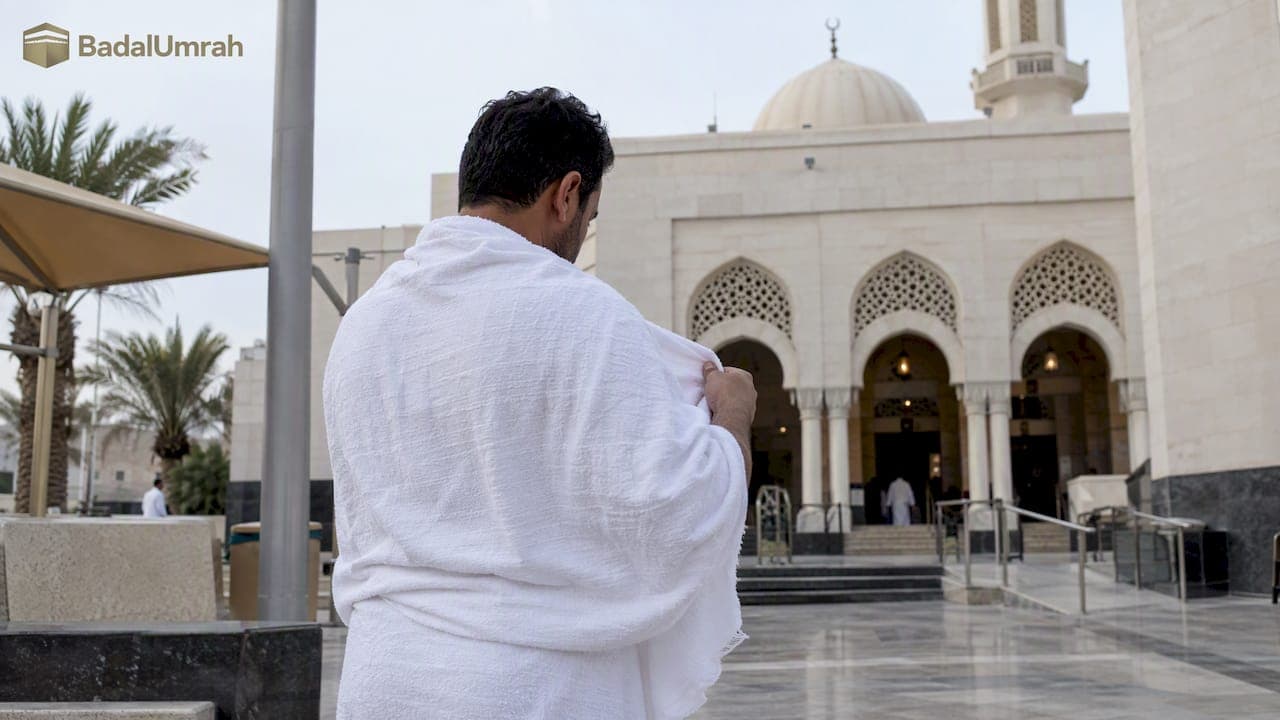
Badal Umrah means performing the Umrah rites on behalf of someone else, whether that person is alive but unable to travel or has already passed away. The proxy wears ihram, performs tawaf, completes sa’i, and ends the state of ihram just as the person would have done, but the spiritual reward is directed to the one who requested it.
Families commonly turn to this arrangement for a specific set of circumstances:
- A parent or relative who is too ill or physically frail to withstand the physical demands of tawaf and sa’i.
- An elderly family member who can no longer travel long distances safely.
- A deceased relative who had the means and intention to perform Umrah but never got the chance.
This practice is not a modern workaround. Classical scholarship recognized that acts of worship involving physical capability, like Hajj and Umrah, can be performed by a proxy when the original person is incapacitated, drawing on the same logic that permits paying someone else’s debt or completing a vow on their behalf. Contemporary scholars have built on this foundation, and readers who want the fuller argument and sourcing can review the meaning, ruling and process behind Badal Umrah in more depth.
One condition most scholars agree on is that the proxy should ideally have already performed their own Umrah before carrying out one on someone else’s behalf. This is not a strict legal requirement in every school of thought, but it is the safer and more commonly recommended practice. Families arranging Badal Umrah for a deceased parent, in particular, should look at how Umrah for deceased parents is typically structured, since the authorization and documentation expectations differ slightly from cases involving a living, ailing relative.
The underlying principle is straightforward: Islam does not want a sincere intention to go unfulfilled simply because of illness, age, or death. Badal Umrah exists to close that gap, and it has become a well-established, verifiable service rather than an informal favor between relatives.
Is visiting Madinah required, and which sites do families usually request
Visiting Madinah is not part of the Umrah ritual itself. Umrah is completed entirely within Makkah through ihram, tawaf, sa’i, and the cutting or shaving of hair. A trip to Madinah is a separate, recommended visit (ziyara) to the Prophet’s Mosque and the surrounding historical sites, and it carries its own spiritual weight even though it stands apart from the Umrah rites.
Because of this separation, families have flexibility in how they sequence a Madinah visit relative to the Umrah itself. Some prefer a Madinah-first approach, treating the visit as a period of spiritual preparation before the proxy travels to Makkah. Others prefer to send the proxy to Madinah after Umrah is complete, treating it as a closing act of reflection. Neither order is religiously mandated, and the choice usually comes down to flight availability, permit timing, and how a provider structures its itineraries.
When families do request a Madinah visit as part of a Badal Umrah arrangement, a handful of sites come up again and again:
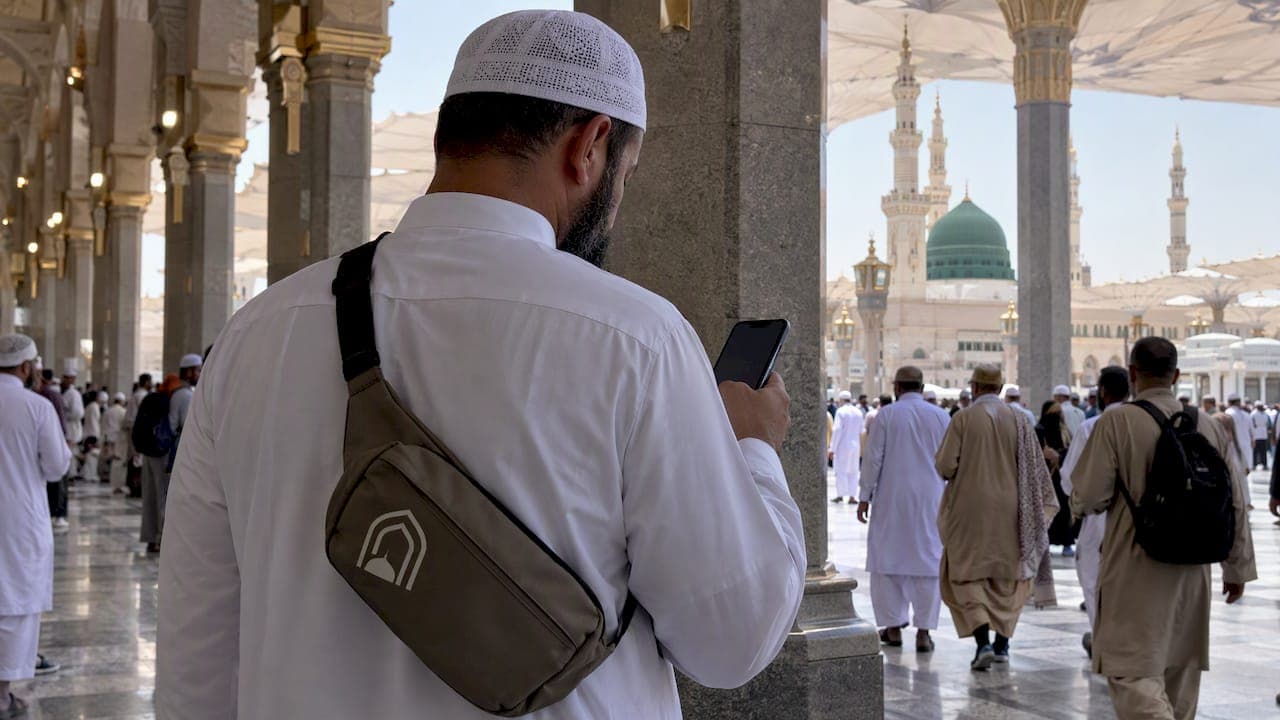
- The Prophet’s Mosque (Masjid an-Nabawi): the central destination, and where the proxy will pray and, if a permit is secured, visit the Rawdah.
- Al-Rawdah Ash-Sharifah: a specific area inside the mosque regarded as one of the gardens of Paradise, accessible only with an official time-slotted permit.
- Quba Mosque: the first mosque built in Islam, often visited for the two-rakah prayer associated with it.
- Mount Uhud: the site associated with the Battle of Uhud, usually visited from the outside as a place of reflection.
- Al-Baqi cemetery: the burial ground near the Prophet’s Mosque where many of the Prophet’s companions and family members are buried.
Because Rawdah access depends on a permit system rather than open entry, it deserves separate attention, and it is the single detail families most often forget to ask about when booking a Badal Umrah package that includes Madinah. A proxy who simply flies to Madinah without a Rawdah booking may end up unable to enter that specific area at all, so this is worth confirming with a provider before payment rather than after.
If a family has a specific request, such as a particular du’a at a specific site or a preference for Quba over Uhud, that request should be communicated clearly to the provider in writing at the time of booking. A verified provider will confirm in writing which sites are included and which depend on permit availability on the day.
Official permit rules and booking mechanics: Nusuk, Rawdah, and practical tips
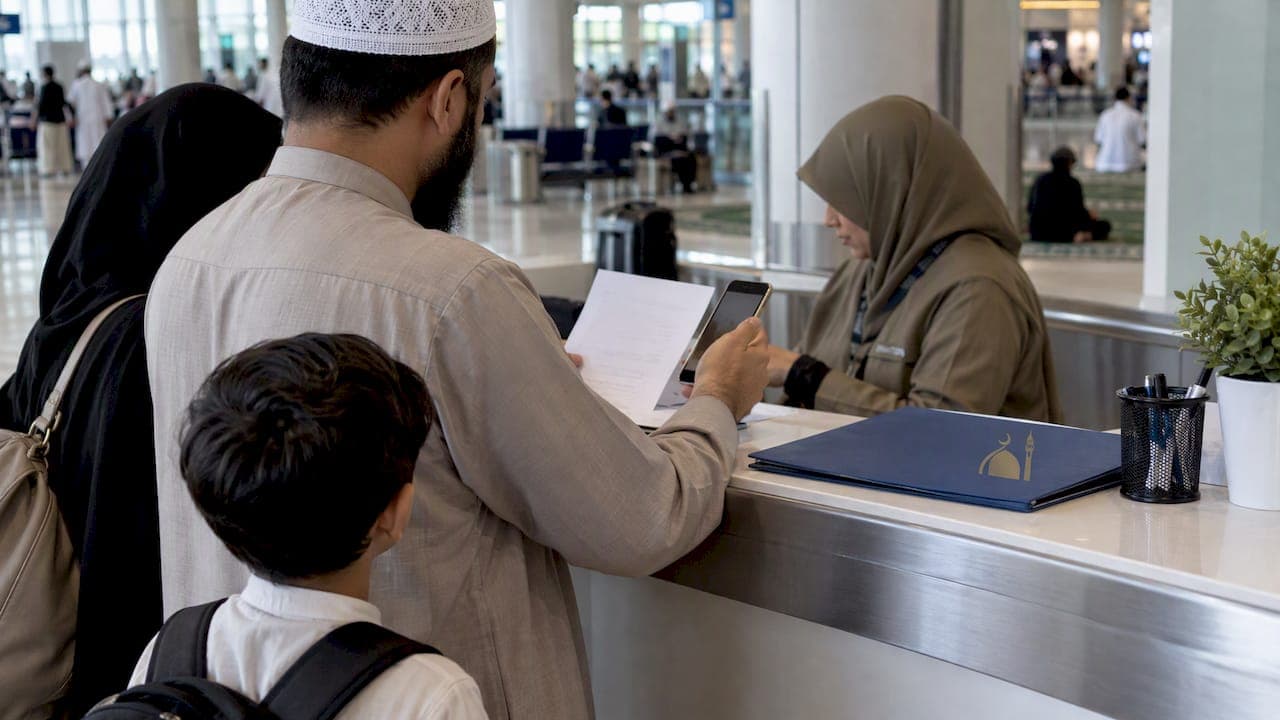
Nusuk is the official platform through which Umrah arrangements and several Prophet’s Mosque services are managed, and it is the starting point for nearly every logistical step a proxy needs to take. Any Badal Umrah provider worth trusting should be able to tell you exactly how they use Nusuk to secure your Umrah slot and, where relevant, a Rawdah appointment. As of September 2026, booking a prayer appointment for Al-Rawdah Ash-Sharifah is done through the Nusuk app, with permits issued immediately once a slot is selected.
Rawdah access runs on a separate, time-sensitive permit system. The Ministry of Hajj and Umrah maintains a dedicated e-Service for issuing the Al-Rawdah Al-Sharifa permit for men and women separately, and slots can fill quickly during busy periods. A proxy who wants to guarantee entry needs to check availability early and be ready to book the moment a suitable slot opens.
A few operational details make the difference between a smooth Madinah visit and a frustrating one:
- Keep the Nusuk app updated on the device the proxy carries, since permit features and slot availability are managed entirely through the app.
- Verify that the proxy’s passport and visa details match exactly what was entered during Nusuk registration, since a mismatch can block check-in or permit confirmation.
- If the proxy is already physically in Madinah, use the Immediate Path feature inside Nusuk, which checks for newly available Rawdah slots roughly every 20 minutes for pilgrims on the ground.
- Treat a confirmed Rawdah appointment as fixed. Missing it is not a minor inconvenience.
That last point deserves emphasis. A missed Rawdah appointment can trigger a block on advance rebooking for up to 365 days, according to Saudi Press Agency reporting on Nusuk booking practicalities. For a paid Badal Umrah package, that penalty makes punctuality and a clear contingency plan essential rather than optional, since a missed slot could mean the Madinah portion of the package cannot be completed as promised within the same trip.
Pro Tip: Ask your provider whether they book Rawdah permits in advance or rely on the Immediate Path once the proxy lands in Madinah, since the two approaches carry very different timing risks.
The Ministry’s own Umrah visit guide reinforces that every visitor needs proper authorization to perform Umrah and to access certain Prophet’s Mosque services, which is why the permit step cannot be skipped or improvised. A provider who treats Nusuk and Rawdah bookings as an afterthought is not set up to deliver a dependable Madinah visit.
How Madinah fits into a Badal Umrah itinerary: travel logistics
Once Umrah is complete in Makkah, a proxy has several practical ways to reach Madinah, and the choice affects how tightly the Madinah visit can be scheduled around permit slots and prayer times.
- Haramain High-Speed Train: a fast, frequently used rail link connecting Makkah and Madinah, popular for its predictable schedule and comfort.
- Direct flights: useful when a provider needs to move a proxy quickly between cities on a tight itinerary.
- Buses: a slower but lower-cost option, often used for group transfers.
- Private cars: offer flexibility on timing, which can matter when a Rawdah slot falls at an inconvenient hour.
The Haramain High-Speed Railway is worth highlighting because it has become one of the most common ways pilgrims move between the two holy cities, and its fixed timetable makes it easier for a provider to plan around a confirmed Rawdah appointment. Travel time by train is short enough that a same-day or next-day Madinah visit after Umrah is realistic, provided the Rawdah permit window lines up with the train schedule.
For families booking transport independently rather than through a full-service provider, resources like this guide to Makkah-Madinah route planning lay out the practical differences between these travel modes and how to plan ziyarat stops along the way.
A reliable Badal Umrah provider sequences these moving parts rather than leaving them to chance. That typically means confirming the Umrah is complete, checking Rawdah slot availability before booking transport, and only then locking in a train or flight time that gives the proxy enough buffer to reach Madinah, rest briefly, and arrive at the mosque in time for the permitted window. Rushing this sequence is one of the more common reasons a Madinah visit falls through even when everything else about the Badal Umrah went smoothly.
Weather, crowd levels, and seasonal demand can also affect how far in advance a provider should lock in transport. During busier periods, train tickets and Rawdah slots both move faster than usual, so a provider that books early tends to have more flexibility if an adjustment is needed later.
Step-by-step: arranging a Badal Umrah that includes Madinah
Whether you are working with a provider or trying to understand what a provider should be doing on your behalf, the process follows a consistent sequence from authorization through to verified completion.
- Confirm eligibility and scope. Establish whether the Umrah is being performed for a living but incapacitated relative or for someone deceased, since this affects what authorization documents are needed.
- Gather documentation. Collect identification for the requester, proof of relationship to the person receiving the reward, and a signed authorization letter where the provider requires one.
- Book the Umrah through Nusuk. The provider should confirm the proxy’s Umrah slot through the official Nusuk channel rather than an informal arrangement.
- Secure a Rawdah permit when the family wants Madinah included. This step should happen as early as the booking window allows, given how quickly slots can fill.
- Schedule transport and ihram logistics. This includes arranging the proxy’s miqat point, ihram timing, and transfer between Makkah and Madinah.
- Execute on the ground. The proxy performs the Umrah rites, then travels to Madinah for the ziyara and Rawdah visit if permitted.
- Capture time-stamped proof. Photos and video should be taken at recognizable locations with visible timestamps, not generic stock-style images.
- Deliver verification to the family. This includes a completion certificate, imam attestation where applicable, and the full set of media documenting each stage.
Documentation matters at every stage of this sequence, not just at the end:
- Keep a copy of the authorization letter and any relationship proof in case the provider or family needs to reference it later.
- Save Nusuk booking confirmations and Rawdah permit screenshots as they are issued, rather than waiting until after the trip.
- Request that photos and video include a visible landmark, such as the mosque entrance or a dated screen, so the proof is specific rather than generic.
Pro Tip: Ask the provider to send proof in stages, such as a Nusuk confirmation after booking and photos after Umrah is completed, rather than waiting for a single bundle at the end.
For families arranging this on behalf of a deceased parent specifically, the authorization step often needs to account for estate or inheritance considerations, and it helps to review how rulings on deceased parents’ Umrah are typically handled before finalizing documentation. Gender eligibility for the proxy is another detail families sometimes overlook. A son can perform Badal Umrah for a mother and a daughter can perform it for a father, but some providers have their own policies on proxy assignment, so it is worth confirming who may act as a proxy before booking.
Once the trip is complete, the family should receive a package that ties everything together: a signed or stamped certificate, the media captured during the visit, and confirmation that the permits used match the dates and names on file. If any of these pieces is missing, that is the moment to follow up with the provider rather than assume it will arrive later.
Documentation and verification: what proof actually confirms completion
The proof a provider sends back is the only way a family can confirm that a Badal Umrah, including any Madinah visit, was genuinely carried out. Not all documentation carries the same weight, so it helps to know what to look for.
Credible proof typically includes:
- A completion certificate naming the person on whose behalf the Umrah was performed and the date of completion.
- Imam attestation, where a recognized religious figure confirms the rites were carried out correctly.
- Time-stamped photos and video showing the proxy at identifiable locations, such as the Kaaba, the Prophet’s Mosque, or Rawdah.
- Nusuk booking confirmation and permit screenshots, which tie the visit to an official, verifiable record.
Best practice among verified providers is to combine several of these elements rather than rely on just one. A certificate alone is easy to produce without real evidence behind it, but a certificate paired with a Nusuk confirmation, time-stamped photos, and imam attestation gives a family multiple independent points to check against each other.
When reviewing what you receive, match the dates and names across every document. A certificate dated differently from the photos, or a name that does not match the authorization letter, is worth raising with the provider immediately rather than assuming it is a clerical error. Visible landmarks in photos matter too. A generic photo of a mosque interior proves far less than one showing a dated screen, a specific gate, or a recognizable feature of the Rawdah area.

A missed Rawdah appointment can block advance rebooking for up to 365 days, which is one reason verification should include checking that the Rawdah visit, if promised, actually took place within the booked window rather than being skipped and quietly left out of the final report.
Finally, keep every piece of documentation in one place, ideally digitally backed up, so that family members or an estate executor can access it later if questions come up. For a Badal Umrah performed on behalf of a deceased relative, this record can matter for years, not just in the weeks immediately after the trip.
How to pick a trustworthy Badal Umrah provider
Choosing a provider for something this personal comes down to a short list of concrete checks rather than a gut feeling.
Look for these criteria before you pay anything:
- Verified Nusuk booking, not a vague promise that the Umrah will be “arranged.”
- Imam or clerical oversight, so the rites are confirmed by someone with religious authority, not just a travel coordinator.
- Transparent evidence, meaning photos, video, and a certificate are standard, not an upsell.
- Active customer support that answers questions before and after the trip, not only during the sales conversation.
- Clear pricing and refund terms, stated upfront rather than negotiated after payment.
Before booking, it is worth asking a provider directly for a sample certificate, a clear explanation of how they book Rawdah permits, and their policy on providing live updates during the trip. A provider that hesitates to answer any of these questions, or that asks for payment through an unofficial channel outside their own platform, is a sign to look elsewhere.
Generic warning signs include vague timelines with no specific dates, no verifiable proof offered at all, and payment requests that bypass the provider’s own booking system. A provider confident in their process will have no trouble showing you exactly how Rawdah is booked and what the final documentation package looks like.
Pro Tip: Ask to see a sample certificate and a sample photo set from a completed Badal Umrah before booking, so you know exactly what you will receive.
How we meet religious compliance and verification expectations
We structure every Badal Umrah booking around the same standard: Nusuk-based permit booking, oversight from qualified imams, and documentation that a family can actually verify. Our package tiers, from the Du’a Package through the Jariyah Premium Package, each include proof methods such as photos, video, and a completion certificate, with higher tiers offering more extensive documentation and faster scheduling.
We perform all Umrah services in accordance with Islamic law, with transparency built into the process through updates and compassionate support for families making the request. Readers who want the scholarly basis behind the practice can review our explanation of the rulings on performing Umrah for others, which covers the authorization process in more detail.
We also support charitable causes aligned with values of compassion that motivate families to arrange Badal Umrah. Families who want to see examples of completed documentation before booking can review our gallery of sample proof, which shows the kind of certificates, photos, and video families typically receive once their Badal Umrah is complete.
What I have learned organizing Badal Umrah with Madinah visits
The one lesson that stands out from coordinating these trips is that the Rawdah permit, not the flight or the Umrah itself, is usually the part most likely to go wrong. Families often assume that once Umrah is booked, Madinah will simply follow smoothly, but Rawdah slots fill fast and a missed appointment carries a real penalty.
The fix is simple: treat the Rawdah booking as the first thing to lock in, not the last. A provider who checks Rawdah availability before finalizing the Madinah leg of the trip avoids the scramble that comes from trying to fit a visit around a slot that no longer exists.
— anas
How our packages deliver a verified Madinah visit with every Badal Umrah
We handle the Nusuk booking, pursue a Rawdah slot whenever the itinerary allows it, and send back photos, video, and a completion certificate so you have real proof the visit happened, not just a promise that it did.
Our package tiers cover different levels of documentation and speed:
- The Du’a Package covers the essentials with a completion certificate.
- The Noor Package adds faster scheduling and expanded verification.
- The Barakah Package and Jariyah Premium Package include the most extensive proof and priority handling.
If a Madinah visit matters to your family, mention it when you book so we can plan the Rawdah permit timing around your Umrah schedule. You can compare every tier on our packages and pricing page or go straight to our booking page to get started.
FAQ
Is it necessary to visit Madinah during Umrah?
No, visiting Madinah is not a required part of Umrah. It is a recommended ziyara that many pilgrims and proxies choose to add before or after completing the Umrah rites in Makkah.
Which ziyarat should I ask to be included in Madinah?
The most commonly requested sites are the Prophet’s Mosque, the Rawdah when a permit is available, Quba Mosque, Mount Uhud, and Al-Baqi cemetery. Specific requests should be communicated to your provider at the time of booking so they can plan around permit availability.
Can I go to Madinah before performing Umrah instead of after?
Yes, there is no religious requirement on the order. Some families prefer a Madinah-first itinerary for spiritual preparation, while others send the proxy to Madinah after Umrah as a closing visit.
How do I know a Badal Umrah provider actually completed the Madinah visit?
Ask for time-stamped photos or video from the Prophet’s Mosque, a Nusuk booking confirmation, and a Rawdah permit screenshot if that was part of the request. Matching dates and names across these documents is the clearest way to confirm the visit took place.
Are there extra costs for including a Madinah visit in a Badal Umrah package?
Costs depend on the package tier and provider, so it is worth asking directly before booking what a specific package includes. Our own package prices are listed on our packages and pricing page, with no hidden charges added after booking.
Sources
- SPA: Nusuk and Rawdah permit information
- Issuance of Rawdah Sharif Permit (Men / Women) — Ministry e-Services
- Visit Saudi: Haramain High-Speed Railway