- umrah vs hajj
Umrah vs Hajj: The Differences, Explained Clearly
Published on Oct 22, 2026
Umrah vs Hajj: The Differences, Explained Clearly

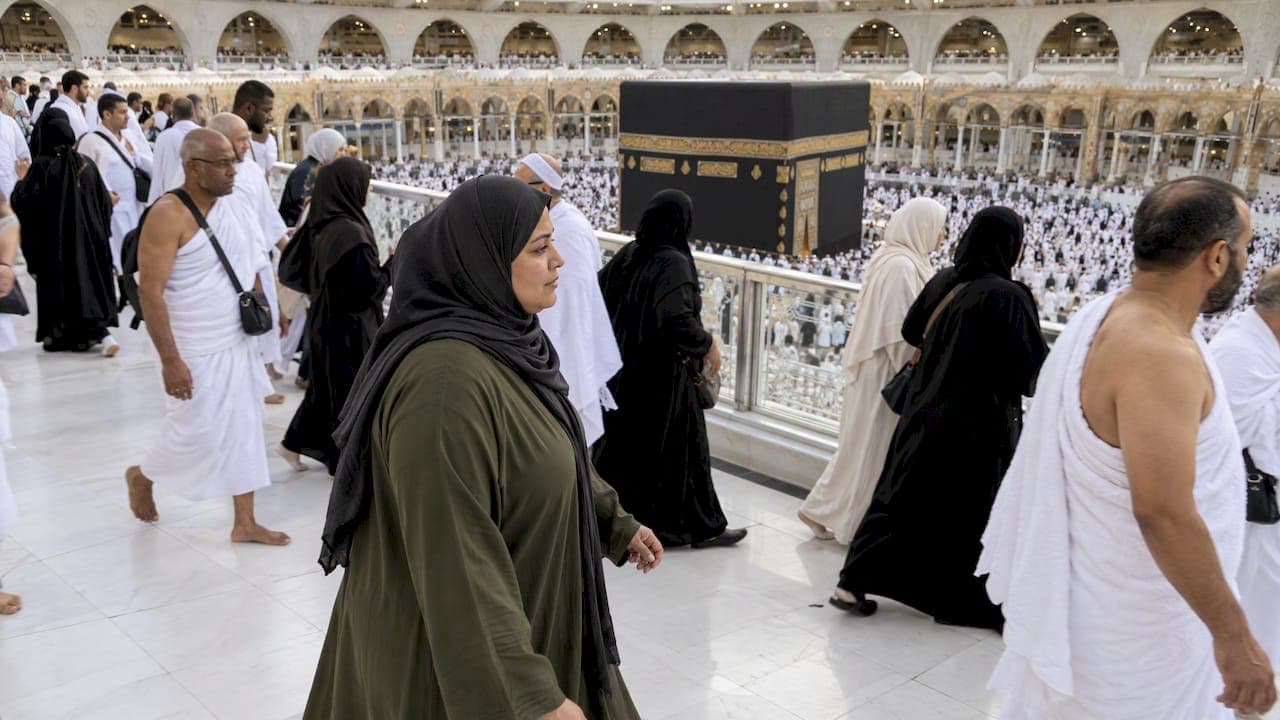
Hajj is an obligatory pillar of Islam with fixed days in Dhul Hijjah. Umrah is a shorter, recommended pilgrimage that you can perform at any time of the year. Both take you to Makkah, and both begin in the state of ihram. They differ in ruling, timing, rituals and demands on the body.
This guide sets the two side by side. It also answers the questions people ask next: whether Umrah in Ramadan replaces Hajj, which to do first, how tawaf and ziyarah relate to Umrah, and what you can do when you or someone you love cannot make the journey.
TL;DR
- Ruling: Hajj is fard (obligatory) once in a lifetime for every Muslim who is able. Umrah is Sunnah according to the majority of scholars, though some view it as obligatory once.
- Timing: Hajj happens only in Dhul Hijjah. Umrah is year-round.
- Rituals: Umrah has four core elements: ihram, tawaf, sa’i and shaving or trimming the hair. Hajj adds Arafat, Muzdalifah, Mina and the stoning of the jamarat.
- Effort: Hajj takes days and is far more demanding physically. Umrah can often be completed in a few hours.
- If you cannot travel: Islamic tradition allows a substitute (badal) for those who are permanently unable or who have died. The conditions differ for Hajj and Umrah.
Table of Contents
- Umrah vs Hajj at a glance
- The ruling: obligation versus recommendation
- Timing: a fixed window versus all year
- The rituals: four requisites versus a longer sequence
- Duration and physical demand
- Does Umrah in Ramadan equal Hajj?
- Umrah or Hajj first?
- Tawaf, Umrah and ziyarah: how they relate
- When you or a loved one cannot go: the role of badal
- Our perspective: two different gifts
- FAQ
- Sources
Umrah vs Hajj at a glance
| Hajj | Umrah | |
|---|---|---|
| Ruling | Obligatory pillar, once in a lifetime for those able | Sunnah for most scholars; some say obligatory once |
| When | 8th to 13th of Dhul Hijjah | Any time of year |
| Core rites | Ihram, Arafat, Muzdalifah, Mina, jamarat, sacrifice, tawaf, sa’i, hair | Ihram, tawaf, sa’i, hair |
| Duration | Several days | Usually a few hours |
| Physical demand | High | Moderate |
| Can it replace the other? | No | No |
The sections below explain each row.
The ruling: obligation versus recommendation
Hajj is one of the five pillars. Islamic Relief explains that it is mandatory once in a lifetime for every able-bodied Muslim who is financially capable, while Umrah is a highly recommended act of worship. The CDC Yellow Book describes the same obligation for every able-bodied adult Muslim who can afford it.
The Quran ties the duty to ability. The verse in Ali 'Imran says Hajj is a duty owed to Allah by those who can find a way to it, and the hadith collection Sahih al-Bukhari records this under the Book of Hajj. Ibn Kathir’s tafsir is a good place to read how scholars understand that ability: provisions, transport and safety.
Umrah is where scholars differ more. Most classify it as Sunnah. Some hold that it is obligatory once in a lifetime, and the Bukhari chapter on Umrah opens with a statement attributed to Ibn Umar that both are obligatory. If this matters for your own situation, ask a scholar you trust, ideally one from your own school of thought.
Timing: a fixed window versus all year
Hajj takes place only in Dhul Hijjah, the last month of the Islamic lunar calendar, with its rites running from the 8th to the 13th. Miss the window and you wait for the next year.
Because the lunar year is shorter than the Gregorian one, Hajj moves roughly ten to eleven days earlier on the Gregorian calendar each year. Exact dates are confirmed by moon sighting in Saudi Arabia, so any date you read months ahead is an estimate.
Umrah has no season. You can perform it in any month, and many people choose Ramadan or the school holidays. If you plan to be in Makkah around Hajj, read our guide to Umrah during Hajj season, because dates and access can shift by weeks.
The rituals: four requisites versus a longer sequence
The Malaysian Federal Territories Mufti Office sets out the definitions and differences in its Bayan Li al-Hajj series. Umrah has four core requisites, and Hajj has five.
What Umrah involves
- Ihram: you enter the sacred state at the miqat, make the intention and begin saying the talbiyah.
- Tawaf: seven circuits around the Kaaba.
- Sa’i: seven laps between Safa and Marwah.
- Tahallul: shaving or trimming the hair to leave ihram.
What Hajj adds
Hajj includes standing at Arafat on the 9th, which is the heart of the pilgrimage. It also includes a night at Muzdalifah, the days at Mina, the stoning of the jamarat and, for most pilgrims, a sacrifice. Tawaf and sa’i are part of Hajj too. None of the Arafat, Muzdalifah, Mina or jamarat rites appear in Umrah.

The three forms of Hajj
Pilgrims perform Hajj in one of three ways: Ifraad (Hajj alone), Qiran (Hajj and Umrah combined in one ihram) or Tamattu’ (Umrah first, leave ihram, then Hajj). In Tamattu’, the Umrah is part of the journey, which is why people sometimes confuse the two. Even then, the Umrah rites and the Hajj rites remain separate.

Duration and physical demand
Umrah can often be completed in a few hours, depending on the crowds. Hajj takes about five to six days of continuous rites.
Islamic Relief notes that Hajj is much more physically demanding, because of its length, the intensity of Arafat and the dense crowds in the Hajj window. This is hard for the elderly and for people with health conditions. For many families, this is exactly why the question of a substitute arises.
Does Umrah in Ramadan equal Hajj?
A hadith recorded in the Bukhari and Muslim collections says Umrah in Ramadan carries a reward like Hajj. People often read this as a replacement. Scholars say it is not.
The reward is a great merit and a real opportunity for people who cannot go on Hajj. But it does not discharge the Hajj obligation itself, as Islamic Relief reiterates. If you are able and have never performed Hajj, Umrah in Ramadan does not remove that duty.
Umrah or Hajj first?
There is no requirement to do Umrah before Hajj. Many Muslims perform Umrah first because it is shorter, easier to plan and available all year. Others go straight to Hajj when they are able.
The practical guidance is this. If you are able to perform Hajj and have not yet done so, do not delay it. If you are not yet able, Umrah is a worthy act on its own. Take your specific situation, such as debts, family responsibilities or health, to a qualified scholar.
Tawaf, Umrah and ziyarah: how they relate
Tawaf versus Umrah
Tawaf is one part of Umrah. It is not the whole Umrah. Circling the Kaaba seven times is the second requisite, after ihram and before sa’i. An Umrah without sa’i and the hair rite is incomplete.
Can you do tawaf without Umrah?
Yes. Voluntary (nafl) tawaf is a recognized act of worship that you can perform whenever you are at the Sacred Mosque, and it does not need ihram. You do need to be in a state of ritual purity. If you intend to perform Umrah, you must enter ihram at the miqat first. Scholars have discussed the finer points, so ask a scholar if you want a ruling for your school.
Ziyarah versus Umrah
Ziyarah means visiting. People use it for visiting Madinah, the Prophet’s Mosque and other historic sites, and in some places also for sightseeing around Makkah. It is not a ritual of Umrah or Hajj, has no ihram of its own and does not substitute for either. Many pilgrims combine a visit to Madinah with their trip, but the two are separate acts.
When you or a loved one cannot go: the role of badal
Some people want to perform Hajj or Umrah and cannot. They may be elderly, seriously ill, permanently disabled or deceased. The Islamic tradition has an answer: a substitute, called a badal.
The basis is a hadith in Sahih Muslim, in a chapter on Hajj on behalf of one who cannot perform it because of chronic illness or old age, or who has died. A woman asked the Prophet (peace be upon him) about performing Hajj for her aged father, who could not ride safely. The tradition is understood as permitting it.
The details differ between the two pilgrimages:
- Hajj badal is for those who are permanently unable, or who died owing the obligation. It is a serious matter, and scholars discuss the conditions, including the status of the person who goes in your place.
- Umrah badal is commonly performed for deceased relatives. For the living, it is generally limited to those permanently unable to travel. Read our guide on Umrah for a living person who cannot travel for the details.
If the person has died, we have written separately about timing and steps after a loved one’s death, Umrah for deceased parents and Umrah for an elderly parent. Each explains the intention, the rulings and what to check before you book anyone.
Our packages
We perform Umrah on behalf of others, with proof of completion in the form of photos, videos and certificates. Every booking is a one-time fee with no recurring charges.
| Package | Price |
|---|---|
| Du’a Package | $150 |
| Noor Package | $250 |
| Barakah Package | $400 |
| Jariyah Premium Package | $500 |
| Hajj Badal, Ifraad | $1,500 |
| Hajj Badal, Tamattu’ (with Umrah and Qurbani) | $2,500 |
The tiers differ in speed and features. The Umrah rites are performed according to Islamic law and verified by qualified imams. If you are not sure which fits, start with the Du’a Package for a single Umrah, or write to our support team and we will help you choose.

Our perspective: two different gifts
People come to us after a loss, or while a parent is slowly failing. They often ask the same quiet question: “Will this count?” We understand why. This is not a purchase like others. It is a duty, a hope and often a goodbye.
What we have learned is that confusion between Umrah and Hajj causes much of the worry. Someone sees that Umrah in Ramadan has a reward like Hajj and wonders whether it settles an unpaid Hajj. It does not, and we say so plainly. Hajj is a pillar with its own conditions. Umrah is a great act of worship with its own merit. We would rather help you choose the right one than sell you the wrong one.
So we keep our approach simple. Tell us who the Umrah is for. We perform it as Islamic law requires, verified by qualified imams. You receive real-time updates and documentation you can keep. And if a question needs a fatwa, such as the Hajj of someone who has died, we encourage you to speak to a scholar before booking. A portion of our profits is pledged to charity, including support for Gaza, because worship and compassion belong together.
For you. For your loved ones. For their forgiveness.
— anas
FAQ
Is Hajj mandatory and Umrah optional?
For most scholars, yes. Hajj is an obligatory pillar once in a lifetime for every Muslim who is physically and financially able. Umrah is Sunnah, although some scholars regard it as obligatory once. Your local scholar can tell you which view your school follows.
Is Umrah the same as Mecca?
No. Makkah is the city. Umrah is the act of worship you perform there, with ihram, tawaf, sa’i and the hair rite. Visiting Makkah for any other reason is not Umrah unless you enter ihram and complete those rites.
Can Umrah be done instead of Hajj?
No. Even in Ramadan, when its reward is described like Hajj, Umrah does not fulfill the Hajj obligation. If you are able and have not performed Hajj, the duty remains. If you cannot go, ask a scholar about Hajj badal.
Can someone perform Umrah for me?
If you are permanently unable to travel because of illness or old age, scholars allow a substitute. It is also commonly done for the deceased. Temporary inability or lack of time is not generally treated the same way, so ask a scholar if you are unsure.
Sources
- Islamic Relief UK: The Difference Between Hajj and Umrah
- CDC Yellow Book 2026: Saudi Arabia, Hajj and Umrah Pilgrimages
- Sahih al-Bukhari: Hajj (Pilgrimage)
- Sahih al-Bukhari: Umrah (Minor pilgrimage)
- Ibn Kathir tafsir of Ali 'Imran 3:97
- Jabatan Mufti Wilayah Persekutuan: Bayan Li al-Hajj Series 2
- Sahih Muslim: Hajj on behalf of one who is incapable